
Building Data-Driven Organizations: Key Points
- 83% of teams in the USA and UK now consider data literacy essential for their daily operations.
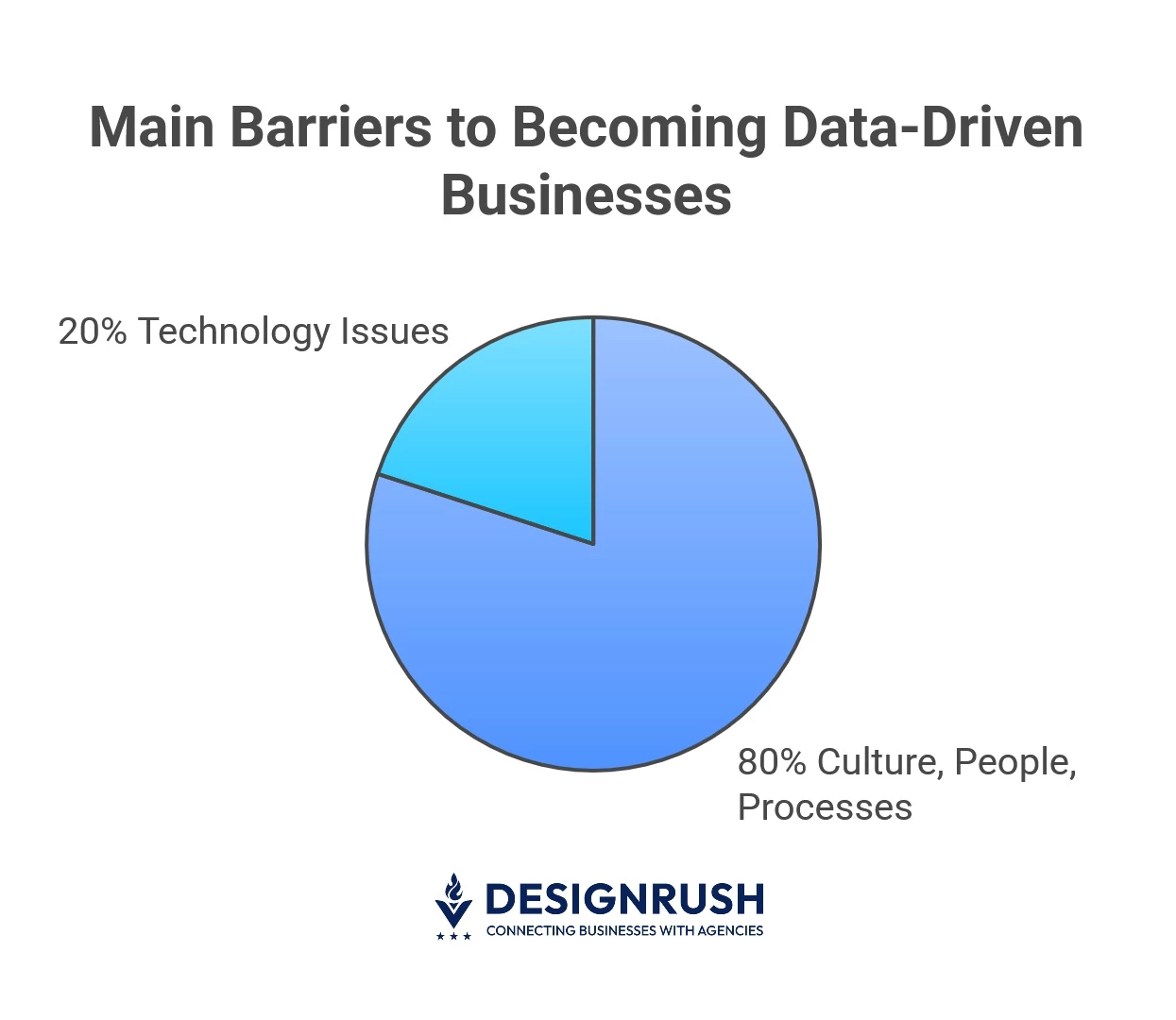
- 80% of businesses cite culture, people, processes, or organizational issues (not technology) as the main barriers to becoming data-driven.
- 92% of CDOs, CDAOs, and data leaders report measurable returns on their data and analytics initiatives.
Intuition and experience only go so far in a data-rich business environment. Smart organizations are adopting a data-first approach to guide strategic decisions, transforming how they operate, analyze market conditions, and serve customers. To see what wonders a data-first mindset can do for your business, keep reading.
Cultivating a Data-Driven Culture Across the Organization
A thriving data culture starts at the top. Executive sponsorship is non-negotiable; C-level leaders must model data-informed decision-making to carry out expectations organization-wide.
However, without a workforce prepared to interpret and leverage this data, businesses risk drowning in information without deriving meaningful value. That's why 83% of teams in the USA and UK consider data literacy essential for their daily operations.
Yet surveys by the MIT Sloan School of Management show that technology isn’t the main barrier. In 2023, 80% of respondents cited culture, people, processes, or organizational structure as the principal challenges to becoming data-driven. But there are ways to address that.
Actionable Steps
Here’s how you can start creating a data-driven culture in your organization.
- Embed KPIs: Integrate data-driven KPIs into performance evaluations for leadership, ensuring that key decision-makers are held accountable for driving data-centric outcomes across all departments.
- Create a CDO Role: Appoint a Chief Data Officer to lead the cultural transformation, with a focus on fostering data literacy, driving change management initiatives, and ensuring the integration of data into strategic decision-making.
- Empower employees through upskilling: Launch upskilling initiatives, including certifications in Google Analytics 4, Tableau, and Looker, to enhance data literacy across your team and ensure they can fully leverage data platforms for optimal performance.
- Create and empower "Data Champion Networks": Advocate for data adoption, mentor colleagues, and drive cultural change across teams.
- Launch a "Data Wins" internal newsletter: Highlight and celebrate data-driven achievements across teams.


Building Robust Big Data Infrastructure and Analytics Capabilities
Without strong infrastructure, even the most ambitious data strategies are destined to fail. This foundation must be complemented by a capable analytics platform to provide oversight and ensure effective decision-making. Here’s how your organization can prepare to become data-driven.
Set Foundational Elements
Successful data-driven organizations are built on scalable, modular, and cloud-native architectures that can grow, adapt, and seamlessly integrate with evolving technologies. Without this foundation, analytics projects become brittle, siloed, and unable to keep pace with business demands.
- Cloud-native design: Embrace modern, flexible platforms like AWS Redshift, Azure Synapse, and Snowflake that offer high scalability, robust security, and on-demand computing power essential for handling vast, complex data workloads.
- Seamless integration: Prioritize API-driven ecosystems that enable real-time data flow between platforms, break down silos, and empower cross-functional teams to access consistent, actionable insights across marketing, sales, finance, and operations.
Choose an Analytics Platform
Once the foundational infrastructure is in place, selecting the right analytics platform becomes critical to unlocking the true value of big data. The ideal tools should not only support scalability and deep insights but also align with your specific workflows, reporting needs, and predictive modeling ambitions.
Consider the following options:
- Looker: Embedded analytics that seamlessly integrates insights into daily business workflows.
- Google BigQuery: Scalable data warehouse designed for advanced querying across massive datasets with high performance.
- DataRobot: Automated machine learning platform that accelerates predictive analytics, allowing non-technical users to build, deploy, and monitor AI models with ease.
Navigate Cloud Infrastructure Trade-offs
While each cloud provider offers unique advantages, it’s important to recognize that there are always trade-offs to consider. Understanding them will help you make an informed decision that aligns with your organization's goals and requirements.
| Cloud Provider | Strengths | Trade-offs |
| AWS | Scalability, wide integrations | Complex pricing models |
| Azure | Enterprise compliance | Steeper learning curve |
| Google Cloud | AI/ML innovation | Smaller enterprise ecosystem |
Implementing Effective Data Governance Frameworks
A data governance framework provides a structured approach to managing data across an organization. It establishes the policies, processes, and structures needed to ensure that data remains accurate, secure, compliant, and strategically valuable across the enterprise.
Data governance frameworks also keep analytics initiatives from collapsing under the weight of poor data quality (which alone costs businesses at least $12.9 million annually, according to Gartner), inconsistent standards, and regulatory risks. Embedding them early helps build trust, drive accountability, and significantly boost operational efficiency.
Understanding Data Governance Frameworks
Two well-known frameworks for data governance are:
- Data Governance Institute (DGI) framework: Focuses on establishing clear data ownership, standardizing processes, and implementing accountability structures.
- DAMA-DMBOK framework: Outlines nine critical knowledge areas that guide organizations in data management, including:
- Data Quality – Ensures data is accurate and reliable
- Data Architecture – Defines the structure and design of data
- Data Security – Ensures proper protection and access controls for sensitive data
Key Practices for Data Governance Implementation
These key practices form the foundation of an effective data governance strategy, ensuring data is managed consistently, securely, and in alignment with organizational goals.
- Automated data validation: Implement tools like Talend and Informatica to automatically verify data accuracy and integrity at ingestion points, preventing errors from spreading across your analytics and reporting systems.
- Clear ownership: Designate dedicated data stewards for every critical dataset to ensure ongoing accountability, proper maintenance, and consistent data governance across departments.
- Governance structures: Form a cross-functional Data Governance Council with representation from the C-suite, marketing, finance, and IT.
- Compliance imperatives: Bake Data Protection Impact Assessments (DPIAs) into every innovation initiative and proactively address GDPR, CCPA, and emerging privacy laws.
Tip: Create a "Data Health Dashboard" visible to leadership, showcasing dataset quality and supporting campaign outcomes.
Aligning Data Initiatives With Business Objectives
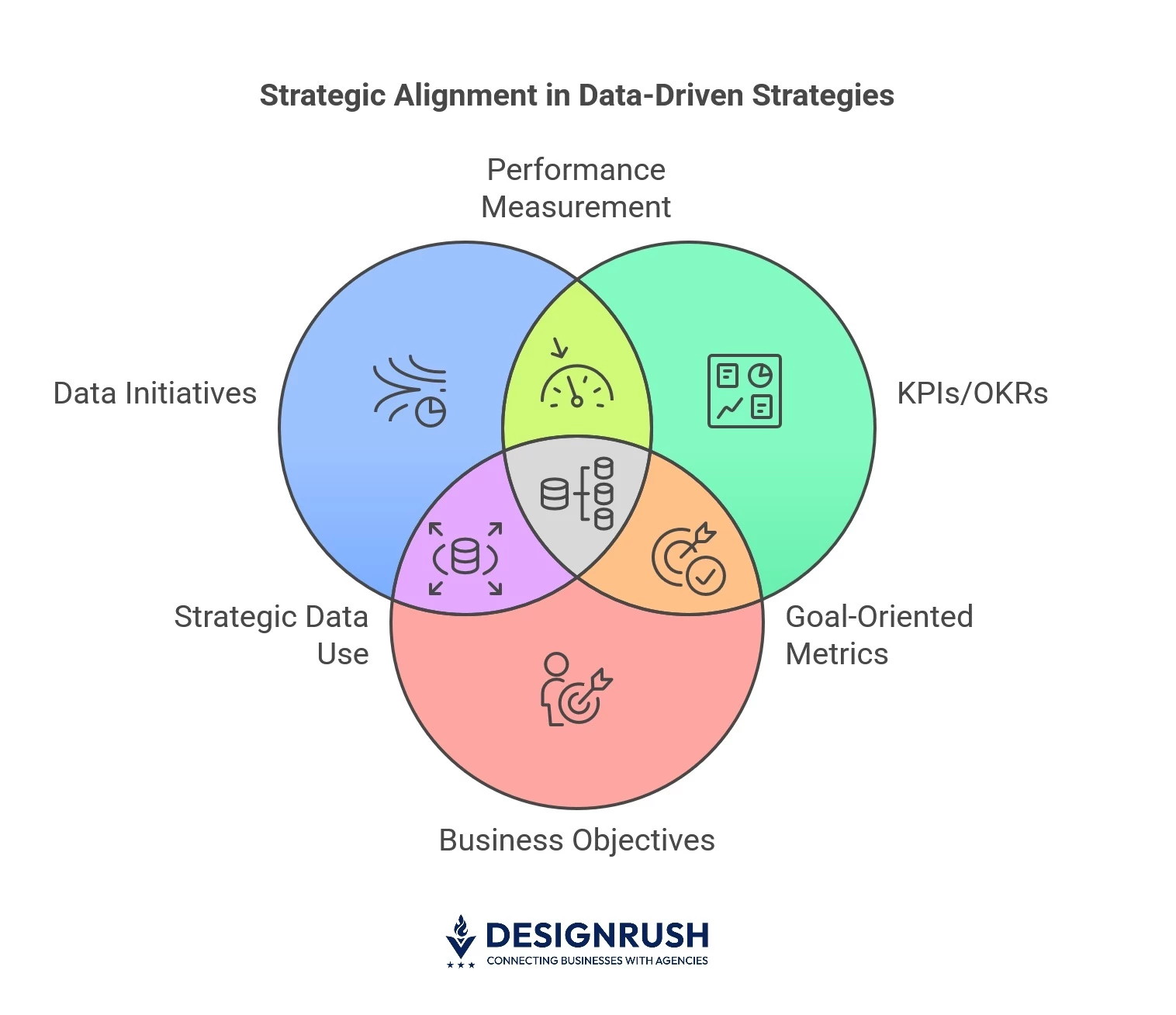
Without clear alignment to business goals, data initiatives often become isolated technical projects that fail to drive meaningful impact. To deliver real business value, every data-driven effort must be strategically linked to the organization's core objectives, such as revenue growth, client retention, operational efficiency, or customer experience.
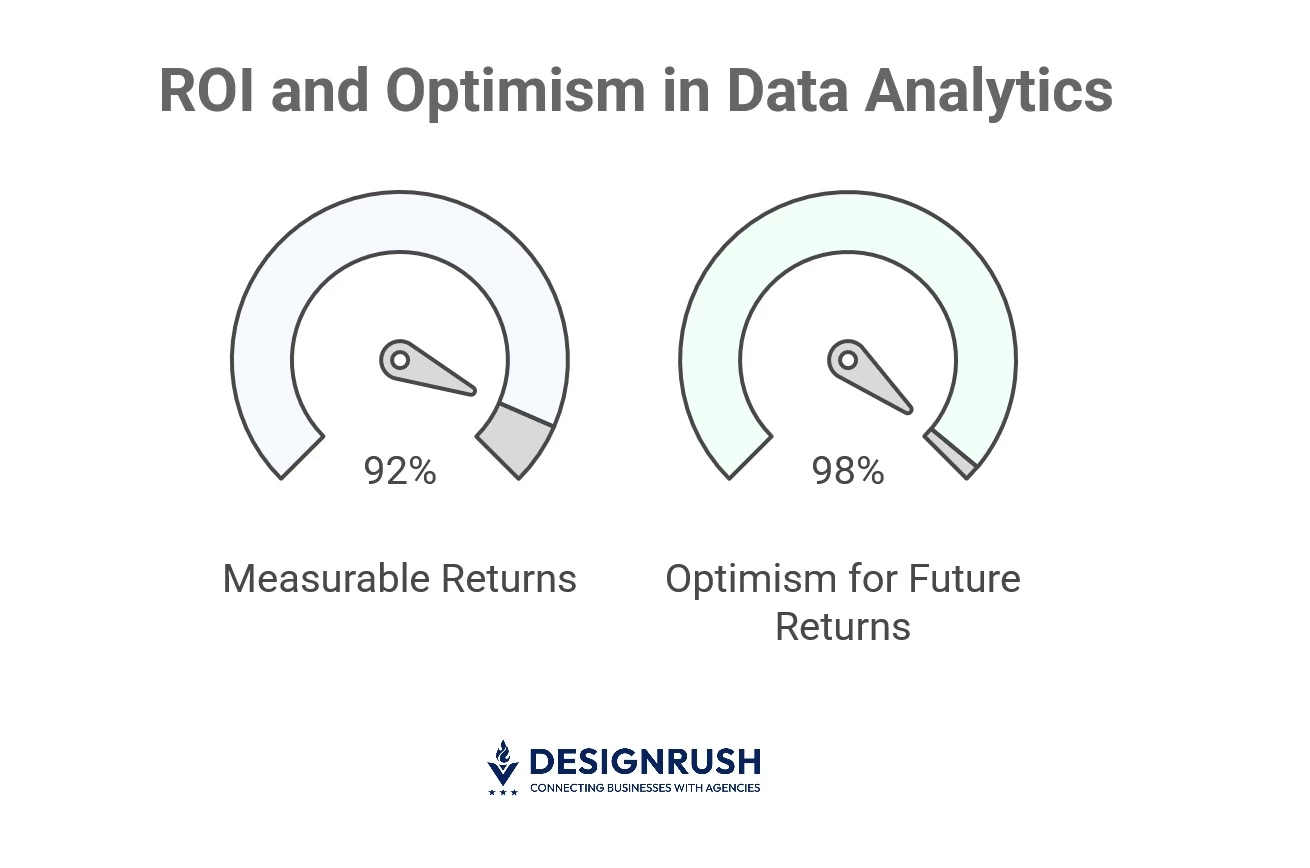
But getting it right pays dividends. MIT Sloane reports that in 2023, 92% of Chief Data Officers (CDOs) and Chief Data and Analytics Officers (CDAOs) reported achieving measurable business value from their data and analytics initiatives, with 98% expressing confidence in securing even greater returns moving forward.
Steps to drive strategic alignment and execution:
- Tie data projects to business KPIs and OKRs: Link each data initiative directly to measurable business outcomes (e.g., marketing analytics to CAC reduction or sales forecasts to revenue growth) to ensure they drive organizational goals.
- Establish cross-functional collaboration: Form cross-functional data teams with representatives from key departments, and hold regular meetings to align on priorities, track progress, and ensure consistent use of data-driven insights.
- Centralize data with unified dashboards: Deploy platforms like Tableau Embedded Analytics to aggregate and centralize key business data, ensuring that all stakeholders access a single, consistent source of truth for decision-making.
- Host Quarterly "Data Days": Organize regular cross-departmental events where teams can collaborate, review key data insights, and strategize on how to apply them, helping to foster a stronger, unified data-driven culture.
- Implement Live Executive Dashboards: Develop real-time dashboards to track mission-critical metrics such as CAC, LTV, client retention rates, and ROAS, giving leadership up-to-the-minute insights to make informed, timely decisions.
Emerging Trends Shaping the Future
Things are moving quickly on the data front, and forward-thinking organizations must stay ahead of emerging technologies that will reshape how data is collected, processed, and leveraged. These trends promise to unlock new efficiencies and redefine competitive advantages over the next decade.
Emerging architectures:
- Data mesh: Decentralizes ownership to domain teams, promoting agility and scalability.
- Hybrid and multi-cloud: Balances security and flexibility while mitigating vendor lock-in.
Bleeding-edge trends include:
1. Synthetic Data
As data privacy concerns grow, synthetic data creates realistic datasets for AI training without exposing sensitive information. It helps organizations innovate faster while minimizing compliance risks and bias.
For instance, Apple has adopted synthetic data generation techniques to train its AI models, such as Apple Intelligence, by creating synthetic messages that resemble real user content. This approach helps improve AI functionalities like email summarization while adhering to strict privacy standards.
2. Federated Learning
Traditional machine learning requires centralizing data, raising privacy and security concerns. Federated learning, on the other hand, decentralizes AI training, enabling models to learn locally while keeping data secure.
FedKit, an open-source framework, enables federated learning across Android and iOS devices, facilitating collaborative AI model training for applications like health data analysis on university campuses.
3. Privacy-Enhancing Technologies (PETs)
With rising privacy regulations, PETs like multi-party computation (MPC), differential privacy, and homomorphic encryption are essential. They allow businesses to analyze data and build AI models while ensuring compliance and protecting individual privacy.
The European Union utilizes PETs to facilitate secure cross-border data sharing among member states, ensuring compliance with data protection laws while enabling collaborative research and policymaking.
Future Vision: The Rise of Autonomous Businesses
By 2030, the most advanced organizations will operate on self-optimizing, AI-driven ecosystems. These businesses will:
- Leverage AI to optimize client campaigns in real time based on continuously updated data streams.
- Implement predictive revenue forecasting models capable of adjusting strategies dynamically without human intervention.
- Use dynamic pricing algorithms that adapt instantly to changing market conditions, maximizing profitability and client satisfaction.
These capabilities will be fueled by fully integrated, decentralized data ecosystems that merge internal and external data sources seamlessly and securely. Agencies that invest in these emerging technologies today will be the ones dominating their industries tomorrow.
How To Build a Big Data-Driven Organization: Wrapping Up
Transforming into a big data-driven organization is a strategic reinvention, not just a technical upgrade. Organizations that invest in culture, infrastructure, governance, and strategic alignment will dominate their industries in the next decade.
Ready to accelerate revenue growth, reduce client churn, and future-proof your business? Start by finding the expertise you need.

Our team ranks agencies worldwide to help you find a qualified partner. Visit our Agency Directory for the Top Big Data Companies, as well as:
- Top Big Data Consulting Companies
- Top Data Science Companies
- Top AI Companies
- Top Cloud Consulting Companies
- Top Big Data Companies in Dallas
How To Build a Big Data-Driven Organization FAQs
1. What skills are most critical for teams in a data-driven organization?
Teams need a blend of technical skills (e.g., data analysis, visualization, cloud architecture) and soft skills (e.g., data storytelling, critical thinking, and cross-functional collaboration) to fully leverage data initiatives.
2. What are common mistakes companies make when trying to become data-driven?
Common pitfalls include focusing too heavily on technology over culture, underinvesting in data literacy programs, failing to align data initiatives with business goals, and neglecting governance and compliance frameworks.
3. How can small and mid-sized agencies compete with large enterprises in big data initiatives?
By adopting modular, scalable cloud solutions, focusing on targeted high-impact analytics projects, and building agile cross-functional teams, smaller agencies can implement big data strategies efficiently without enterprise-level budgets.