
How To Create an App in 2026: Key Findings
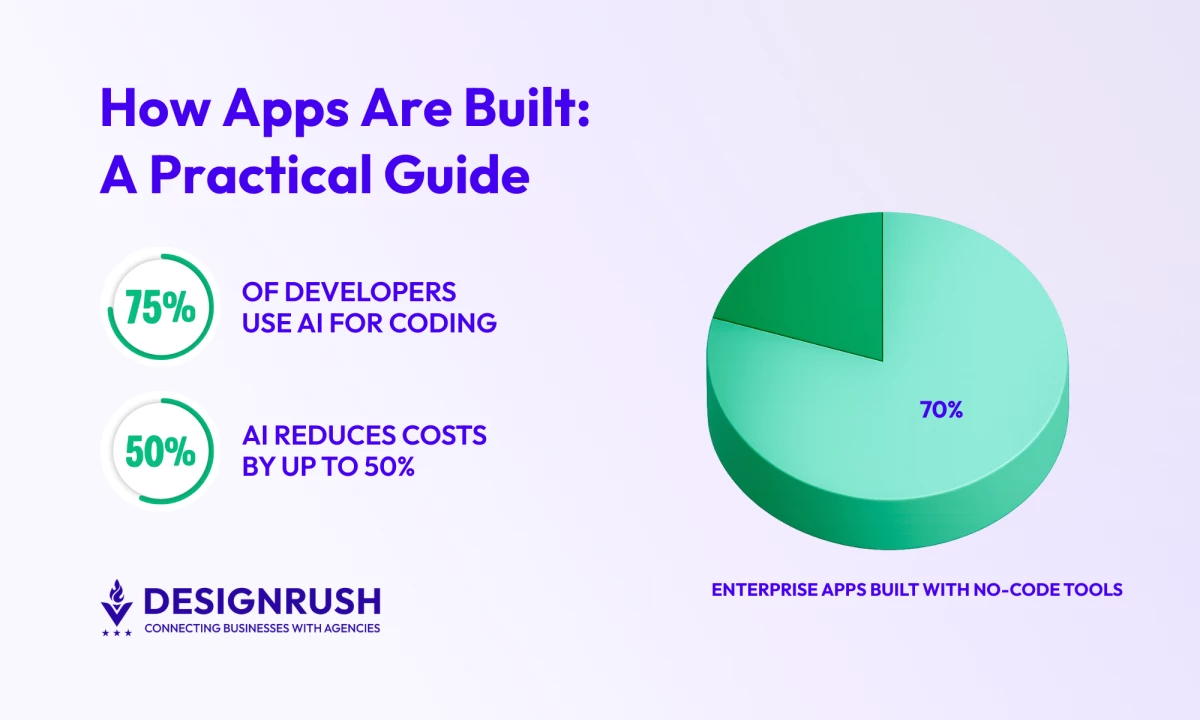
- By 2025, 70% of new enterprise apps will be built using low-code/no-code tools, and over 75% of developers are using AI coding assistants.
- Low-code app development tools cut down MVP development time to 2 to 6 weeks and reduce costs by up to 50%.
- Apps that use AI-powered personalization and predictive analytics see significantly higher engagement and retention.
Companies leading the app development market are delivering high-impact digital products that drive revenue, accelerate time-to-market, and strengthen client value. With AI-assisted development and low-code platforms, what once took months now happens in weeks.
Strategic Overview: What Businesses Need to Know Before Building an App in 2026
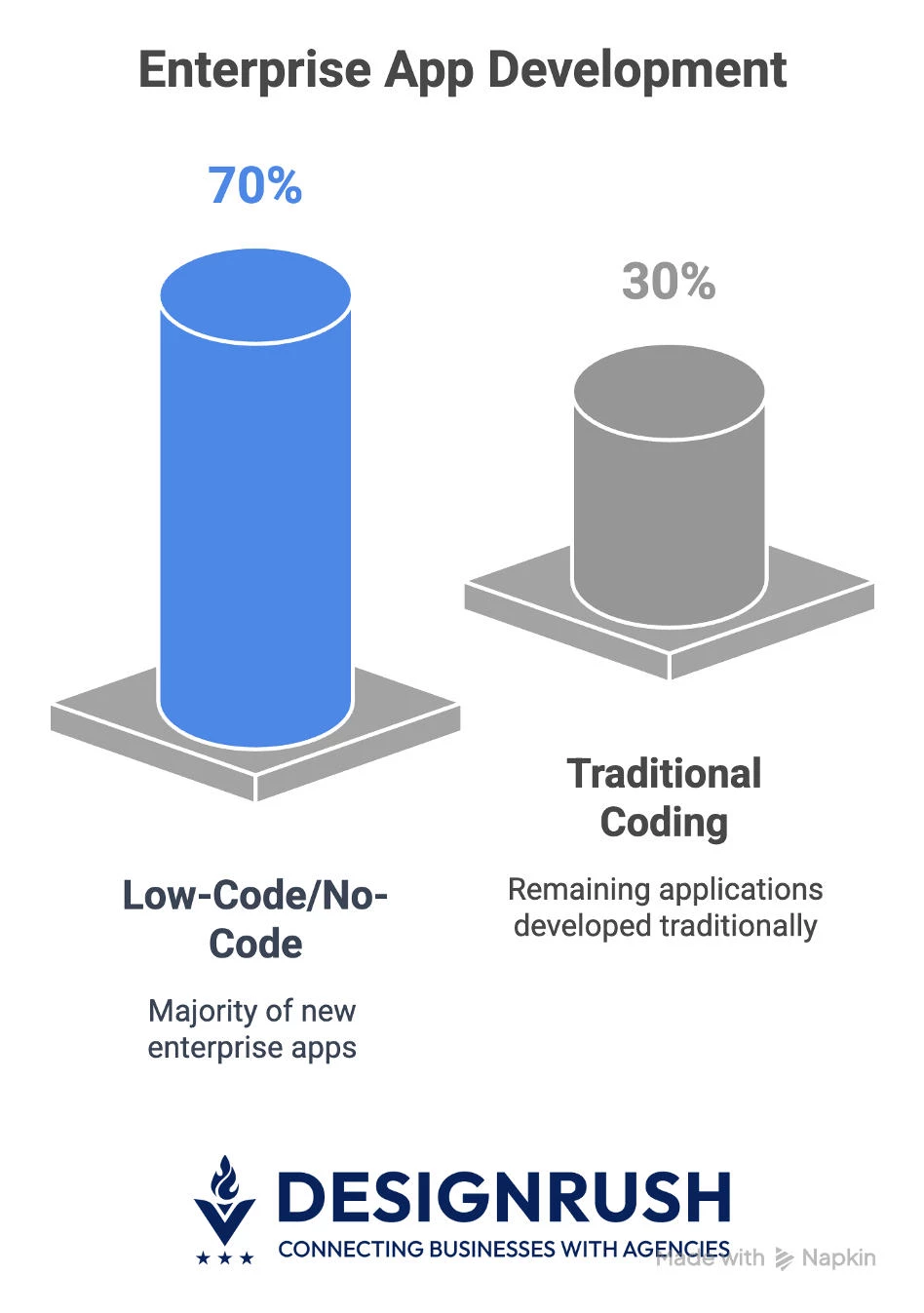
App development in 2026 is shaped by shifting client expectations, accelerated timelines, and emerging technologies like AI and Web3. Gartner predicts that 70% of new enterprise applications will be developed using low-code or no-code tools in 2025.
Meanwhile, over 75% of developers are already leveraging AI coding assistants — a signal that digital innovation is no longer a luxury, but a competitive requirement.
This section outlines the key market forces, revenue opportunities, and operational challenges you must navigate to stay competitive.
- The tech stack has evolved: Modern platforms like FlutterFlow, Backendless, and AI-enhanced IDEs now streamline end-to-end app development.
- Expectations have grown: Clients in 2026 expect AI-native features, seamless multi-device support, and very fast iteration cycles. Apps should be personalized for users and feel as polished as a native, platform-specific product.
- Key revenue-driving use cases: Certain app use cases are especially valuable now. Three big opportunities are:
- eCommerce apps with personalization engines: Retail and commerce apps that use AI to personalize product feeds and offers can significantly increase conversion and order value.
- SaaS tools with embedded payments and workflow AI: Apps that integrate payments, subscriptions, and AI-driven automation open new revenue streams and higher average revenue per user.
- Internal productivity apps that cut operational cost: Custom internal apps (for workflows, analytics dashboards, etc.) that use AI to automate tasks directly reduce labor expenses and are often sold on a value (cost-savings) basis.
- Challenges to solve: Along with opportunities, agencies face new challenges in 2025 app development:
- Maintaining enterprise-grade security in low-code builds: Robust security practices (like OAuth2 with biometric login, encryption, etc.) are crucial when using rapid development platforms.
- Integrating scalable AI without bloat: It’s important to choose the right AI APIs or frameworks so the app scales to many users without huge cloud costs or latency.
- Meeting compliance and accessibility standards globally: Apps must comply with GDPR, CCPA, and emerging AI regulations across markets. They must also follow the latest accessibility guidelines to serve all users.



Step-by-Step Guide To Building an App in 2026
This step-by-step guide walks you through the 2026-ready process of building an app, from planning and tooling to launch and scale.
- Step 1: Create your app strategy
- Step 2: Choose your tech stack
- Step 3: Design for the AI-native user
- Step 4: Build, automate, secure
- Step 5: Launch, scale, monetize
Step 1: Create Your App Strategy
Align the app’s goals with your business outcomes. Define how it will make or save money, whether through increasing customer lifetime value (LTV), reducing churn, improving conversion rates, etc.
Set clear key performance indicators (e.g., target LTV, cost per acquisition, revenue per user, or churn reduction metrics) that the app is expected to influence.
Ivan Đikić, VP of Engineering at Infinum, emphasizes that having a clear strategy is just the beginning; execution and quality are what ultimately set apps apart:
“Building an app may seem like a simple affair — and in some cases, it is — but to build a custom app that truly resonates with the end users and meets market demands is anything but.
In today’s super-saturated market, customers have very high expectations, and if your app is not up to par, they won’t wait long before turning to the competition.
That’s why we’d always recommend partnering up with experts you trust. They will guide you on that journey and make sure your launch is followed by success.”
Step 2: Choose Your Tech Stack
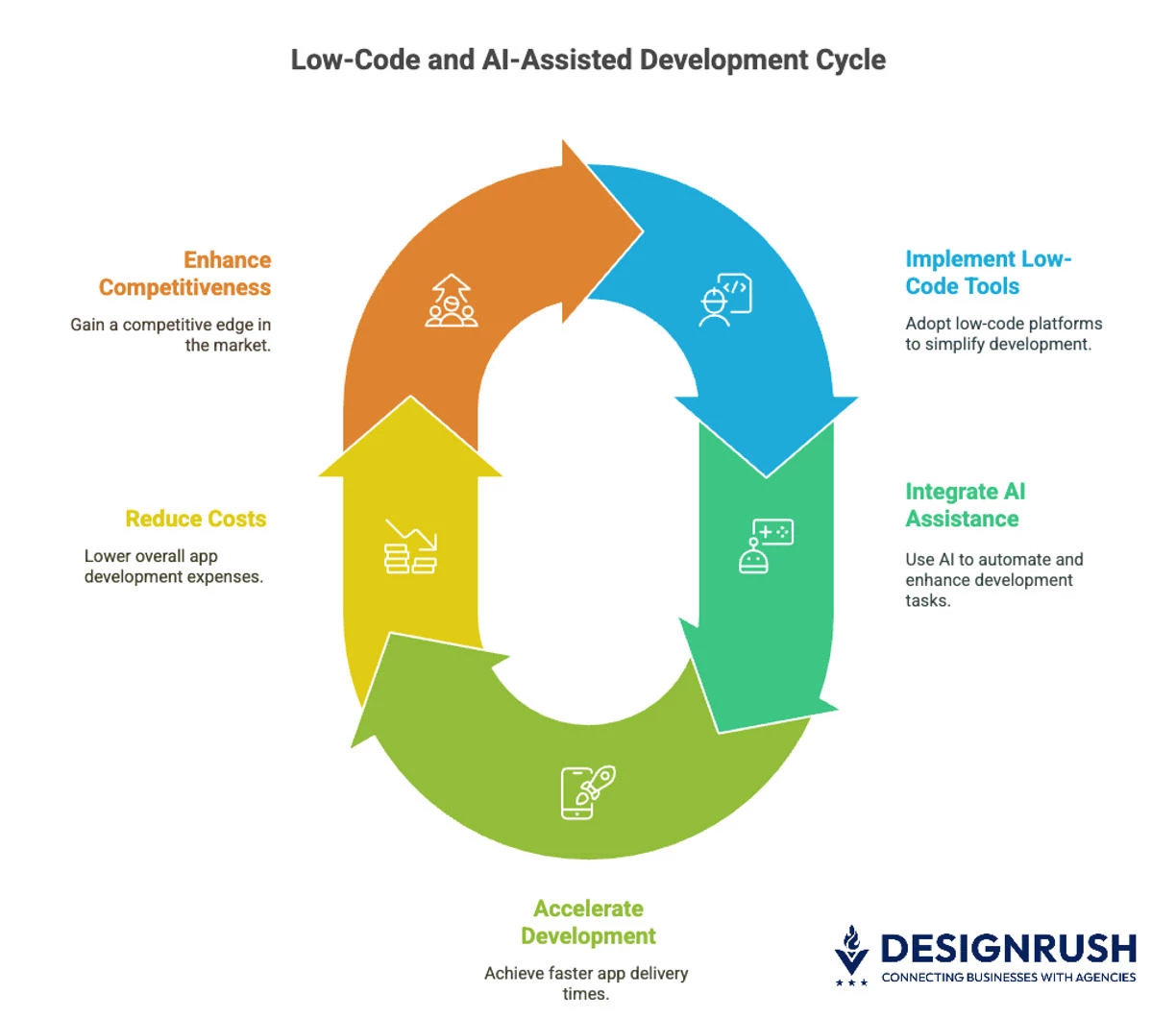
Low-code and AI-assisted development means teams can deliver complex apps more quickly than ever: in some cases, 40% to 60% faster than traditional methods.
Embracing these new tools is crucial for staying competitive on timelines and app development costs.
Cross-Platform Frameworks
Modern cross-platform frameworks have matured to deliver near-native performance. Three leading options in 2026 are:
- Flutter: Google’s Flutter is a lightning-fast UI toolkit with full support for web and desktop, making it ideal for apps that need rich, real-time interfaces across platforms.
- React Native: React Native has a vast number of libraries and community packages for faster implementation of common features.
- Kotlin Multiplatform: Kotlin Multiplatform allows reuse of business logic across Android, iOS, and web. It’s great when the project is Android-first with support for iOS/web without maintaining separate codebases.
Low-Code & No-Code Tools
Not every app needs to be coded from scratch. In 2026, low-code and no-code platforms can dramatically speed up development for certain projects, especially MVPs and internal tools:
- Bubble: A visual web-app builder well-suited for quickly creating SaaS web applications or startup MVPs. Bubble allows drag-and-drop UI design and workflow logic without writing code.
- OutSystems: An enterprise-grade low-code platform that enables visual development, often used by agencies serving finance, insurance, or government clients where compliance and robust testing are key.
- Backendless: A no-code/serverless backend platform for powering the backend without having to set up servers. You can implement business logic with a flowchart-style interface to cut down development time.
AI-Powered Development Assistants
Coding in 2026 can also be augmented by AI-powered app development tools and smart automation:
- GitHub Copilot X: The evolved version of GitHub’s AI coding assistant generates code snippets or entire functions based on comments or natural language prompts, and it can explain and refactor code.
- Replit Ghostwriter: This tool builds and deploys small services or prototypes. You can paste an API documentation and ask it to generate an integration, then it will produce working code and deploy it in the cloud.
- Framer AI: You can use this tool to go from high-fidelity product prototype to a responsive web page in a fraction of the time, then integrate the page with back-end logic.
Step 3: Design for the AI-Native User
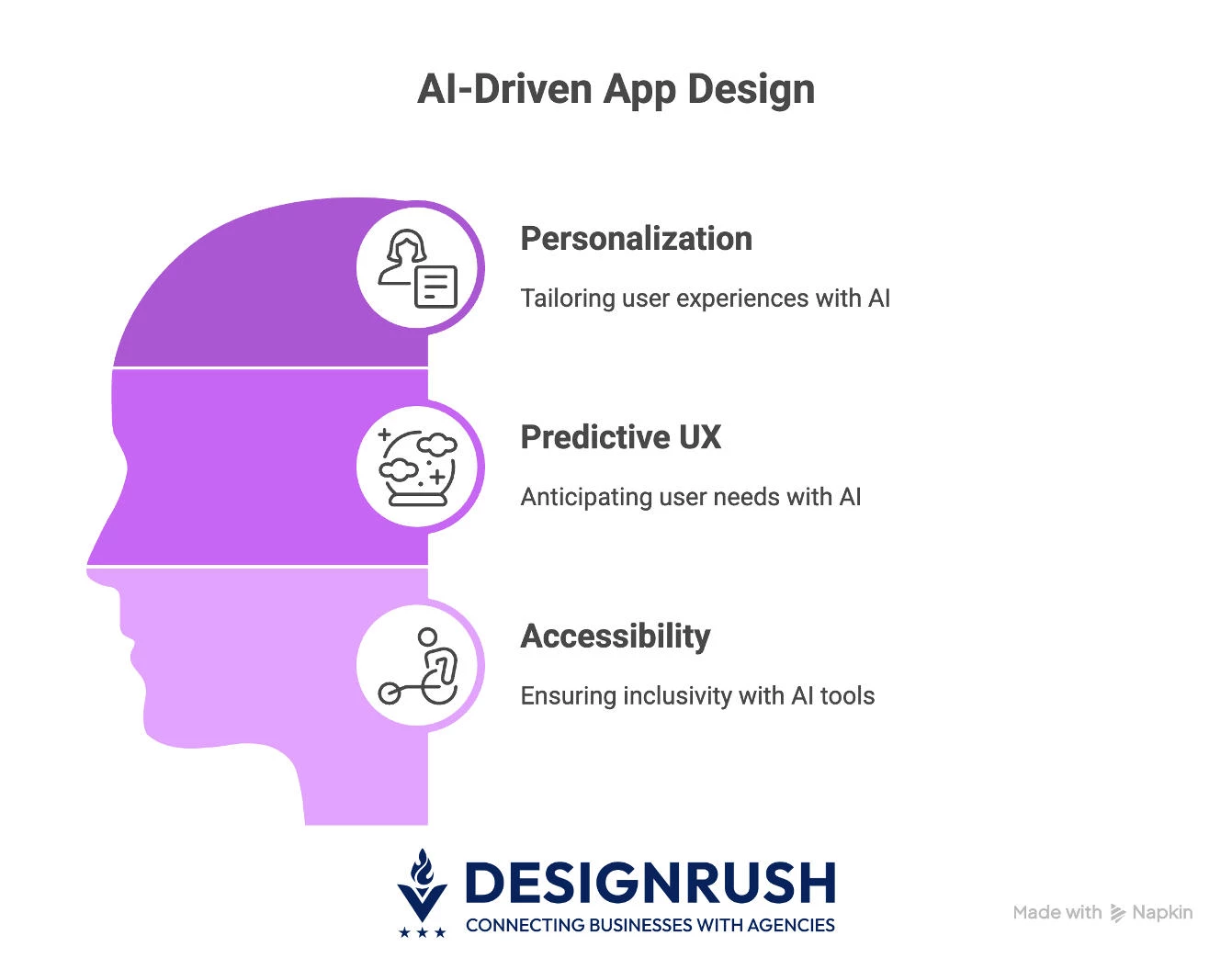
In 2026, great app design means anticipating user needs and creating interfaces that can adapt on the fly. Two priorities stand out: personalization and accessibility, both enhanced by AI.
Personalization and Predictive UX
Personalization has been shown to improve engagement significantly — real-world cases show double-digit percentage increases in usage when interfaces adapt intelligently to users. The key is to incorporate AI outputs gracefully.
Modern UX design also uses AI to build predictive interfaces that can offer what users need before they explicitly search for it. This could mean a music app generating a “Monday Morning Playlist” or a project management tool automatically highlighting tasks likely to be urgent.
Accessibility as a Baseline
Developers must follow Web Content Accessibility Guidelines 3.0 as a baseline, which means ensuring text is resizable, color contrasts are sufficient, the app supports keyboard navigation and screen readers, and so on.
In 2026, AI tools can assist here, too: there are automated accessibility scanners that use computer vision and NLP to detect potential issues (like an AI that flags low-contrast text or missing alt text on images).
Step 4: Build, Automate, Secure
Once planning and design are set, the focus shifts to implementation and deployment, with an emphasis on automation and security.
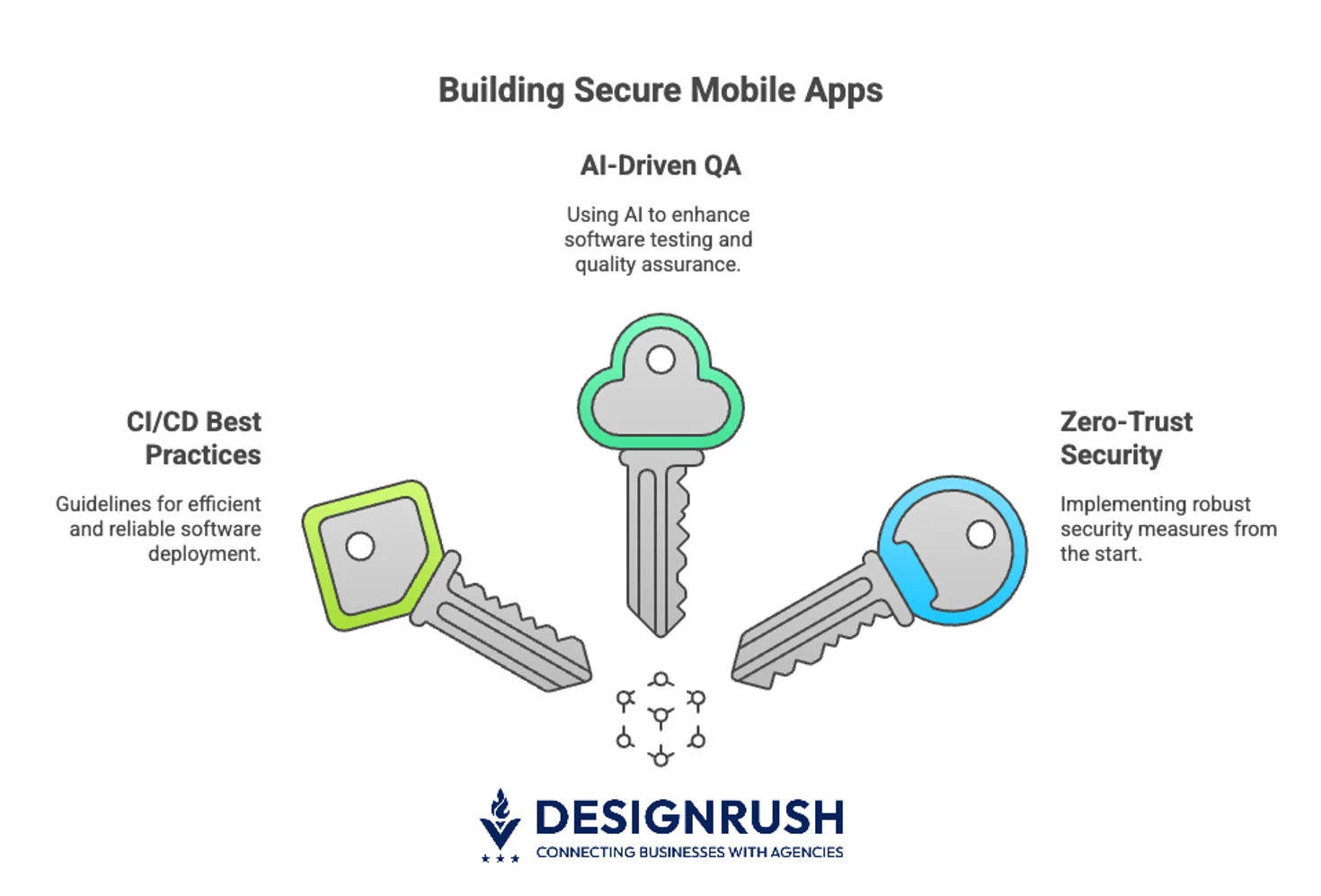
CI/CD & Deployment Best Practices
For Continuous Integration/Continuous Deployment, follow these best practices:
- Keep builds atomic and reversible — every release should be deployable, rollback-ready, and modular.
- Use feature flags and canary releases to test features in production without full rollout risk. Launch new features to a limited user base and gather real-time insights before committing to a full release.
- Adopt Infrastructure as Code (IaC) for consistent environments across development, staging, and production. With IaC, your infrastructure is version-controlled, repeatable, and auditable.
- Prioritize security early by integrating automated vulnerability scans and secret detection into your pipeline. Catching vulnerabilities pre-release is exponentially cheaper (and less damaging) than fixing them post-launch.
AI-Driven QA and Testing
Quality assurance is another area supercharged by AI. Instead of relying on manual testing or writing huge suites of scripted tests, agencies now incorporate AI-based testing tools.
- Testim uses AI to create and maintain automated UI tests for web apps and can adapt to minor UI changes, reducing false failures.
- Katalon Studio and others have AI that analyzes test execution and suggests additional test cases or identifies which test cases are most likely to catch new bugs.
- Bitrise is great for mobile CI/CD, as it provides end-to-end automation including running unit tests, UI tests on real device clouds, and even automated performance testing.
AI can also perform visual regression testing (comparing screenshots to catch visual bugs) much more effectively. The result is that developers can maintain high app quality even with rapid release cycles.
Still, technology alone isn’t enough. As Unico Connect’s Lead Mobile App Engineer, Zubin Gala points out, testing must also prioritize the user:
"Testing early and often ensures you’re creating something that truly resonates with your audience, refining both functionality and user experience. An iterative approach not only improves engagement but also prevents costly fixes down the line."
Zero-Trust Security Architecture
With increasing cybersecurity threats and privacy regulations, security must be built into the app from day one. The modern approach many developers follow is Zero Trust: assume no request or user is inherently trustworthy, even if it’s from inside the system, and verify everything.
Routinely use AI-driven security tools: integrate static code analysis, run penetration tests (some AI-powered pen-test services can continuously probe your app for vulnerabilities), and prepare an incident response plan.
Step 5: Launch, Scale, Monetize
The app is built, now it’s about getting it into users’ hands, scaling it reliably, and ensuring it meets business objectives through smart monetization and growth tactics.
App Store Optimization (ASO) with AI
Getting an app noticed in crowded app stores requires continuous optimization of your listing. You can leverage AI for the following:
- Generate and test app store metadata
- Create visual assets (screenshots or preview videos) to attract more downloads and boost app promotion
- A/B test app store listing variants
Dynamic Monetization Models
Here are the leading monetization approaches top-performing apps are using:
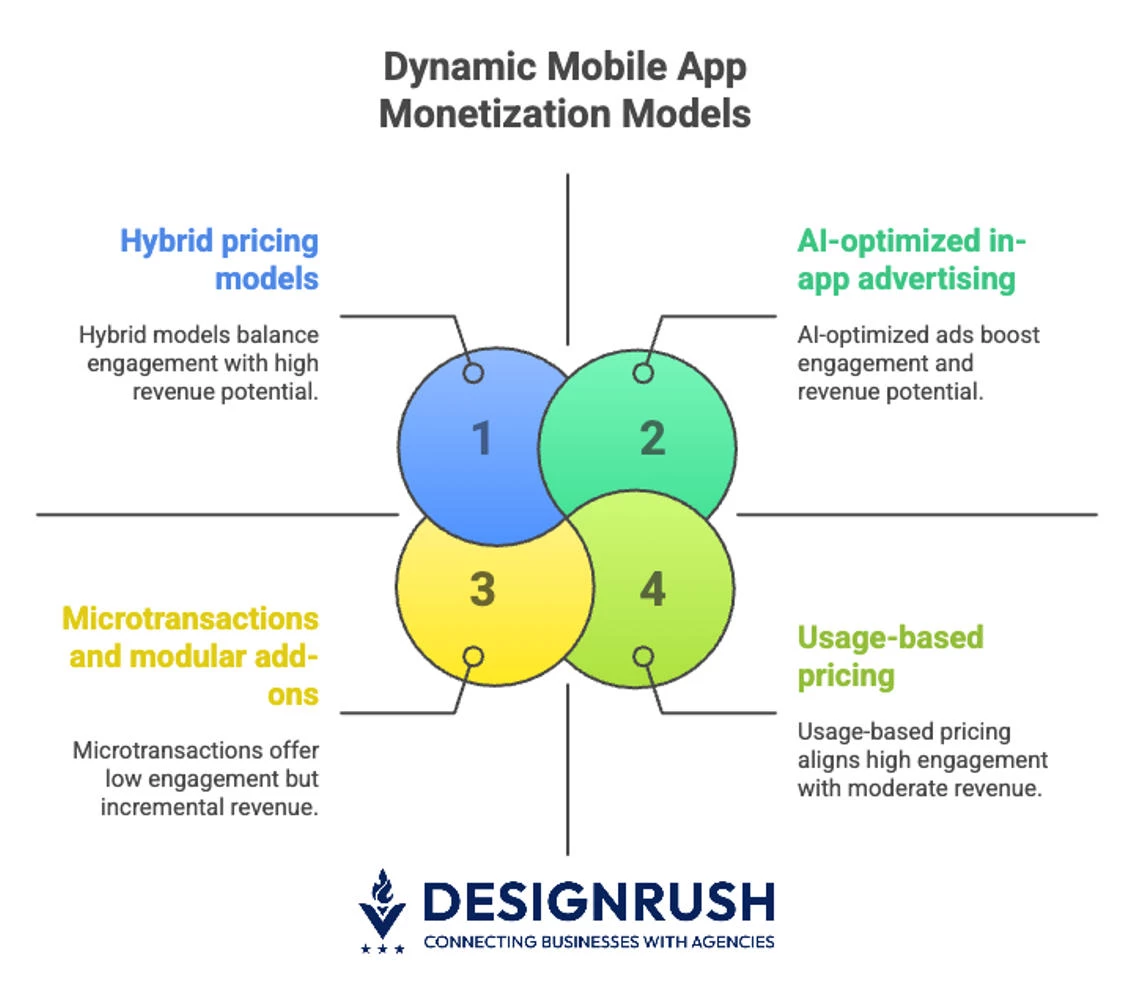
- Hybrid pricing models: Combine free access with in-app purchases, ads, or premium subscriptions to serve casual and power users.
- AI-driven personalized paywalls: Use behavioral data to trigger upgrade prompts at the right moment with custom messaging, improving conversion rates without disrupting UX.
- Usage-based pricing: Ideal for B2B apps or API-driven tools, this model charges based on actual usage, aligning price with perceived value.
- Microtransactions and modular add-ons: Let users pay incrementally for specific features or extended limits, lowering the entry barrier and increasing ARPU over time.
- AI-optimized in-app advertising: Transform ads into personalized content by using AI to match users with high-relevance offers, improving both engagement and ad revenue.
Product Analytics & Growth Loops
Launching the app is just the beginning; continuous improvement through data is critical.
Implement robust analytics from day one. Tools like Mixpanel, Firebase Analytics, or Amplitude enable user behavior tracking in detail (funnels, retention cohorts, feature usage, etc.). In 2026, these analytics platforms also incorporate AI-driven insights.
Using predictive analytics, you can set up alerts for when a user is likely to churn (e.g. they haven’t logged in for 10 days and usually they log in daily). At that trigger, have an automated but personalized message sent to re-engage them — maybe a special offer or simply a reminder of new features.
These growth tactics, driven by data and AI, help maximize LTV and ensure the app continues to grow post-launch.
How To Create an App in 2026: Wrap-Up
The playbook is clear: use AI and low-code to deliver fast, iterate continuously based on data, and position yourself as a long-term growth partner to clients.
Ready to elevate your agency’s app development game? Contact an expert app development team today to bring your vision to life!

Our team ranks agencies worldwide to help you find a qualified partner. Visit our Agency Directory for the top app development companies, as well as:
- Top Cross-Platform App Development Companies
- Top Enterprise Mobile App Development Companies
- Top Android App Development Companies
- Top AI App Development Companies
- Top App Developers In San Francisco
Our team also showcases top creative talent on the Design Awards page, so be sure to check it out for the best and latest in app design.
How To Create an App in 2026: FAQs
1. What’s the average timeline to launch an MVP in 2026?
With AI-assisted coding and low-code platforms, MVPs can typically be launched in 2 to 6 weeks. A small, focused team can rapidly prototype, test, and deploy using prebuilt components and automation, saving months compared to traditional methods.
2. What’s the biggest trend in app development right now?
AI-native functionality is leading the charge: apps now personalize content, UI, and workflows automatically based on user behavior. Web3 is also gaining traction, especially in loyalty programs and token-based communities that deepen user engagement and retention.
3. How much does it cost to build an app in 2026?
Costs range widely depending on complexity, but AI tools and no-code platforms can reduce development budgets by 30% to 50%. Expect to spend $10K to $50K for MVPs, while enterprise-grade apps may exceed $100K.
How DesignRush’s Marketplace Can Help You Create an App
DesignRush Marketplace connects businesses with top agencies that can complete a project or provide a certain service that a company needs. If your company is looking to develop and market a mobile app, we can find the right agency for the job!
Tell us about your project and we will curate a list of up to 5 most qualified agencies out of 15,000+ in our directory that can create an app to your requirements and for any platform. Best of all — it's free!