-details-webp.webp)

Picking the perfect digital marketing agency goes beyond ticking boxes; it’s about finding a partner who truly understands your business and delivers real results. We’ll show you how to assess agencies, spot red flags, and build a partnership that drives success.
Choosing a Digital Marketing Agency: Key Points
- Choose an agency aligned with your goals and marketing maturity, focusing on clear KPIs like CAC and LTV to ensure measurable results, not vanity metrics.
- Evaluate agencies for strategic fluency, full-funnel skills, and data-driven, customized approaches, not generic pitches or buzzwords.
- Select a partner with strong cultural fit, scalability, innovation, and strategic advisory capabilities to future-proof your marketing success.
Choosing a Digital Marketing Agency Overview
1. What Does a Digital Marketing Agency Do?
2. Types of Digital Marketing
3. 12 Best Marketing Agency Tools
Digital now makes up 61.1% of the average marketing budget. With such a large share of spend, your agency isn’t just a vendor but a key partner in driving market share, managing CAC, and fueling growth
1. Align Agency Selection With Business Objectives
Focus your agency search by aligning goals, marketing maturity, and KPIs.
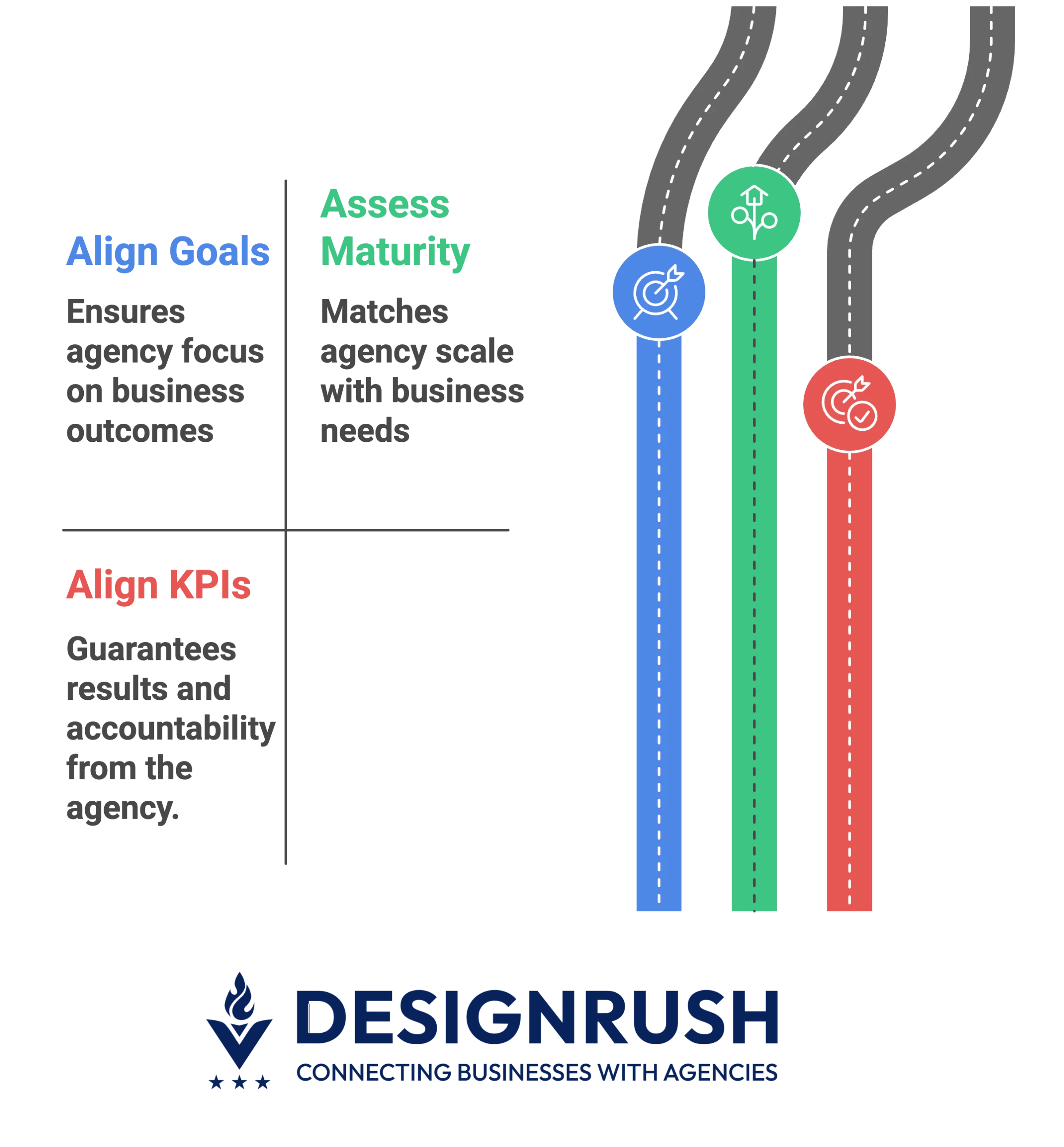
- Define short-term vs. long-term goals
- Understand internal marketing maturity
- Align KPIs with agency deliverables
1.1. Define Short-Term vs. Long-Term Goals
Be crystal clear on your primary outcomes. Whether you’re focused on ad spend efficiency or long-term brand equity, goal clarity will quickly filter out mismatched agencies.
In practice, use business outcomes — not just deliverables — as your evaluation lens.
Share both your short-term KPIs (e.g., demo signups, CPL, CAC) and long-term KPIs (e.g, organic LTV growth, brand lift) and demand that they respond with relevant case studies or strategies for each.
1.2. Understand Internal Marketing Maturity
An honest assessment of your in-house marketing maturity will also narrow the field:
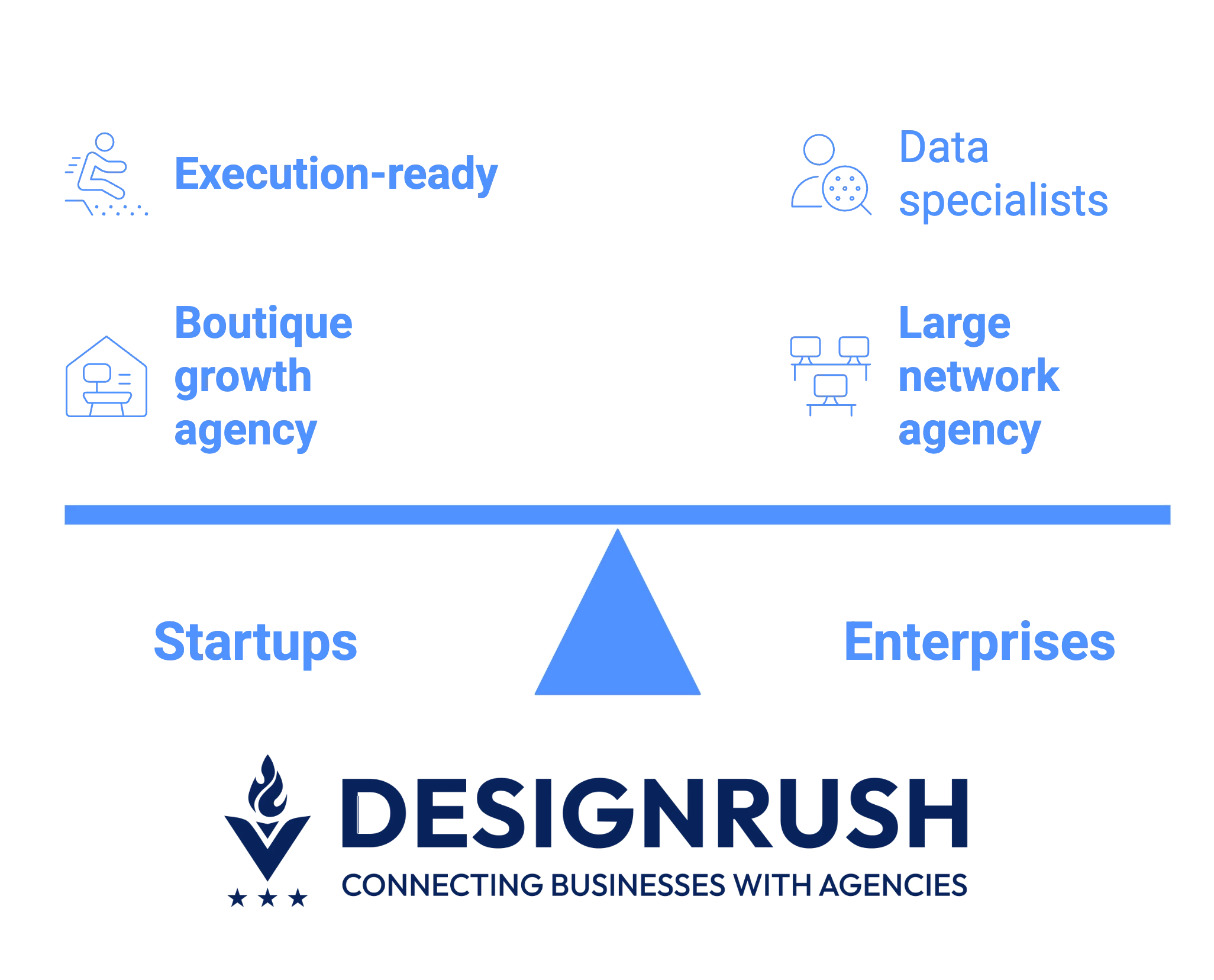
- Startups: Likely need execution-ready generalists — agile “doers” who can handle iterative testing and rapid pivots across channels. A boutique growth hacking agency might shine here.
- Enterprises: Require specialists with deep data capabilities, scalable reporting infrastructure, and experience orchestrating large multi-channel programs.
Engaging an agency at the wrong maturity level is a recipe for churn. If you’re a lean startup and hire a big-network agency that expects you to have a sophisticated content engine and CRM integrations on day one, you’ll struggle.
Conversely, enterprise teams will outgrow a small agency’s resources fast. Strategic misalignment on this front is a leading cause of early agency breakups, so make sure the agency’s scale fits yours.
1.3. Align KPIs With Agency Deliverables
High-performing partnerships share one common trait: measurable outcomes. Both you and the agency should be speaking in terms of results, not just activity.
Anchor early conversations around metrics like:
- Customer Acquisition Cost (CAC)
- MQL-to-SQL conversion or velocity
- Revenue per channel or ROAS
- Funnel conversion rates by stage
If an agency’s proposal is loaded with talk of “impressions” and “reach” with no mention of how those translate to pipeline or revenue, consider it a red flag.
In other words, top agencies will happily discuss how they connect awareness to lead gen to sales. For example: by setting up GA4 events, CRM integrations, and multi-touch attribution models, etc.
If they can’t, or won’t, provide that level of accountability, it’s a sign their priorities might not align with yours. Reject proposals that showcase vanity metrics without funnel attribution or ROI projections.


2. Evaluate Core Capabilities and Strategic Fluency
2.1. Must-Have Capabilities in Modern Agencies
In 2026, your agency should bring more to the table than basic ad buying or a menu of siloed services. Look for core competencies beyond the surface:
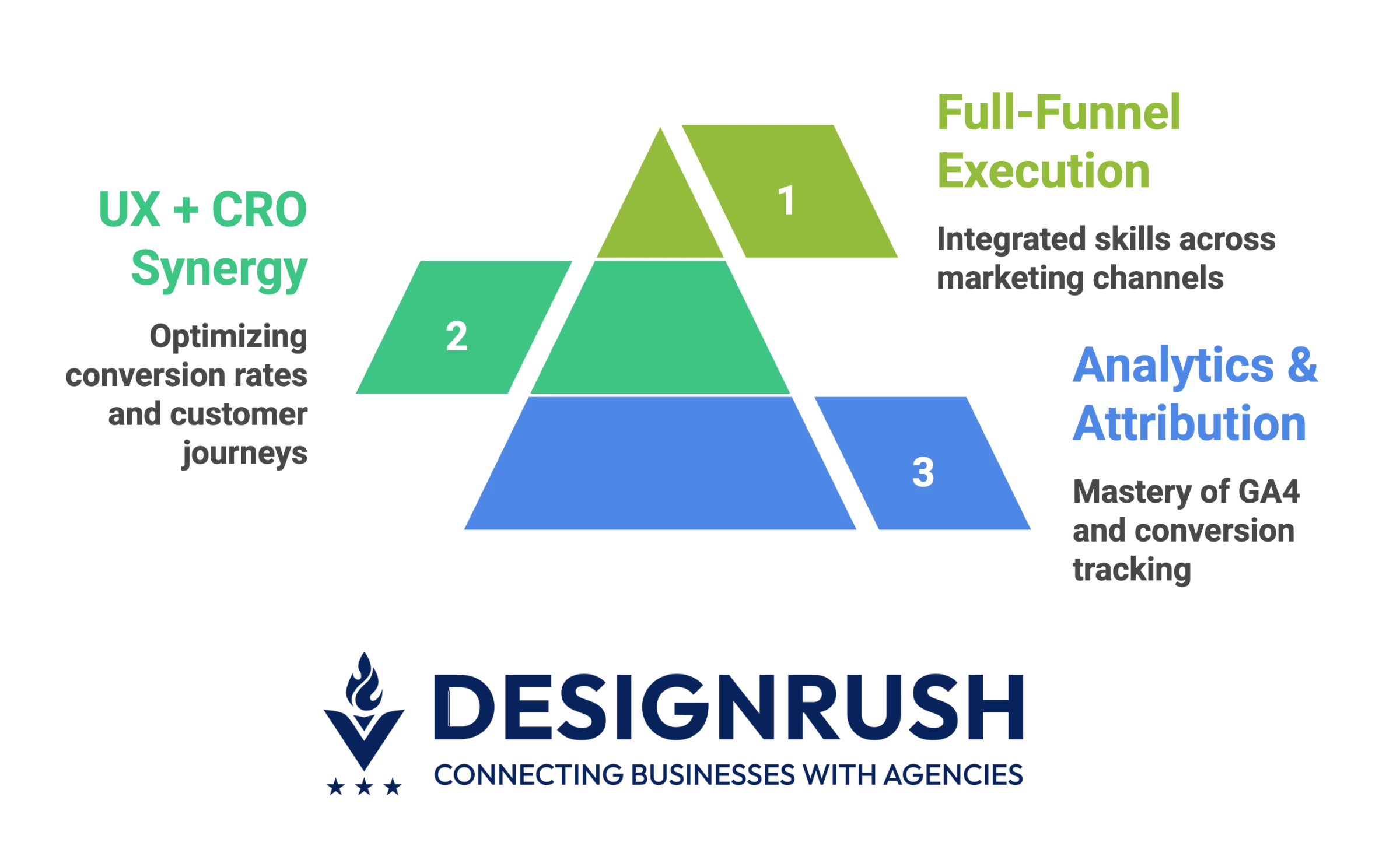
- Analytics & attribution: Mastery of GA4 and conversion tracking, CRM syncing, and the ability to build multi-touch attribution models. Your agency should prove it can connect the dots from first touch to final sale.
- UX + CRO synergy: An eye for conversion rate optimization and customer journey mapping. Driving traffic is only half the battle; can they also improve your landing page conversion rates, checkout flow, or lead nurture path?
- Full-funnel execution: Truly integrated skills across SEO, PPC, social, email, retargeting, and content. Modern campaigns require interplay (e.g., linking an SEO content strategy with paid retargeting).
These are baseline requirements for a revenue-driven marketing team. An agency might bill itself as PPC specialists or content gurus, which is fine, but ensure they have a plan (and partners or sub-specialists) to address the rest of the funnel.
A Facebook Ads agency that can’t advise on landing page A/B testing, for instance, will leave ROI on the table.
2.2. Red Flags To Watch For
As you evaluate agencies’ pitches and materials, keep an eye out for warning signs of shallow capability or misalignment:
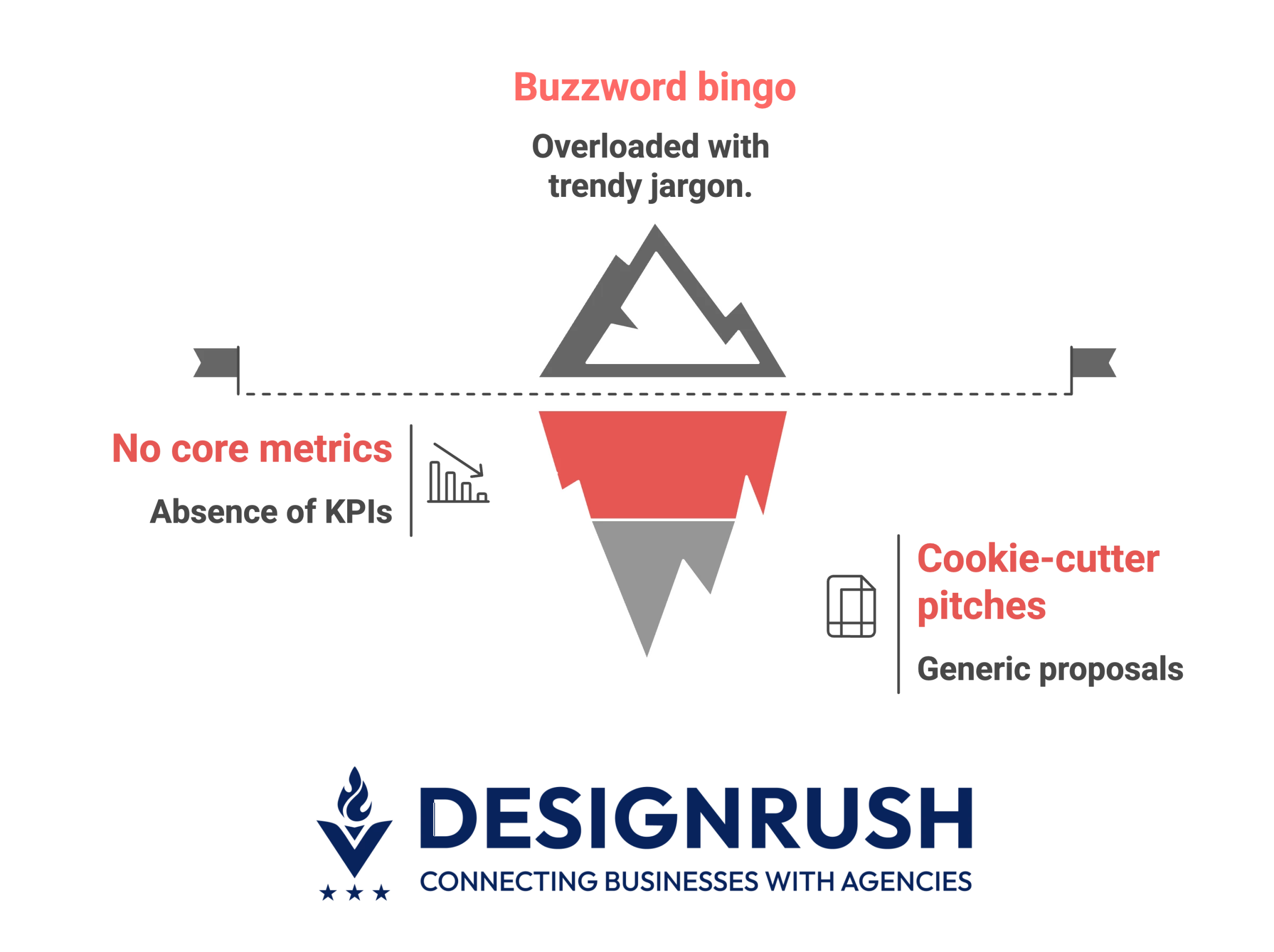
- Buzzword bingo: Slick decks overloaded with trendy jargon (“omnichannel synergies,” “growth hacking ninja”) but lacking real metrics or clear strategies. If you can't get a straight answer on impact, it’s all fluff.
- No mention of core metrics: If you don’t hear CAC, LTV, conversion rate, or ROI, be wary. Real growth partners talk performance, not just impressions or followers.
- Cookie-cutter pitches: Generic proposals or portfolios reused across industries. Your business has unique customers and challenges; the agency should acknowledge that in its approach.
Bottom line: An agency worth hiring will demonstrate that they speak your language (business outcomes) and have the chops to execute across the board or intelligently focus where it matters.
Any agency that can’t articulate how they'll make you money doesn’t deserve your money.
3. Conduct a Strategic Discovery Process
Once you have a shortlist of agencies, treat the interview process as a two-way strategic dialogue, not a vendor sales pitch. The goal is to gauge not only their expertise, but also how they think on their feet and collaborate.
- Questions that reveal strategic maturity
- Assess reporting and collaboration protocols
- Clarify pricing & scope before signin
3.1. Questions That Reveal Strategic Maturity
Ask questions that force the agency to reveal how they handle real-world scenarios and adapt strategy. For example:
Question | What a Good Agency Should Say | Red Flags to Watch Out For |
“How would you adjust strategy if early campaign results are underperforming?” | A good agency will talk about data-driven iteration: maybe reallocating budget from one channel to another, testing new creative, or diagnosing funnel drop-offs. | Vague or generic responses like “we’d work harder” or “we’re confident in our approach.” No mention of systematic optimization. |
“What’s your typical time-to-impact for lead gen vs. retention initiatives?” | They outline realistic timelines: e.g., PPC/paid social = 1–2 months, SEO/content = 4–6 months. Look for grounded, experience-based answers. | No clear differentiation between short- and long-term tactics, or overly optimistic projections without qualifiers. |
“How do you integrate our CRM or CDP into campaign reporting?” | They describe syncing data from systems like HubSpot, Salesforce, Marketo to measure revenue impact. Emphasis on closing the loop between marketing and sales. | Only mention tools like Google Analytics, or seem unsure about CRM/CDP integration. Likely working in a silo. |
These questions prompt discussion of growth mechanics, not just campaign tactics. You’re essentially testing if the agency thinks like a strategic partner invested in your outcomes, or just an executor of tasks.
3.2. Assess Reporting and Collaboration Protocols
The best agencies operate almost like an extension of your internal team. During your evaluation, probe how they report and collaborate:
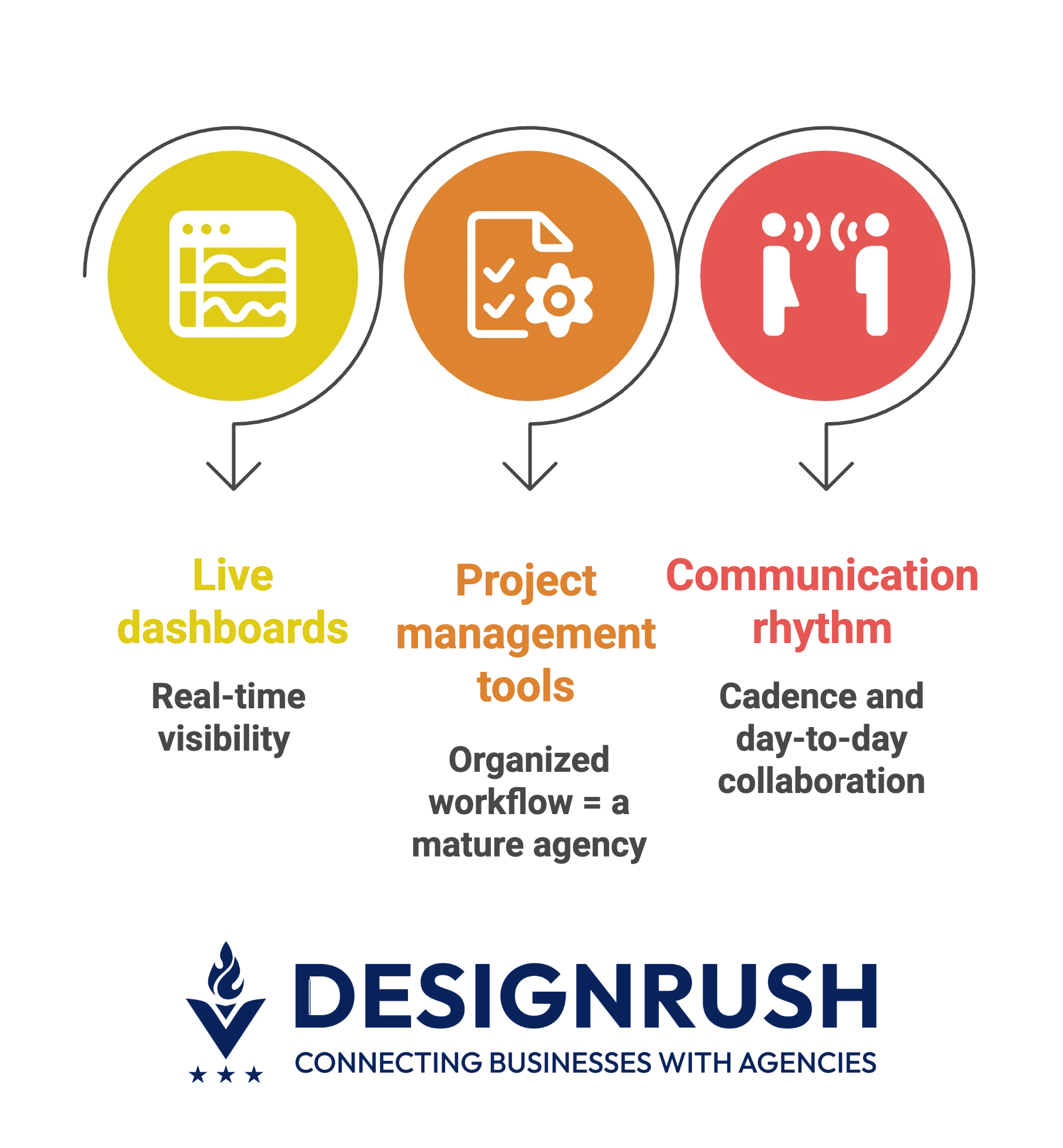
- Live dashboards: Do they offer live dashboards or regular data portals like Databox or Looker Studio? Real-time visibility into performance is invaluable. You shouldn’t have to wait a month to know if a campaign is tanking.
- Project management tools: Check if they use tools like Trello, Asana, or similar tools for managing tasks and requests. An organized workflow is a sign of a mature agency and prevents email chaos where feedback and deliverables get lost.
- Communication rhythm: Confirm their cadence: will there be weekly or bi-weekly check-ins? How is day-to-day collaboration? If your team operates with daily standups, an agency that only wants a monthly phone call will feel out of sync.
As Gabriel Shaoolian, Founder and CEO of Digital Silk, puts it, effective collaboration requires ongoing commitment from both sides:
"A brand has to be ready to allocate time. This is collaboration. When you hire an agency, the agency doesn't go away and does everything. You want to collaborate with them on a weekly basis."
Clarify these protocols before signing, so you know what working together will look like.
3.3. Clarify Pricing & Scope Before Signing
Finally, don’t let the excitement of a great pitch cloud the fine print. Insist on clarity in pricing and scope up front:
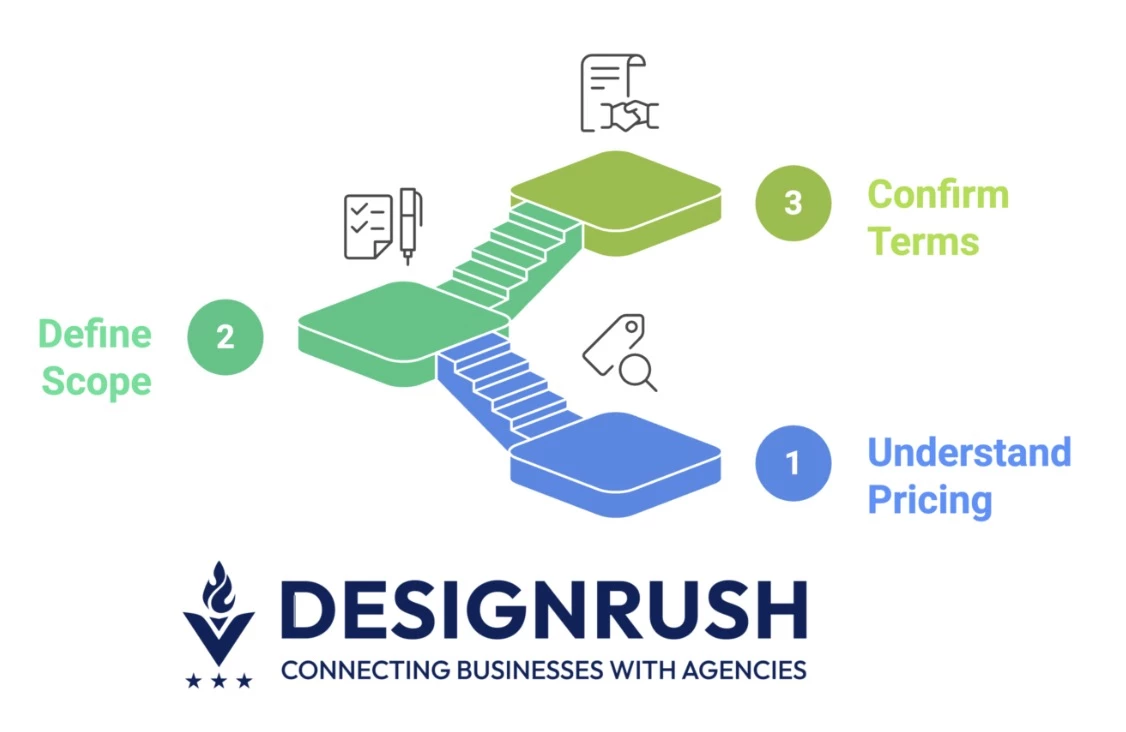
- Pricing models: Understand the structure: retainer, performance-based, or hybrid. If incentives are included, make sure they’re tied to your business outcomes (e.g., CAC or revenue goals, not just ad spend).
- Defined scope & revisions: Get a detailed statement of work. Know exactly what’s included: how many campaigns, creatives, and revision rounds. Clarify if adjustments are part of the process or billed separately.
- Onboarding & exit terms: Ask about onboarding timelines and requirements. Also, confirm there’s a fair termination clause: 30 days is standard. You need flexibility if the fit isn’t right.
A trustworthy agency will document everything. If they avoid a written scope or rush you to sign, take that as a red flag. You’re looking for a partner, not an opportunist.
4. Evaluate Positioning, Proof, and Performance
At this stage, you’re likely down to a few finalists. Now it’s about digging into their track record and seeing if their positioning and promises hold water.
4.1. Demand Outcome-Based Case Studies
Ask for case studies directly relevant to your goals and analyze them critically. Use this simple rubric:
- Problem → Strategy → Outcome: A strong case study should clearly explain the client’s challenge, the strategy deployed, and the measurable result. Look for something like:
- “Client was facing [X]. We implemented [Y]. After [Z] months, [KPI1] improved by [XX%] and [KPI2] by [YY%].”
- Context & benchmarks: Look for comparative context. “3% conversion rate” means little without knowing the baseline or industry average. A better line:
- “We doubled the client’s previous rate and exceeded the 2% industry average.”
- Long-term impact: Results should show sustained success, not just early spikes.
- “Reduced CAC by 32% over 6 months and kept it below baseline” is far more credible than “got 100 leads in the first month.”
If an agency only offers vague wins (“traffic went up”), press for data. Even anonymized results should show measurable value. If they can’t, ask yourself: Are they truly delivering, or just talking a good game?
4.2. Validate Strategic Positioning
Agencies will all describe their “special sauce.” It’s your job to validate those claims:
- Industry or channel focus: If they claim niche expertise (e.g., fintech, SEO), ask what share of their clients fit that profile and request examples. You want proof of repeatable results, plus insights or frameworks they’ll apply to your business.
- What sets them apart: Ask directly, “How do you differ from other similar agencies?” Look for clear answers, like proprietary tools, unique testing methods, or in-house capabilities.
- Process & frameworks: Do they have a structured onboarding plan? A defined audit or funnel-building approach? Agencies that can walk you through a framework are more likely to deliver consistently.
- Check outside sources: Use DesignRush to cross-check claims. Reviews can reveal patterns like missed goals, poor communication, or standout strengths. Don’t just take their word for it; look for proof.
4.3. Don’t Ignore Cultural Compatibility
Facts and figures matter, but so does chemistry. A poor cultural fit can derail even the best strategy. Some considerations:
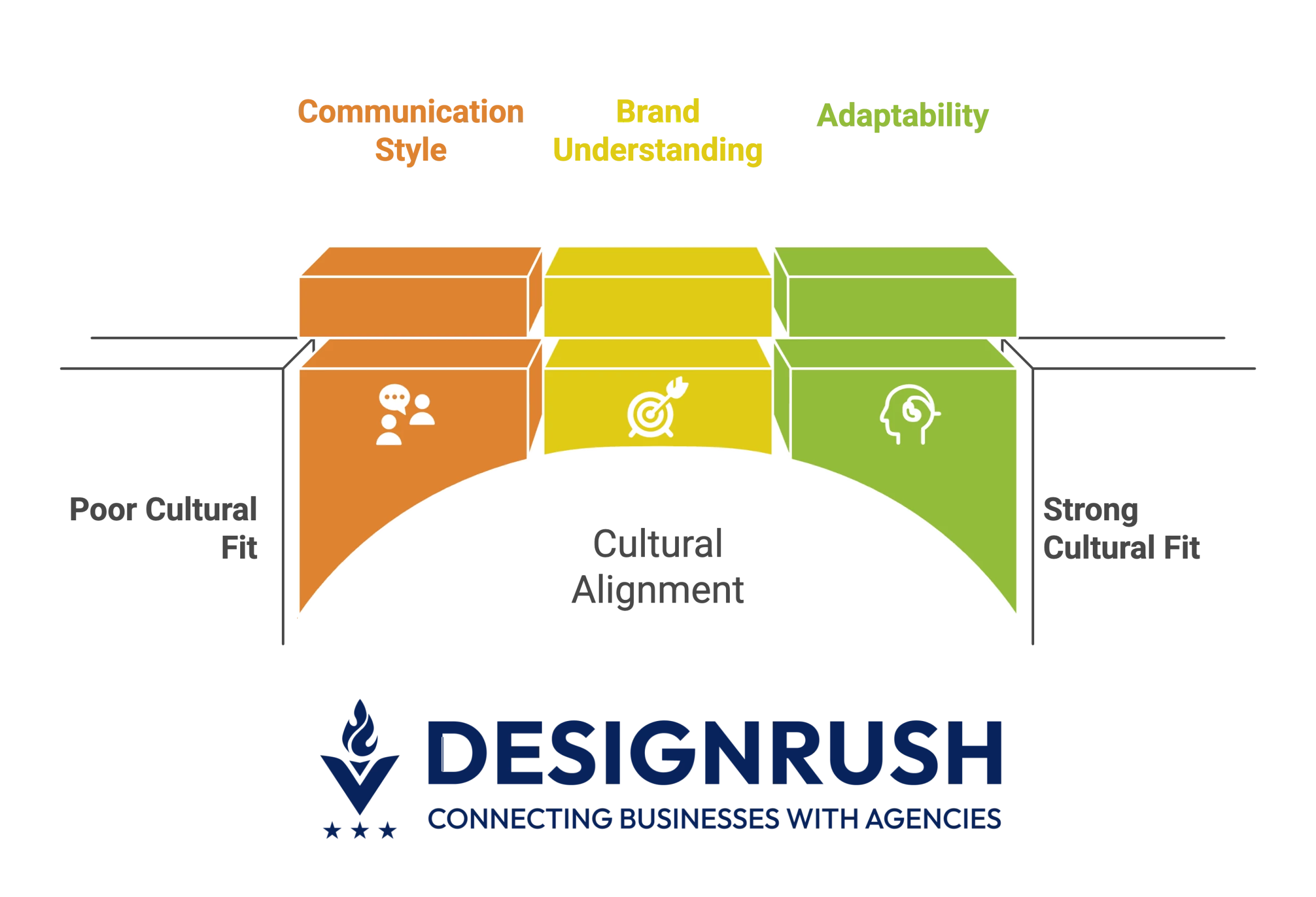
- Communication style: Do their tone and pace align with your team? A minor mismatch is workable, but major differences, like spinning instead of candor, can strain collaboration.
- Brand understanding: In early conversations or drafts, did they show they understand your voice and audience? If your tone is youthful and their copy feels stiff, that’s a disconnect.
- Adaptability: How do they handle feedback? If they’re inflexible and you value collaboration or too passive when you need firm guidance, it could lead to friction.
Strong cultural fit can cut onboarding time, helping you get results faster. If you can’t picture working closely with them long-term, don’t ignore that instinct. Even top-tier agencies fail when the partnership feels off.
5. Future-Proof the Partnership
A truly valuable agency partnership is one that can grow and adapt alongside your business and the ever-changing marketing landscape.
As you finalize your selection (or in final vetting calls), probe how the agency plans to future-proof your engagement.
- Evaluate the scalability of the process
- Assess innovation track record
- Value beyond deliverables: strategic advisory
5.1. Evaluate the Scalability of the Process
Your needs today won’t be your needs next year. So, ask the agency how they handle growth and scaling:
Question | What a Good Agency Should Say |
“If we triple our media spend or lead volume in a year, can your team handle it?” | You’re looking for an indication of their capacity and infrastructure. Do they have enough staff (or a hiring plan) to allocate more people to you if needed? Have they done it for other clients (taking someone from $50k/month ad spend to $150k, for example)? |
“How would you support us if we launch in a new region or try a new platform?” | If international expansion or new channels are on the horizon, ask about their capabilities there. Even if they are not experts in that area, a good agency will have partner agencies or a network of freelancers to tap. |
“Can your reporting evolve as our needs get more complex?” | Maybe today you just need basic lead reports, but in a year, you might need multi-channel attribution models. Can they accommodate that? The last thing you want is to outgrow the agency’s analytical capabilities and have to switch later. |
The last thing you want is to outgrow the agency’s analytical capabilities and have to switch later.
5.2. Assess Innovation Track Record
Marketing is in constant flux; new technologies, platforms, and techniques appear every quarter. An agency that rests on its laurels will eventually fall behind.
Ask about how they stay innovative:
- AI and automation: Are they using tools like ChatGPT, Jasper, or AI-driven bid optimization? Over half of marketers now leverage AI for idea generation. Agencies embracing automation tend to move faster and smarter.
- Sharing trends and insights: Do they regularly update you on new tactics through newsletters, webinars, or trend reports? Agencies that educate clients without being asked are keepers.
- Piloting emerging platforms: Have they piloted channels like TikTok, Reddit, retail media, or shoppable livestreams? Even if not core to your plan, their openness to experimentation is telling.
Look for proactive thinking, not reactive execution. If they say, “We were early to test [X] and here’s what we learned,” that’s gold.
But if they brush off new trends or can’t name a recent test, they may not be equipped for today’s fast-moving landscape.
5.3. Value Beyond Deliverables: Strategic Advisory
Finally, think beyond the contracted deliverables. The best agency relationships blur the line between an outside vendor and an in-house strategist.
Consider whether the agency can provide broader strategic value, such as:
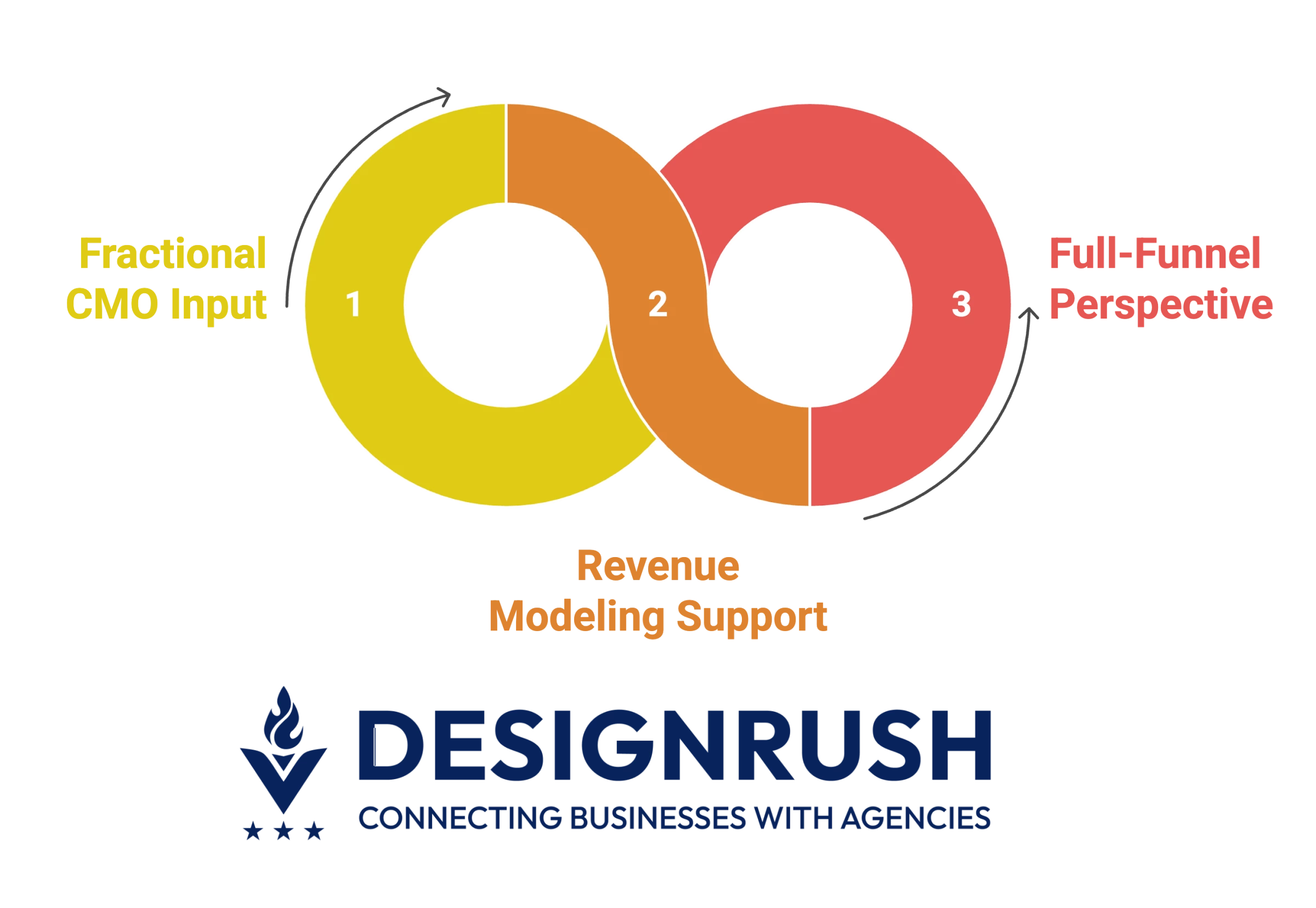
- Fractional CMO input: Do they advise on brand positioning, messaging, or marketing strategy, even when not scoped? That’s a sign of high-level insight.
- Revenue modeling support: Can they help you forecast ROI, guide budget shifts, or model spend efficiency? A data-savvy agency should be able to pressure-test your assumptions.
- Full-funnel perspective: Do they flag issues outside their remit, like a weak checkout UX or missing email follow-ups? That shows they care about outcomes, not just their deliverables.
In essence, gauge if the agency is prepared to contribute to your business outcomes, not just the deliverables you pay them for.
Benjamin Dzaferovic, Co-Founder and CEO of Outecho, advises:
“Executives should look for agencies that demonstrate a commitment to these values, have a solid track record, and show a genuine interest in understanding and achieving their business goals.”
The more they show interest in understanding your full funnel and business model, the more likely they’ll spot opportunities and offer advice that moves the needle.
How To Choose a Digital Marketing Agency: Final Words
Your digital marketing agency isn’t just a vendor ticking boxes on a campaign checklist. They should be a strategic ally that can multiply the impact of your marketing efforts.
The decision you make in selecting an agency should carry the same weight as a senior hire, because the right agency amplifies your strategy, while the wrong one can derail it.
Choose the agency that will deliver meaningful business impact. The difference will show up on the bottom line.
Our team ranks agencies worldwide to help you find a qualified partner. Visit our Agency Directory for the Top Digital Marketing Agencies, as well as:
- Top Digital Advertising Agencies
- Top Content Marketing Agencies
- Top Social Media Marketing Agencies
- Top Digital Marketing Agencies for Small Businesses
- Top SEO Agencies
How To Choose a Digital Marketing Agency FAQs
1. What’s the most common reason digital agency relationships fail?
Misaligned goals and vague scope. If success metrics aren’t clearly defined upfront (e.g., 100 SQLs/month vs. lower CAC), both sides may lose trust. Lock in KPIs and roles in the contract and prioritize onboarding.
2. What pricing model is most scalable?
A hybrid model (retainer + performance bonus) offers balance. The retainer ensures stability; performance incentives reward results. Avoid commission-only deals unless attribution is crystal-clear. You can also tier retainers based on spend or leads to keep incentives aligned as you scale.
3. Should I choose a specialist agency or a full-service agency?
It depends on your current focus and resources:
- Choose a specialist if you’re focused on one channel (e.g., SEO, TikTok, ABM). They go deeper, faster.
- Go full-service if you need multi-channel execution (ads, content, CRO) or have limited in-house resources. Many brands start with specialists and expand later.
4. How soon can I expect results?
Expect early signals (clicks, leads) in 45–90 days. Paid ads show traction faster; SEO or content can take 4–6 months. Sustainable ROI often takes up to 12 months. Set milestone goals (e.g., lower CPL by month 3) and avoid agencies promising instant wins.