
Key Takeaways:
- Industry-specific experience cuts onboarding time and lowers execution risk, so use filters and case studies to find proven partners in your niche.
- Outdated or vague profiles are red flags, so look for current case studies, real metrics, and active leadership to gauge reliability.
- Directories are just the starting point, and cross-checking LinkedIn, Glassdoor, and client work helps uncover true credibility and capabilities.
A careful vetting process is essential to find an agency with the experience, structure, and alignment to meet your goals. This guide will help you go beyond surface-level impressions and find a partner that truly fits.
Define Your Needs Before You Search
Before you dive into listings, step back and clarify what you actually need. The more precise you are about your requirements, the easier it is to filter out mismatched options and identify agencies equipped to deliver.
Starting with a vague idea often leads to wasted time, misaligned proposals, and friction down the line. So, here’s how to prep:
Clarify Scope, Budget, and Timeline
Before starting your search, you need to be completely clear on the basics — what you need, how much you can spend, and how fast you need it done.
- Service scope: Are you looking for a full-service partner or a specialist in web design, branding, or PPC?
- Budget: Know your range, and whether it includes ongoing costs like maintenance or media spend.
- Timeline: Are you on a tight launch schedule or open to a longer-term engagement?
Align Internal Stakeholders
Internal alignment is just as important as external vetting — make sure your team is on the same page before bringing in a partner.
- Be sure decision-makers are aligned on things like key business objectives, timelines, and what success looks like for the engagement.
- Decide who’s responsible for managing the agency relationship day-to-day, including communication, approvals, and accountability.
- Get buy-in on how success will be measured from the start (whether it’s leads, conversions, revenue impact, or long-term brand growth).
A clear internal brief helps prevent mismatches later.
How To Navigate Directories Like DesignRush
Directories are powerful if you know how to use them properly. It shouldn’t feel like searching for a needle in a haystack, or a stack of needles. Here’s what you can do to make the process as quick and easy as possible.
- Use filters and categories wisely
- Understand what rankings mean
- Read between the lines
- Use the hiring guide to steer decisions
1. Use Filters and Categories Wisely
Smart use of filters can save you hours — and help you spot the agencies most likely to be a strong fit from the start. Here’s how:
- Service categories help you narrow based on need: Categories like eCommerce Development or Digital Strategy let you focus on agencies with the right expertise, whether you need a full website build or something small and specific like targeted PPC support.
- Industry focus helps prioritize relevant experience: Agencies familiar with your vertical will better understand your audience, challenges, and goals — saving you time on onboarding and strategy alignment.
- Filter by location or company size for better fit: Proximity enables smoother collaboration, and size often influences working style. A smaller shop might offer agility; a larger one may bring deeper resources.
- Use budget filters to stay efficient: Hourly rates and project ranges help you zero in on agencies within your budget while avoiding wasted time on mismatches.
2. Understand What Rankings Mean
Rankings offer a starting point, but they’re not gospel. Many factors affect placement, both algorithmic and editorial.
Instead of fixating on top-ranked agencies, look for relevance. Ask the following:
- Do they have experience in your space?
- Are they showing results that resemble your goals?
- Does their team size or pricing align with your scope?
A mid-ranked agency might have:
- More relevant case studies
- A better cultural fit
- Nimble processes better suited to your team
3. Read Between the Lines
Click into profiles, not just headlines. It takes time to dig a little deeper but it’s worth doing. Directories are designed for discoverability but it’s up to you to connect the dots.
Look for subtle but telling details such as:
- Year founded: A newer agency might be more agile and innovative, while a more established one can bring deeper experience and process maturity. Consider what matters most for you.
- Client list: Scan for recognizable brands or recurring themes. Are they working with companies similar to yours in size, industry, or challenge?
- Service depth: Some agencies list many services but only show depth in one or two. Look for consistency between what they claim and what they showcase.
4. Use the Hiring Guide to Steer Decisions
At the end of a directory category page, you should find a curated hiring guide. This resource offers a practical overview of the landscape with guidance to help make the decision-making process easier.
Information can include:
- Industry benchmarks for hourly rates, timelines, and project scopes, so you can spot outliers or align expectations early.
- Key performance metrics based on service type — like ROI benchmarks for paid media or conversion targets for web design.
- FAQs that reflect common concerns and priorities from businesses like yours, which can help sharpen your internal decision-making.
- Smart questions to ask during your evaluation process, tailored to each service category.
What To Look For in an Agency Profile
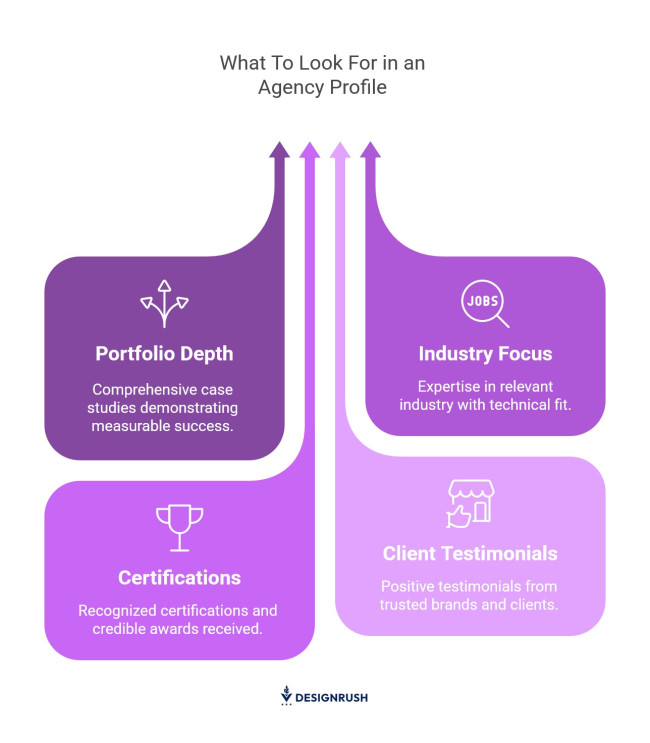
Agency profiles offer a lot of helpful information, if you know where to look. Focus on the substance behind the surface. A great profile will help you assess credibility, capability, and cultural fit — if you read it with the right lens.
- Portfolio depth and relevant case studies: A strong portfolio includes measurable results, not just polished visuals. Prioritize agencies that highlight not only what they built, but how it impacted the client’s business, with projects similar in size, scope, or industry to yours.
- Industry focus and core competencies: Some agencies market themselves broadly but only deliver well in a niche. Others have deep vertical expertise that gives them a real edge. If your business has technical or compliance-heavy needs, an agency with direct experience in your industry can save time and reduce risk. And don’t neglect to check whether their stated competencies are actually demonstrated in their work.
- Certifications and awards: Third-party recognition matters — but only if it’s meaningful. Certifications from platforms like Google or Adobe signal a level of rigor in training and execution. Awards should reflect excellence, but dig a little to be sure, because some accolades are pay-to-play.
- Client logos and testimonials: Logos from recognizable brands build trust, but look further. Check whether the agency led the engagement or played a supporting role. Testimonials should be recent, specific, and detail the nature of the relationship. Bonus points if the listing includes names or titles — those can often be validated informally via LinkedIn.
Red Flags To Watch For
It’s possible to pick up on clues about problem areas, if you know what to look for. Be cautious if you see:
- 🚩 Lack of specifics: Vague case studies, missing metrics, or overly general service descriptions suggest they may not have the experience you need.
- 🚩 Overuse of jargon: Buzzwords without substance ("synergistic growth hacking solutions" for example) can mask a lack of real strategy or results.
- 🚩 Outdated listings: Profiles that haven’t been updated in over a year suggest an inactive agency or, at the very least, one that’s not invested in visibility or credibility.
- 🚩 Unclear positioning: If it’s hard to tell what they actually specialize in, that confusion is sure to carry over into your project.
Verify the Agency Outside the Directory
Agency directories are a great starting point, but they only tell part of the story. To truly vet a potential partner, you’ll need to dig deeper. Here’s how to expand your research outside the platform:
- Scan Glassdoor to understand culture and stability: Reviews from current and former employees can reveal things you won’t find in a client testimonial. This might include internal turnover, communication issues, or strengths in team dynamics. A healthy internal culture tends to create more value, leading to healthier client relationships.
- Review social media to gauge tone and engagement: Active, thoughtful posts can show that the agency is plugged into industry trends and knows how to present itself. It’s also a window into their brand personality and how they might represent yours.
- Verify client work with a critical eye: Visit the sites, campaigns, or products they claim to have delivered. Are they still live? Do they align with the promises made in case studies? Dig a little to see whether the agency delivers on its claims.
- Evaluate their broader reputation: Look for mentions in reputable publications, podcast features, guest articles, or speaking engagements. Such things would reinforce credibility and show that their expertise is recognized beyond their own marketing.
- Check for consistency across channels: Their directory profile, website, LinkedIn, and other platforms should all tell the same story. Inconsistencies in messaging or positioning can be a red flag.
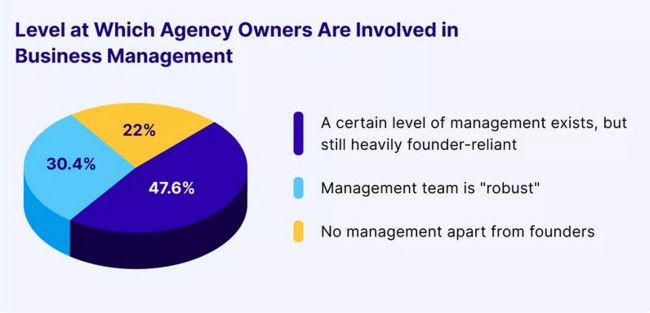
- Check LinkedIn for legitimacy and leadership: LinkedIn can confirm an agency’s size, team structure, and key personnel. Look at how active they are and how long they've been around. And check whether their leadership brings relevant expertise, or if the business is heavily founder-reliant, which is the case for 22% of agencies.
The Agency Vetting Checklist
Use this checklist to evaluate and compare agencies side by side. Whether you’re hiring for a rebrand, digital campaign, or ongoing development support, it’s designed to bring structure to your vetting process and ensure you’re asking the right questions at the right time.
Phase 1: Prep Internally
☐ Defined your service scope, budget, and timeline internally: Everyone on your team agrees on what success looks like and what you’re asking the agency to do.
☐ Set clear internal goals and KPIs: You identified what “winning” looks like for your campaign, product, or partnership.
☐ Aligned internally on top 2–3 finalists: Your team is clear on who the top contenders are and why they made the cut.
Phase 2: Shortlist on the Directory
☐ Used filters to shortlist relevant agencies: You’ve used location, industry focus, and service categories to zero in on viable options.
☐ Reviewed case studies with measurable results: You’ve seen evidence of success with similar clients or comparable goals.
☐ Assessed industry experience and technical fit: The agency understands your business model and can work with your required platforms or technologies.
☐ Verified certifications and awards: You’ve confirmed the recognition they list is current, credible, and relevant.
☐ Evaluated client testimonials for detail and recency: You looked for specificity, not just general praise, and checked the dates and sources where possible.
☐ Checked for niche expertise or unique differentiators: You found out what gives the agency a strategic edge.
Phase 3: Cross-Verify Outside the Platform
☐ Cross-checked social profiles and leadership presence: You know who’s behind the agency and how they engage publicly.
☐ Reviewed third parties for internal culture insights: You’ve looked for consistency between what they say externally and how they operate internally.
☐ Confirmed past work is live and high quality: The agency’s featured work is not only real—it’s performing and up to standard.
☐ Researched client retention and repeat business: You reviewed if the agency mentions multi-year relationships or ongoing partnerships.
Phase 4: Engage and Evaluate Fit
☐ Held a discovery call and asked key questions: You’ve assessed fit, process maturity, and how clearly they understand your goals.
☐ Tested their communication clarity and responsiveness: You evaluated how promptly and clearly they respond across email, calls, and meetings.
☐ Evaluated team chemistry and culture fit: You gauged how well your team meshes with theirs
☐ Requested a proposal or pilot plan: You received a customized proposal or pilot roadmap that demonstrates they understand your needs.
☐ Clarified ownership, IP rights, and contract terms: You confirmed who owns the deliverables, data, and creative assets — and reviewed all key legal terms upfront.
The Ultimate Guide to Vetting Agencies: Final Thoughts
Directories like DesignRush are the perfect place to start, but maximizing the value entails thoughtful vetting: defining your needs, filtering with intention, reading beyond the surface, and verifying claims through outside channels.
The right agency will challenge your thinking, elevate your execution, and help turn your goals into growth, so get started.
Our team ranks agencies worldwide to help you find a qualified partner. Visit our Agency Directory for the top business consulting companies, as well as:
- Top Small Business Consulting Firms
- Top Startup Consulting Firms
- Top HR Consulting Firms
- Top Software Consulting Companies
- Top Consulting Firms in Columbus
Our design experts also recognize the most innovative design projects across the globe. With a growing wave of fresh branding, be sure to explore our Awards section.
The Ultimate Guide to Vetting Agencies: FAQs
1. What’s the ideal agency size for my business?
It depends on your priorities. Smaller agencies usually offer more flexibility and direct access to senior talent, while larger firms tend to bring deeper bench strength and more robust processes. Consider team structure and responsiveness alongside capabilities.
2. How long should the vetting process take?
Most businesses take 2–4 weeks from search to signed agreement, depending on urgency and complexity. Rushing it can lead to misalignment, but overanalyzing can slow momentum. Set internal timelines and stick to them.
3. Should I ask for references?
Absolutely. You gain real-world insight by speaking with a past or current client in terms of what it’s like to work with the agency. Ask about communication, reliability, results, and overall satisfaction.