
Modern CRO, powered by artificial intelligence, enables real-time personalization, predictive user-behavior modeling, and funnel optimization at scale.
AI Conversion Rate Optimization: Key Points
- AI personalization can boost revenue by 5–15% and marketing ROI by up to 30%, making it a high-ROI priority for digital leaders.
- Google's AI testing approach reduced optimization time by 60%, demonstrating the speed advantage over traditional A/B testing cycles.
- Real-time AI decision-making dynamically reallocates traffic, increasing efficiency mid-test and accelerating performance gains without waiting for statistical completion.
AI isn’t just optimizing conversion flows; it’s reinventing them. You can now blend machine learning, natural language processing (NLP), and behavioral analytics to generate measurable business outcomes and boost conversion rates.
The adoption of AI is turning CRO from a slow, reactive practice into a proactive, always-on strategy for long-term revenue growth.
Why AI Outperforms Traditional CRO
Traditional conversion rate optimization methods are effective but labor-intensive, reliant on historical data, and often blind to subtle user nuances. Analysts must manually parse data and run sequential A/B tests that can take weeks or months to yield insights.
In contrast, AI-enhanced CRO adapts instantly, predicts user intent, and scales experimentation without human bottlenecks.
Organizations adopting AI report dramatic improvements in testing speed and insight discovery. For example:
- Google’s ad platform uses AI to experiment with multiple ad creatives and targeting combinations, reducing optimization time by up to 60% compared to manual tests.
- Shopify Audiences uses continuously learning algorithms to target high-intent shoppers, helping brands reduce customer acquisition costs by as much as 50% across ad campaigns.
How AI Unlocks Smarter, Faster Conversion Optimization
AI-driven CRO doesn’t suffer from plateaus the way manual CRO does. A human team might run out of obvious test ideas or be limited by bandwidth, whereas an AI can continuously juggle countless micro-experiments and adapt to changes in user behavior or traffic sources in real time.
Here are some key advantages AI brings over traditional approaches:
- Predictive personalization
- Real-time decisioning
- Sentiment-aware copy
- Dynamic segmentation
- Iteration and testing
1. Predictive Personalization
AI analyzes real-time behavior to serve personalized content that reflects individual user intent. AI personalization at scale has been shown to lift revenues by 5% to 15% and boost marketing ROI by 10% to 30%.
For agencies and brands, predictive personalization is a scalable growth lever. Here’s how to implement it effectively:
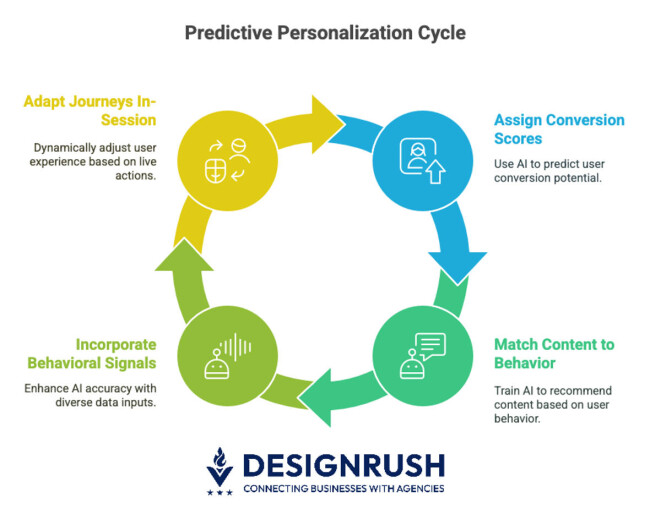
- Use AI to assign conversion probability scores: Platforms like Kameleoon or Dynamic Yield calculate real-time conversion intent, allowing you to target high-potential users with tailored offers or UX adjustments.
- Deploy machine learning to match content to behavior: Train AI models to recommend headlines, calls to action, or products based on behavioral patterns from similar user segments.
- Incorporate multi-touch behavioral signals: Enhance accuracy by feeding your AI engine data from email marketing, SMS, paid ads, and on-site behavior to create a holistic personalization model.
- Let AI adapt journeys in-session: Empower your AI CRO stack to dynamically change layout elements, value props, or calls to action based on live user actions, not just predefined rules.
2. Real-time Decisioning
AI dynamically shifts traffic toward top-performing variants during experiments, learning and optimizing instantly instead of waiting weeks for test completion. This shift from static to adaptive testing empowers faster insights and accelerates ROI.
To execute this effectively:
- Implement multi-armed bandit algorithms: Use AI-powered testing models that adjust traffic allocation based on early performance. This maximizes conversions during the test window.
- Automate traffic weighting based on conversion signals: Let AI continuously evaluate variant effectiveness by tracking engagement, micro-conversions, and path progression, not just final outcomes.
- Incorporate reinforcement learning into UX optimization: Deploy AI agents that learn from user interactions and gradually favor layouts and experiences that drive the highest business value.
- Integrate AI with real-time analytics platforms: Pair decisioning engines with live dashboards that surface actionable insights instantly, so you can adapt strategies mid-experiment.
3. Sentiment-aware Copy
NLP analyzes customer tone and phrasing to tailor messaging that resonates emotionally, improving engagement where manual copy testing often falls short.
This AI-driven approach unlocks scalable emotional intelligence in marketing, increasing engagement and driving higher conversion rates across channels. To apply this effectively:
- Use NLP to score headlines and CTAs by emotional tone: Train models to evaluate copy for sentiment polarity and intent alignment, prioritizing language that evokes trust, urgency, or curiosity.
- Leverage AI to generate copy variants at scale: Automate the creation of micro-targeted CTAs or descriptions that adjust phrasing based on user behavior, demographics, or engagement history.
- Analyze top-performing content patterns across segments: Use NLP to identify which emotional triggers (e.g. reassurance, exclusivity, fear of missing out) consistently drive conversions for specific cohorts.
- Integrate AI sentiment analysis with CRM and behavioral data: Enhance targeting by aligning message tone with lifecycle stage, past interactions, and predicted buyer readiness.
4. Dynamic Segmentation
Unlike static rule-based segmentation, dynamic AI-driven grouping ensures the right users see the right message at the right moment, maximizing conversion potential.
Here’s how to implement dynamic segmentation with impact:

- Train AI models on behavioral signals, not static traits: Segment audiences by intent indicators like scroll depth, click paths, and purchase probability instead of relying solely on demographics or channels.
- Deploy predictive traits from your CDP: Use platforms like Twilio Segment to generate AI-based “likelihood to buy” or “churn risk” tags that update in real time and fuel smarter campaign logic.
- Auto-adjust offers and messaging per segment: Let AI dynamically trigger different CTAs, layouts, or incentives based on evolving engagement profiles — no need for manual reclassification.
- Align segmentation models with funnel stages: Use AI to detect where users are in their journey and assign content that nudges them to the next step with personalized precision.
5. Iteration and Testing
AI pre-validates test ideas and predicts winners before launch, reducing time and cost while accelerating insights traditional testing can't match. This enables faster experimentation and a steady pipeline of performance gains
To operationalize AI-driven testing:
- Deploy adaptive testing models like multi-armed bandits: Let AI shift traffic in real time toward high-performing experiences, accelerating results and minimizing exposure to underperformers.
- Automate ideation with AI-powered test suggestions: Platforms like Optimizely or VWO can recommend what to test next based on conversion patterns, lifting creativity bottlenecks.
- Enable continuous, real-time optimization loops: Replace static tests with self-learning systems that evolve automatically as user behavior and traffic sources change.
- Feed test results into broader AI strategy: Your test insights must inform personalization, segmentation, and forecasting models so you can build a smarter ecosystem with every iteration.
Comparative Analysis: AI CRO Tools for Strategic Execution
A variety of platforms now offer AI-powered CRO capabilities. Below is a breakdown of leading tools and their differentiators for strategic execution:
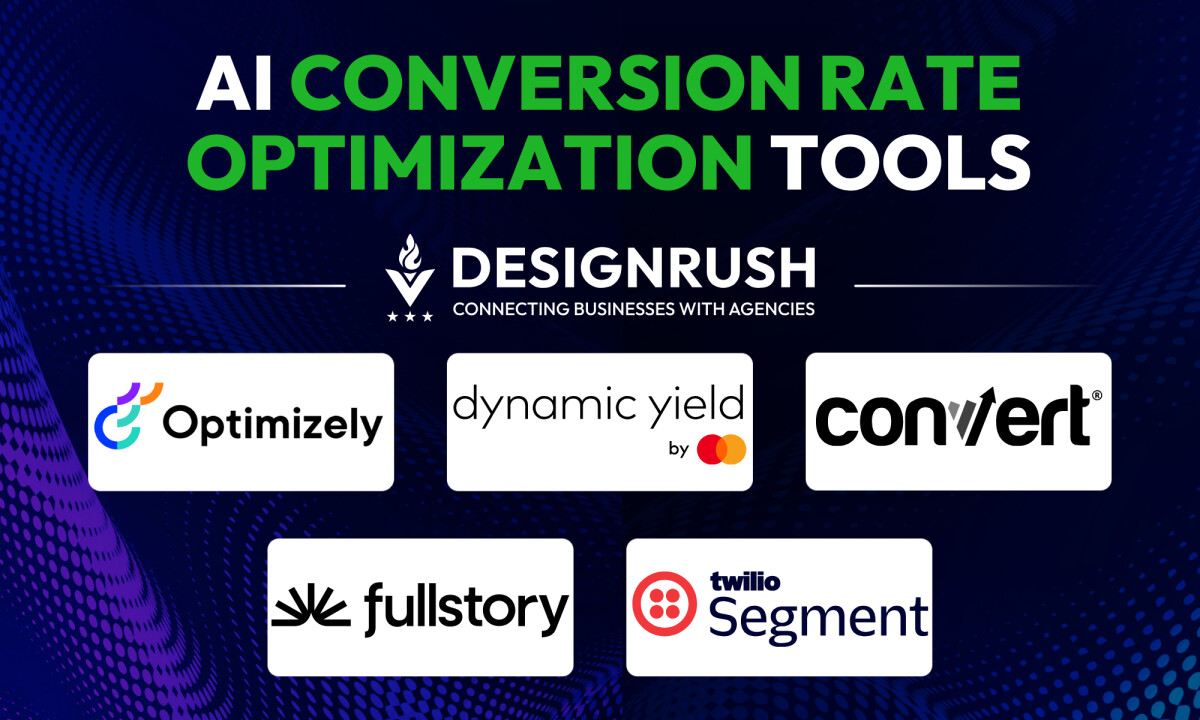
| Tool | Best For | Pros | Cons |
| Optimizely | Enterprises | AI-driven experimentation suite (automated test ideation, metrics guidance, and analysis). Industry-leading analytics and Stats Engine for robust results. | Robust features come with enterprise pricing and a steeper learning curve for newcomers. |
| Dynamic Yield | eCommerce & Retail at Scale | Real-time personalization engine that algorithmically matches content/products to each user, anticipating behavior across channels. | Smaller teams may find it resource-intensive, and implementation can be complex. |
| Convert Experiences | Agencies & SMBs | Fast, flexible A/B testing with support for client-side and server-side experiments. Very quick to implement, with an intuitive interface and strong support. | Limited built-in visual editing and add-ons. Fewer out-of-the-box templates and integrations than top-tier platforms |
| FullStory | Product Teams (UX Analytics) | Rich heatmaps, session replays, and customer journey analytics to diagnose where users struggle. Excellent for qualitative insights: you can watch recordings or see where users click, scroll, rage-click, etc., to inform hypothesis generation. | FullStory isn’t an experimentation platform itself but complementary to an A/B tool. Privacy considerations are crucial, as session recordings must be configured to mask sensitive data. |
| Twilio Segment | Data-Driven Brands | Uses AI models on first-party data to create Predictive Traits, or likelihood to purchase or churn, which you can sync into marketing tools. Great for building audiences and personalization based on future behavior. | Segment feeds insights into other CRO/personalization tools, so you need those execution tools in place. Cost can grow as your user base/events scale. |
Best Practices to Maximize AI CRO
Successfully leveraging AI to boost conversions requires more than just deploying smart tools. It demands strategic alignment, clean data, and iterative discipline.
Business owners and agency leaders must treat AI CRO not as a plug-and-play solution, but as a dynamic system that evolves with user behavior and organizational goals.
- Start with clean, structured data: Ensure your analytics and event tracking are accurate and complete to power AI models with reliable behavioral insights.
- Define clear CRO objectives up front: Align your business’s AI stack around specific KPIs (e.g., trial conversions, cart completions) to avoid wasted experimentation.
- Use AI to augment, not replace, human insight: Your data scientists and marketers should guide strategy while AI handles high-speed testing and personalization at scale.
- Monitor performance continuously: Set up real-time dashboards and alerts to track uplift, anomalies, and AI decision patterns across your funnel.
- Refine user segments with behavioral clustering: Go beyond demographics by using AI to create predictive personas based on real-time intent and action signals.
AI Conversion Rate Optimization Risks & Pitfalls
Even the best AI CRO stack isn’t a magic bullet. As you scale up AI-driven optimization, keep an eye on several potential pitfalls:

- Data quality dependence: AI performance relies on clean, consistent data. Audit your data infrastructure before deploying AI and ensure event streams are privacy-compliant and well-maintained.
- Overpersonalization fatigue: Hyper-targeted experiences can feel repetitive or invasive. Avoid user burnout by giving users control over their content preferences and personalization settings.
- Privacy compliance risk: AI CRO often involves behavioral tracking subject to GDPR, CCPA, and evolving AI laws. Offer clear consent options for users and collaborate with your legal team before scaling personalization initiatives.
- Tool overlap and redundancy: Many AI tools offer similar functions, leading to wasted spend or conflicting outputs. Conduct a tech stack audit to identify overlaps and consolidate where possible.
Pro Tip: Start with a pilot experiment on a high-traffic page, rather than deploying AI across your entire site at once. Monitor the impact on conversion and ROI in a contained environment.
This pilot-first approach enables you to prove the value and catch issues on a small scale. Plus, if something goes wrong (e.g. a personalization glitch), you’ve minimized risk by not rolling it out everywhere from day one.
AI CRO: Final Thoughts
AI isn’t just augmenting optimization; it’s fundamentally changing the game. Organizations that leverage AI to continuously learn and refine their user experiences will create a self-sustaining advantage in the market.
We evaluate agencies globally to connect you with the right partner. Explore our Agency Directory to discover the top conversion optimization agencies, along with:
1. Top Lead Generation Companies
2. Top Content Marketing Agencies
AI CRO FAQs
1. What data infrastructure is needed to support AI CRO?
AI CRO requires a clean, structured data foundation, including accurate event tracking, unified customer profiles, and real-time behavioral data. Integrating a CDP, analytics platform, and API-accessible tools ensures AI models can ingest, process, and act on high-quality inputs effectively.
2. How long does it take to see ROI from AI CRO tools?
Most companies begin to see measurable gains within 30 to 90 days, especially when AI is applied to high-traffic pages or conversion-critical funnels. Faster time-to-insight and continuous testing cycles help accelerate ROI compared to traditional CRO methods.
3. What KPIs should be tracked to measure AI CRO success?
Core success metrics include conversion rate lift, cost per acquisition (CPA), time-to-value, revenue per visitor, and customer lifetime value (CLV). It’s essential to benchmark these KPIs pre- and post-AI implementation to quantify impact and guide optimization strategy.