
CRM platforms have evolved from simple contact databases into sophisticated engines driving marketing, sales, and service strategies. But are you truly unlocking the full value of these tools?
CRM Statistics: Key Findings
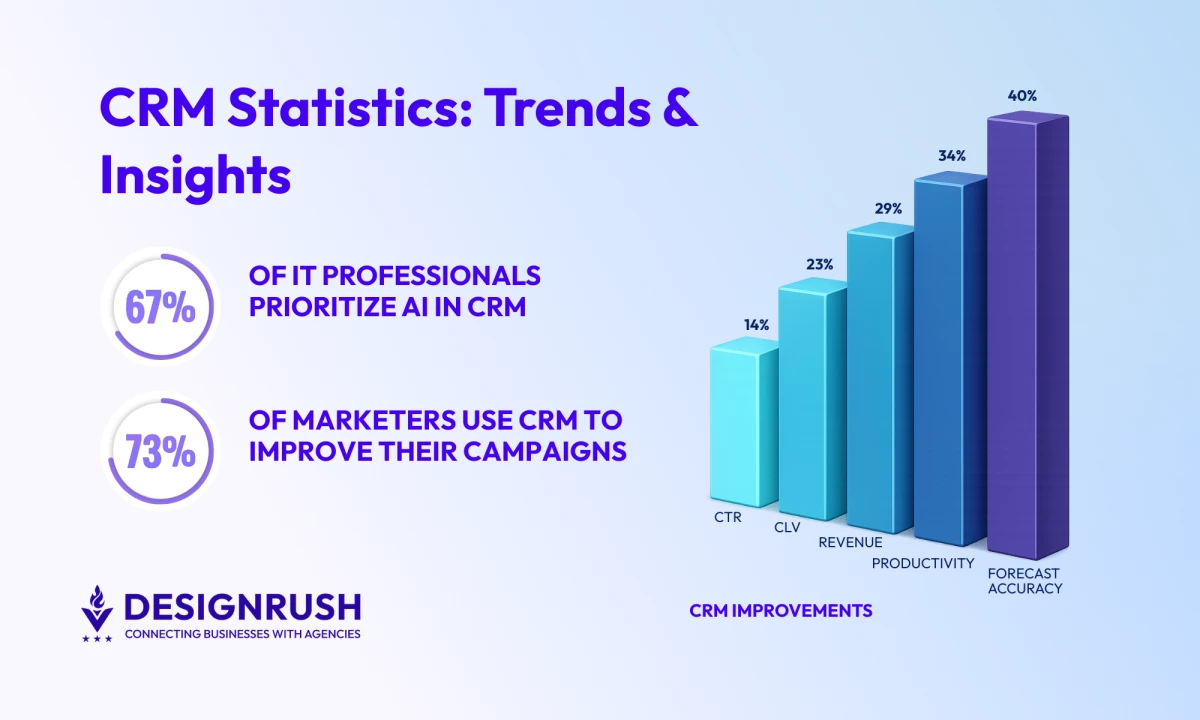
- Companies using CRM experience a 29% increase in revenue and a 34% boost in productivity after integrating CRM into their workflows, highlighting its importance for sales-driven growth.
- Businesses using CRM for personalized marketing see a 14% higher click-through rate on emails, emphasizing the effectiveness of targeted campaigns based on customer data.
- AI-driven CRM features help businesses automate tasks and improve forecasting; 67% of IT professionals prioritize Gen AI in CRM.
CRM Statistics Overview
This report provides an executive-level overview of the latest CRM statistics, focusing on platform usage, adoption trends, ROI benchmarks, and strategic opportunities.
How CRM Impacts Business Growth: ROI Benchmarks & Strategic Value
Virtually every growing business is touching CRM in some form: 91% of companies with over 11 employees use a CRM system today. This widespread adoption underscores the value CRM platforms bring to companies of all sizes.
Below are some key statistics that highlight how CRM investments deliver measurable returns and strategic value:
- Over 8x ROI: According to Nucleus Research, every $1 spent on CRM software yields $8.71 in revenue. This reflects how well-implemented CRMs can drive sales and efficiency gains.
- Higher sales and productivity: After implementing a CRM, companies see an average 29% increase in revenue and a 34% boost in productivity. Sales teams close more deals faster when their workflows are integrated with CRM data and automation.
- Higher customer lifetime value: Organizations that integrate their CRM with advanced analytics and personalization tools achieve about 23% higher CLV (customer lifetime value) than those with siloed systems. This means more repeat business and upsells over the long term.
- Faster lead response times: According to Salesforce data, companies using AI-driven sales development reps (AI SDRs) with their CRM can respond to new leads 35% faster than teams relying on humans alone.
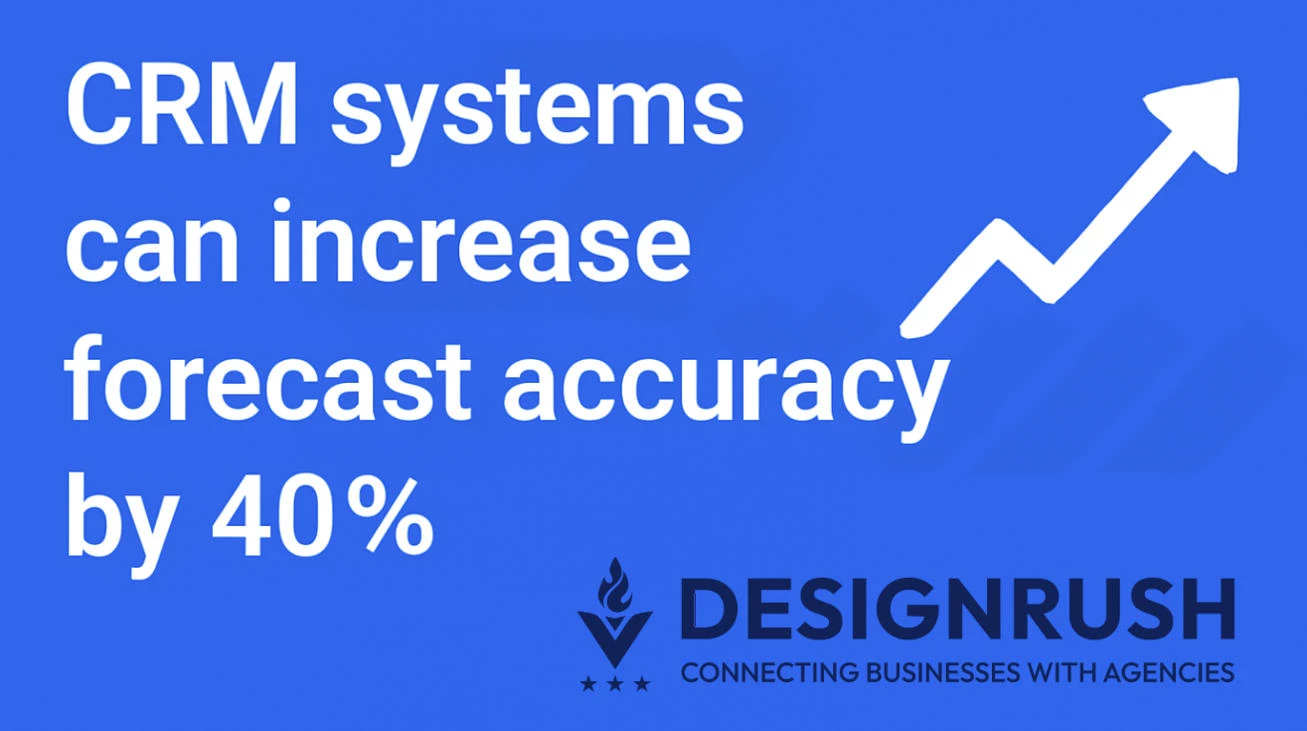
- Improved forecast accuracy: CRM systems can increase forecast accuracy by around 40% to 42% on average (Salesforce), giving leaders more confidence in their sales pipelines.
- Growth acceleration: Firms that align CRM with other systems (like marketing automation or ERP) tend to grow faster. Salesforce reports that businesses using its integrated analytics saw a 25% higher deal win rate after embedding analytics into CRM workflows.
- Higher win rates: Companies that leverage embedded analytics in their CRM have reported a 25% jump in close rates on deals (Salesforce). Data-driven insights help reps prioritize the right opportunities and strategies, leading to more wins.
Business Takeaways
Maximizing the ROI of CRM adoption goes beyond just installing the system. You should take deliberate steps to ensure their CRM solution delivers on its promises.
Here are actionable strategies for success:
- Customize CRM features for your needs: Tailor CRM workflows, dashboards, and reports to your unique business processes. Customization helps ensure your CRM serves as a practical tool, not just a data repository.
- Invest in CRM training and onboarding: Ensure your teams are fully trained in CRM capabilities. Proper onboarding and ongoing education maximize feature adoption, making the system more effective in driving sales and customer engagement.
- Utilize CRM analytics to inform decisions: Make data-driven decisions by leveraging your CRM’s reporting and analytics features. Use insights to prioritize leads, forecast sales, and adjust strategies to stay ahead of competitors.



CRM Adoption Trends by Industry, Region & Business Size
As CRM platforms continue to evolve, their adoption varies significantly across different industries, regions, and business sizes. Understanding these trends will help you make informed decisions about CRM selection and implementation.
- Tech companies lead adoption: 94% of tech companies use a CRM, underscoring how vital these systems are for B2B sales cycles.
- Retail and eCommerce catching up: Around 18% of all CRM-using companies are in retail. eCommerce businesses in particular have driven CRM growth, using data for omnichannel customer tracking and personalized marketing.
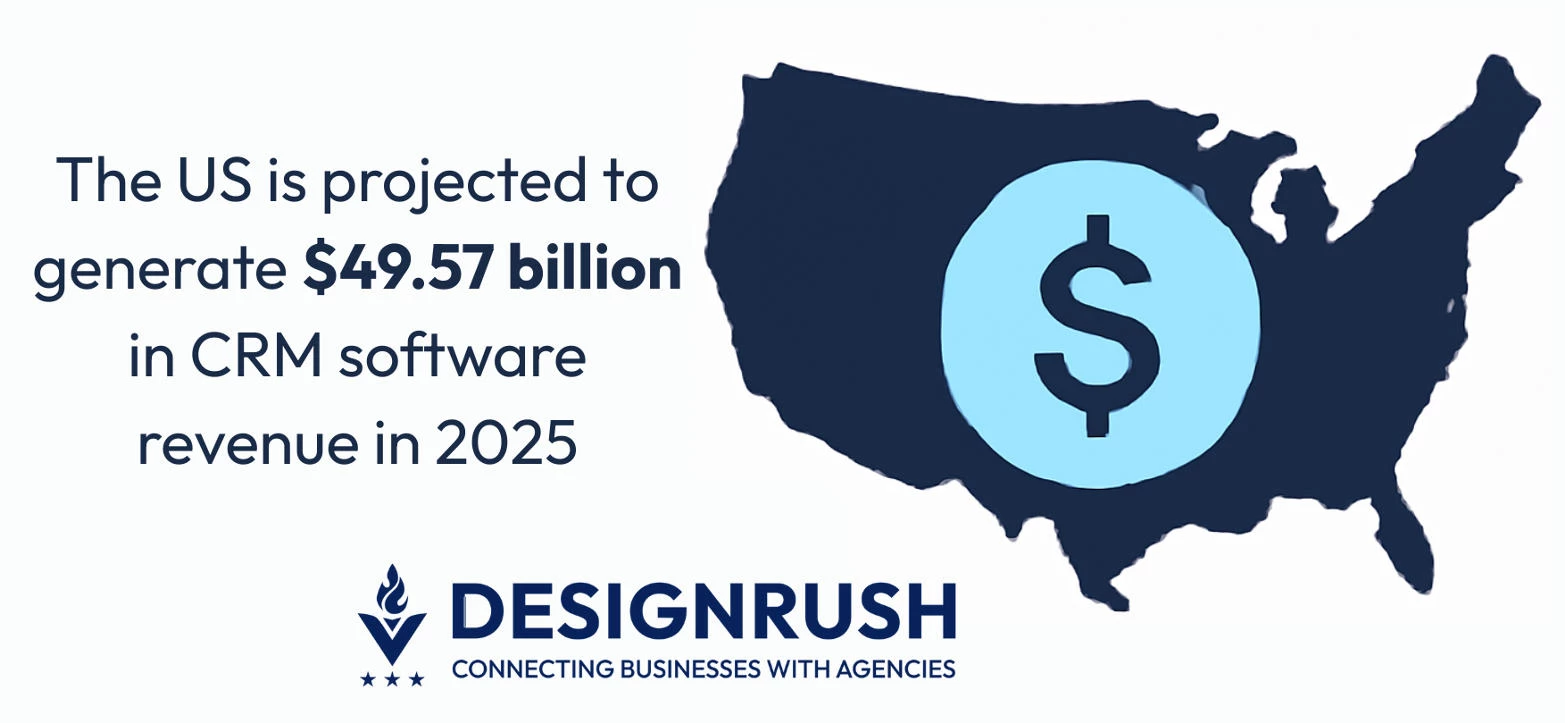
- North America at the forefront: Over 60% of businesses have CRM systems in NA, the highest of any region. The US alone accounts for a significant share of global CRM software revenue, projected around $49.57 billion in 2025.
- APAC’s rapid growth: The Asia-Pacific region’s CRM adoption is growing faster than the global average, at an estimated 16% year-over-year. Emerging markets in Asia are embracing cloud and mobile-first solutions as they undergo digital transformation.
- Sales teams rely on CRM the most: In companies that have a CRM, the sales department has the highest usage: about 80% of sales reps use CRM to log calls and track deals.
- Marketing teams benefit too: 73% of marketers say they use their company’s CRM system to access sales and lead data to improve their campaigns. This alignment between marketing automation and CRM is critical for lead nurturing.
- Customer support teams are catching up: 68% of customer service leaders use a CRM as part of their support operations — after all, sales and support data in one place is key to good service.
Business Takeaways
Here are actionable steps to maximize CRM benefits based on these insights:
- Focus on industry-specific CRMs: Tailor your CRM solution to your industry’s needs. Vertical-specific CRMs offer unique features that streamline workflows, improving both user adoption and customer satisfaction.
- Integrate CRM across departments: Align your sales, marketing, and customer service teams with a shared CRM platform to improve collaboration, streamline workflows, and ensure seamless customer experiences.
- Enhance cross-functional alignment: Marketers should actively use CRM data to drive campaigns. Aligning marketing automation tools with CRM helps improve lead nurturing and boosts conversion rates.
Platform Usage Statistics: Salesforce, HubSpot, Microsoft & More
The CRM software market continues to be led by a few key players, with many niche and vertical players comprising the rest. According to recent industry surveys, the approximate CRM market share by vendor in 2025 is as follows:
Feature Usage & Gaps
- CRM for email and outreach: About 61% of companies use their CRM for email marketing or automated outreach as a primary use-case. Small businesses in particular lean on CRM to organize contacts and send campaigns in lieu of separate email tools.
- Analytics underutilization: Only 34% of CRM users leverage advanced analytics and reporting features to drive business decisions (Salesforce).
- Yet-to-be-unlocked value: 43% of customers use fewer than half the features available in their CRM system, often because they find them too complex. This represents an opportunity to unlock value with better dashboards and analytics training.
- Integrations are key: 56% of CRM users prefer platforms with native integrations to other apps. In fact, integration capability is often a deciding factor in CRM selection.
- Rise of AI features: Salesforce reports a 35% year-over-year increase in customers using its AI forecasting and automation tools. 67% of IT professionals prioritize Gen AI in CRM.
- Mobile CRM is more effective: 65% of sales reps with mobile CRM access achieve their sales targets, compared to only 22% of those without mobile CRM. Clearly, a mobile-friendly CRM (or one with a good app) is no longer optional.
Business Takeaways
Here’s how you can ensure your CRM system drives efficiency for your organization:
- Choose the right CRM platform for your needs: Focus on selecting a CRM that aligns with your business size, industry, and technical requirements. Leading platforms like Salesforce or Zoho are great options, but niche CRMs may serve specific needs better.
- Unlock the full potential of CRM features: Many businesses underutilize advanced CRM features, like analytics and automation. Invest in training to ensure your team takes full advantage of the CRM’s capabilities.
- Implement AI-driven CRM features for efficiency: Explore CRM tools that offer AI forecasting and predictive analytics. These features can help increase efficiency, drive better decision-making, and improve forecasting accuracy.
- Prioritize mobile CRM and automation: With many businesses moving toward remote work and digital solutions, adopt CRM tools with strong mobile capabilities and automated outreach features to stay agile and responsive to clients.
Strategic CRM Use Cases
CRM systems offer more than just basic customer tracking; they are powerful tools for driving growth across various business functions.
- CRM for personalization: Personalized email campaigns based on CRM data enjoy a 14% higher click-through rate than non-personalized emails. (Overall, personalization boosts ROI by 10% to 30%).
- CRM and CPQ (configure-price-quote): Customers using integrated proposal tools see average deal sizes increase by 10% to 15% due to more consistent upselling (e.g. suggesting add-ons based on CRM data).
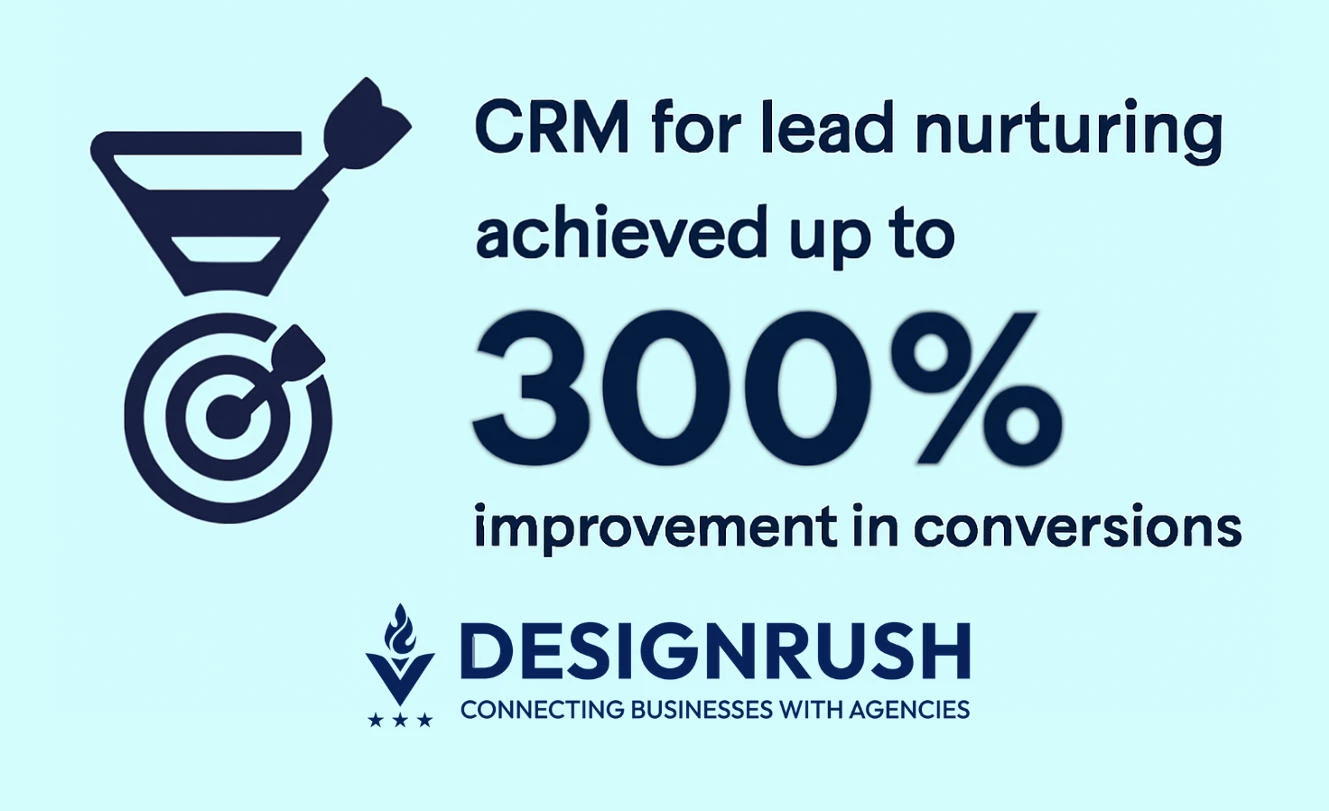
- CRM for lead segmentation: A Forrester study noted that companies using CRM for tailored lead nurturing and segmentation achieved up to 300% improvement in lead conversion rates.
- CRM and renewal rates: Companies that use CRM automation have seen 10% to 20% higher renewal rate increases compared to manual tracking. Furthermore, proactive service outreach (powered by CRM data) led to a 26% improvement in customer retention (Salesforce).
- CRM consulting: Implementing and optimizing CRM systems has become one of the most in-demand agency services in recent years.
Business Takeaways
To fully leverage the potential of CRM systems, focus on the following:
- Personalize customer interactions: Leverage CRM data to create personalized experiences for your customers, from email campaigns to product recommendations.
- Focus on lead segmentation: Implement CRM-driven segmentation to identify high-value leads and tailor outreach strategies. Using detailed customer data to segment and nurture leads can dramatically increase conversion rates.
- Offer CRM consulting services: Position your agency as a CRM expert by offering consulting, integration, and optimization services. As CRM adoption grows, businesses are seeking help to maximize the value of their CRM systems.
CRM Statistics: Wrap-Up
CRM platforms are essential tools for businesses looking to drive growth, streamline operations, and enhance customer relationships. By fully embracing CRM capabilities, whether through automation, AI-driven insights, or advanced integrations, you can significantly improve ROI and stay competitive in an ever-evolving market.
Our team evaluates agencies globally to assist you in finding a trusted partner. Explore our Agency Directory for the best CRM consulting companies, along with:
CRM Statistics FAQs
1. How can CRM adoption improve team collaboration?
CRM adoption ensures that sales, marketing, and customer service teams share a unified view of customer data, promoting smoother communication, faster decision-making, and consistent customer experiences.
2. What role does AI play in CRM systems?
AI-powered CRM features, such as predictive analytics and sales forecasting, automate repetitive tasks, identify potential leads, and help sales teams prioritize their efforts, driving efficiency and improving decision-making.
3. How do I choose the right CRM for my business?
Consider factors such as your business size, industry needs, and the specific functionalities you require (e.g., integrations, automation, AI capabilities). Evaluate multiple platforms and choose one that aligns with your goals and workflows.