
We’ll decode the latest lead generation statistics and demonstrate how trends drive revenue, covering key benchmarks by channel and industry, as well as emerging shifts like zero-click capture.
Lead Generation Statistics: Key Points
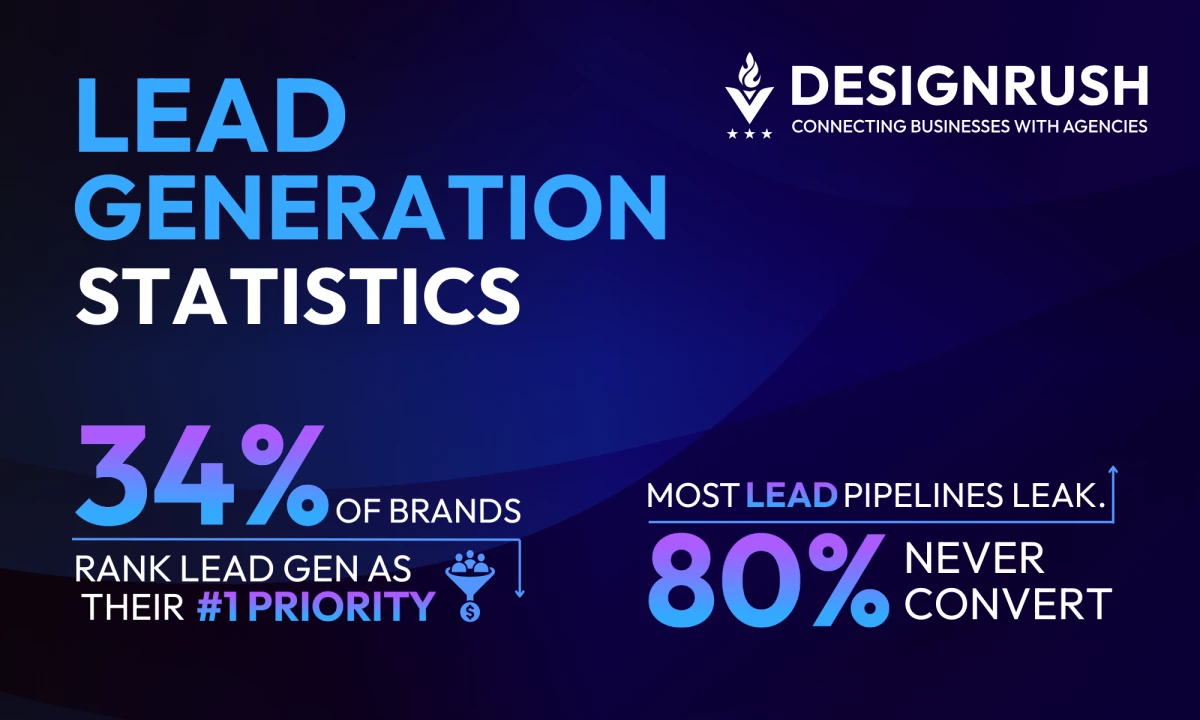
- Lead gen is the top growth priority for 34% of companies, yet 80% of leads never convert.
- Social media now drives leads for 68% of marketers, with LinkedIn as the most effective channel.
- Content marketing generates 3× more leads than outbound at 62% lower cost.
Lead Generation Stats Overview
Generating leads is a strategic, measurable process, not luck. When done right, it’s data-backed science that drives consistent growth.
Let’s dive into the numbers.
The Revenue Impact of Lead Generation
Lead generation is the engine that powers business growth. Companies that prioritize a healthy, data-driven pipeline consistently outperform those that don’t.
Lead Generation Is the #1 Growth Priority for Modern Companies
Revenue growth starts with a steady flow of qualified leads. For today’s CEOs and CMOs, filling the pipeline is priority #1 because without new leads, revenue stalls.
Key stats that highlight this: 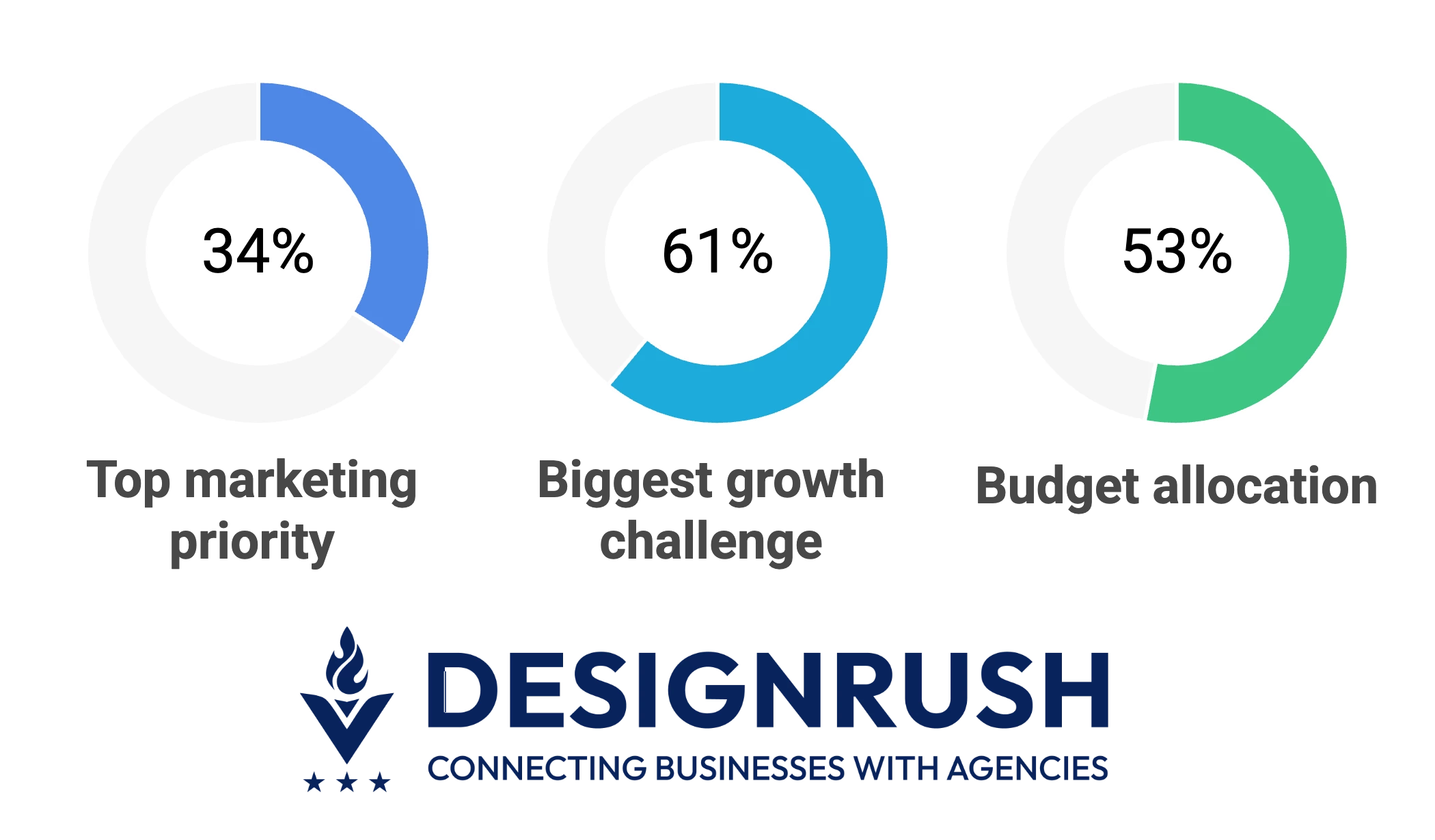
- 34% of companies rank lead generation as their top marketing priority, ahead of brand awareness and sales enablement (Hubspot).
- 61% of marketers say generating leads is their biggest challenge to growth (Hubspot).
- 53% of marketers allocate at least half of their marketing budgets to lead generation (BrightTALK).
What these stats mean for agencies:
- Benchmark your clients’ lead performance against their industry peers to set smarter KPIs — and justify budget increases where needed.
- Double down on channels that directly fuel the pipeline: Prioritize campaigns with clear attribution to leads and sales, such as inbound SEO or LinkedIn lead gen forms.
Sales & Marketing Alignment Is Key to Pipeline Growth
Even the best lead gen strategy won’t work if sales and marketing aren’t on the same page. Misalignment on lead quality, hand-offs, and who owns the pipeline can quickly stall growth.
Key stats that prove the point: 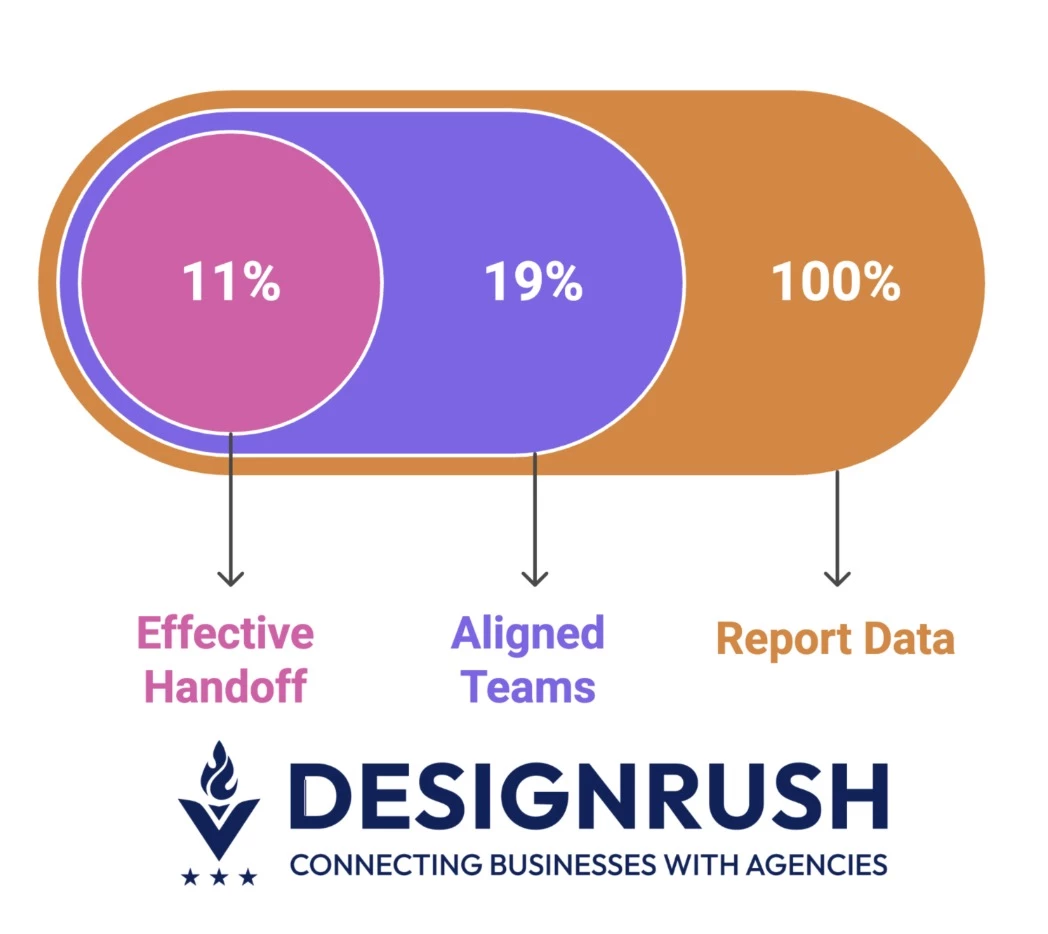
- Highly aligned sales and marketing teams achieve 19% faster revenue growth and 15% higher profitability on average (Forrester).
- Only 11% of companies have a truly effective lead hand-off process in place – a gap that data transparency and shared KPIs can close (Influ2).
To drive growth, agencies should:
- Facilitate better lead scoring and handoff processes: Ensure your marketing-qualified leads (MQLs) meet sales’ criteria and track what happens post-handoff.
- Help clients align KPIs: Unify sales and marketing goals around pipeline health and revenue, not isolated metrics like cost-per-lead or MQL volume.
- Recommend CRM and marketing automation integrations: When data flows seamlessly between systems, teams can track lead quality and close rates in real-time.
Most Leads Leak Before Converting
Most leads never make it through the full funnel, highlighting the need for better nurturing. Even after you acquire leads, the battle is only half-won.
Key data points reveal the scale of the problem:
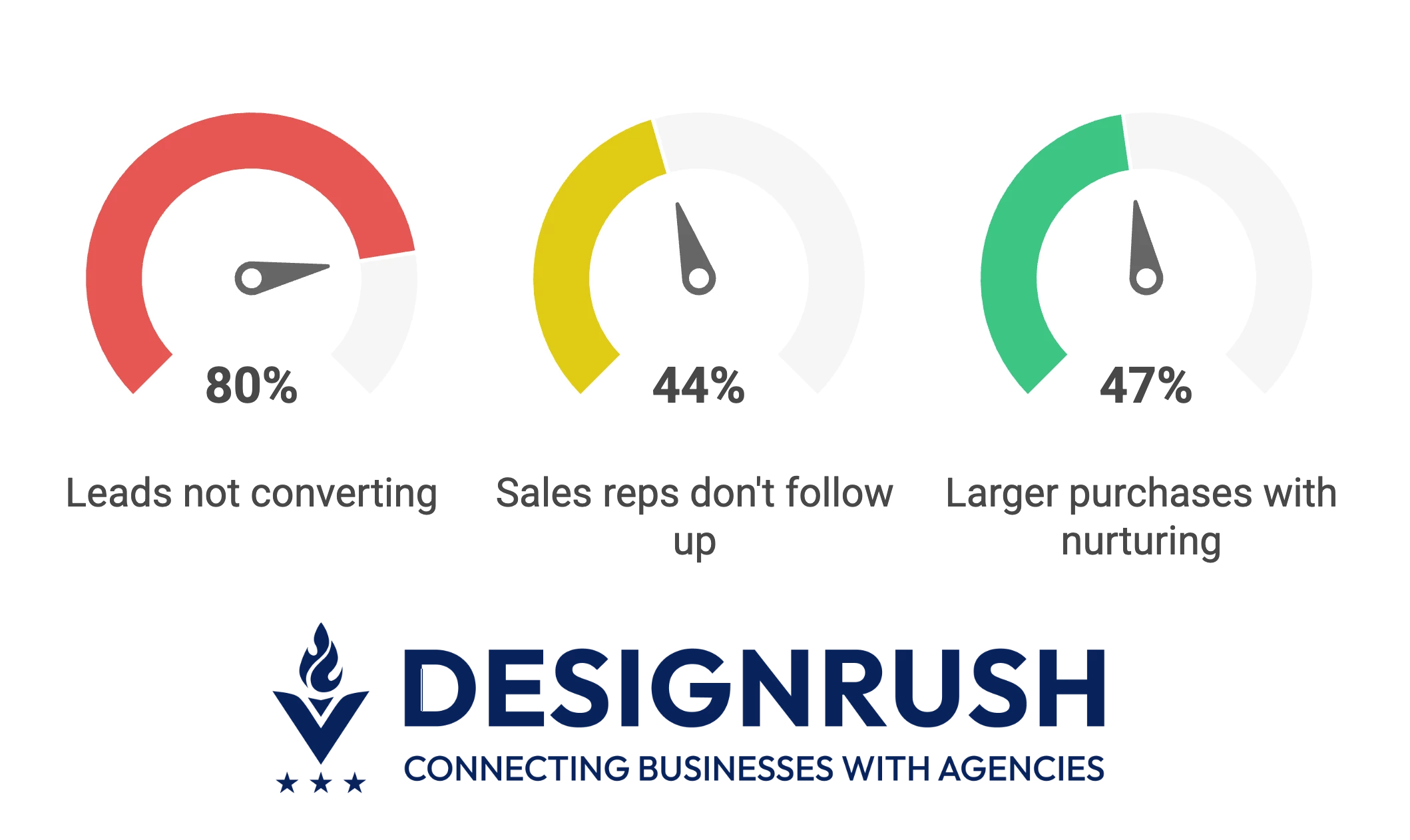
- A staggering 80% of new leads never convert into a sale, often due to poor nurturing or misqualification (Invesp).
- 44% of sales reps never follow up with a lead at all, leaving revenue on the table (Exploding Topics).
- Nurtured leads make purchases 47% larger than non-nurtured leads (The Annuitas Group, Demand Generation Study)
Huge drop-off rates are a wake-up call. To improve marketing ROI:
- Map your funnel leakage: Audit where leads drop off and fix the biggest leaks first, whether it’s a weak follow-up process or poor lead qualification.
- Don’t abandon costly leads: If your CPL is high on certain channels, double down on nurture campaigns (email sequences, remarketing) to extract more value from each lead.
Rachel Hernandez, Senior Director of Content at Next Net Media, explains:
"At what point are your leads walking away? What was your last outreach before that? Where are the most conversions happening? How can you elevate that honeypot before the churn?
Chances are good that it’s going to come back to mutual engagement, providing useful value, building a good relationship, and striking at the optimal times."



Lead Generation Benchmarks by Channel
Today’s lead generation spans many channels and industries, each with unique benchmarks. Knowing what’s “good” for your niche helps set smart goals, optimize spend, and stay ahead.
Content Marketing Powers the Lead Funnel in 2026
Content marketing remains one of the most effective lead generation drivers, powering both lead volume and nurturing at a lower cost than paid ads.
Here’s the latest content lead generation statistics: 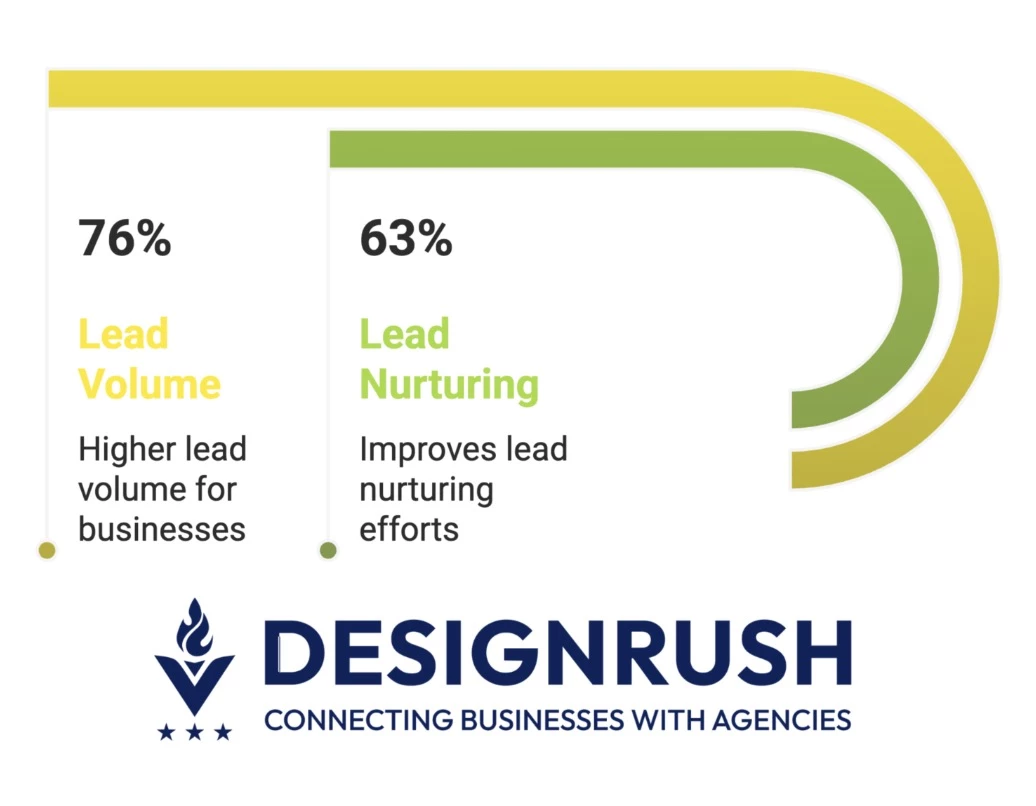
- Content marketing generates 3× more leads than traditional outbound marketing while costing 62% less (DemandSage).
- B2B marketers rank their website, blog, and SEO (all content-driven channels) as their #1 lead gen ROI source (Hubspot).
- About 75% of marketers say content marketing boosted their demand and lead gen efforts (Hubspot).
- 76% of businesses credit content marketing with higher lead volume; 63% say it improves lead nurturing (Forbes).
- Brands using content as a lead driver see up to 6× higher conversion rates than those who don’t (Forbes).
When it comes to strategies, here are some ways to drive results:
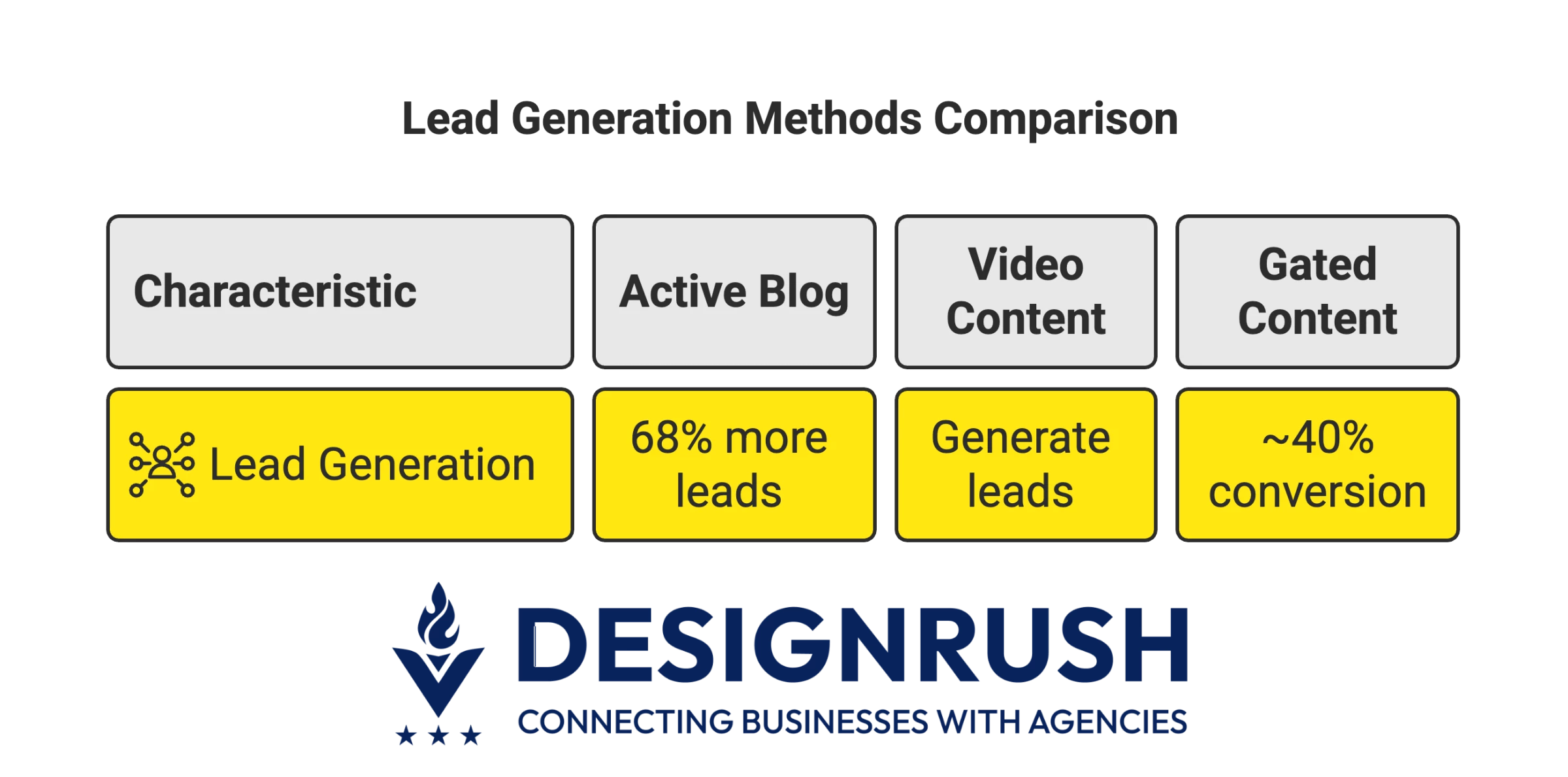
- Brands with an active blog generate 68% more leads than those without one (Hubspot).
- Video content is another strong lead generator: 88% of marketers say video marketing helps generate more leads, whether through webinars, YouTube, or social clips (Wyzowl).
- Strategically gated content (e.g., downloadable guides) can convert up to 41% more visitors into leads compared to similar ungated content, if the value is clear (MonsterInsights).
What these stats mean for you:
- Prioritize consistent, quality content creation across your owned channels (blogs, videos, newsletters) to fill the top of your funnel efficiently.
- Use a mix of formats: Blogs drive SEO, videos improve engagement, and interactive tools (quizzes, calculators) generate warm leads.
- Gated content works — but only when it’s worth it. Create genuinely valuable assets (eBooks, templates, exclusive insights) to drive conversions.
Email Marketing Remains the Highest-ROI Lead Channel
With unmatched ROI and direct access to warm audiences, email often tops marketers’ lists for driving sales-qualified leads cost-effectively, far outperforming many paid channels.
The latest email lead generation statistics show: 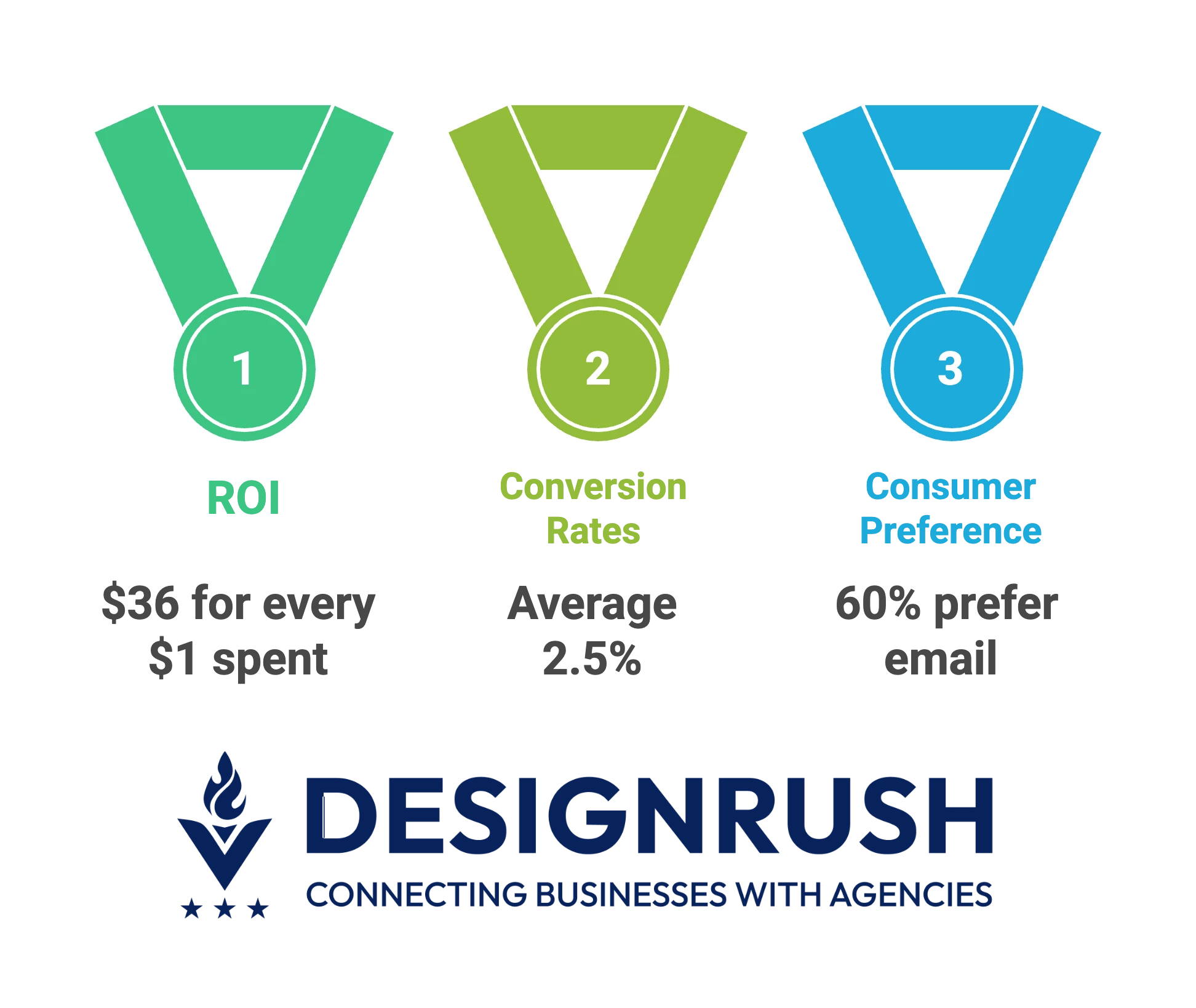
- Email marketing drives an average ROI of $36 for every $1 spent, with some industries (retail, eCommerce, consumer goods) hitting ~$45 per $1 spent (Statista).
- Email achieves some of the highest conversion rates among digital channels, averaging 2.5% overall — 2.8% for B2C and 2.4% for B2B audiences (FirstPageSage).
- 50% of marketers say email marketing has the biggest impact on their multi-channel lead generation success (eMarketer).
- Consumers still prefer email: Surveys show 60% of consumers prefer that brands contact them via email over other channels (Square).
- Younger generations aren’t tuning out either: about 79% of Millennials and 57% of Gen Z say they enjoy receiving brand emails (Statista).
- 60% of online shoppers make at least one purchase a month after receiving a marketing email (Digital Commerce 360).
When it comes to strategies, here are some ways to drive results:
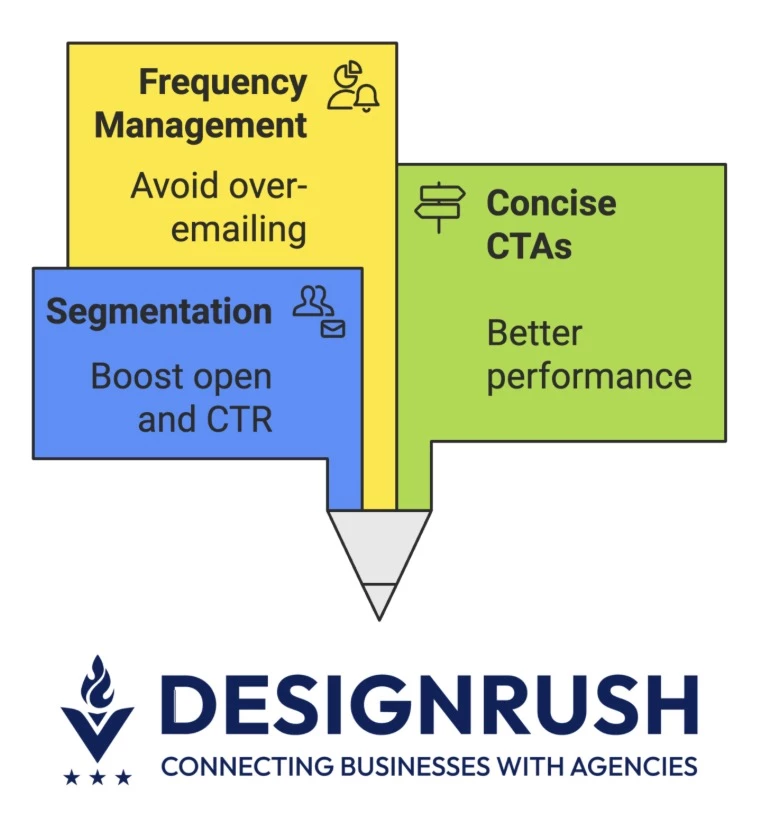
- Segmented email campaigns see 30% higher open rates and 50% higher click-through rates than non-segmented sends (Hubspot).
- The best-performing lead gen emails are concise and focused. 73% of marketers say emails with 1–2 clear CTAs perform best (Databox)
- But beware of over-emailing: 69% of subscribers unsubscribe due to excessive sends, and irrelevant content turns off over half of recipients (Constant Contact).
What these stats mean for agencies:
- Optimize your cadence: Balance regular outreach with audience tolerance to avoid unsubscribes. The sweet spot is delivering consistent value at a reasonable cadence.
- Keep emails simple and focused: Limit CTAs to one or two actions to drive clarity and clicks.
- Test and improve: Continuously test subject lines, send times, and content formats to keep your campaigns performing.
Social Media Now Rivals Search as a Lead Gen Powerhouse
Social media has grown into a major lead generation engine for both B2B and B2C brands.
Today, it ranks just behind search as one of the top sources of leads, with marketers seeing strong results from a mix of paid and organic strategies.
Social media lead gen stats below highlight this trend: 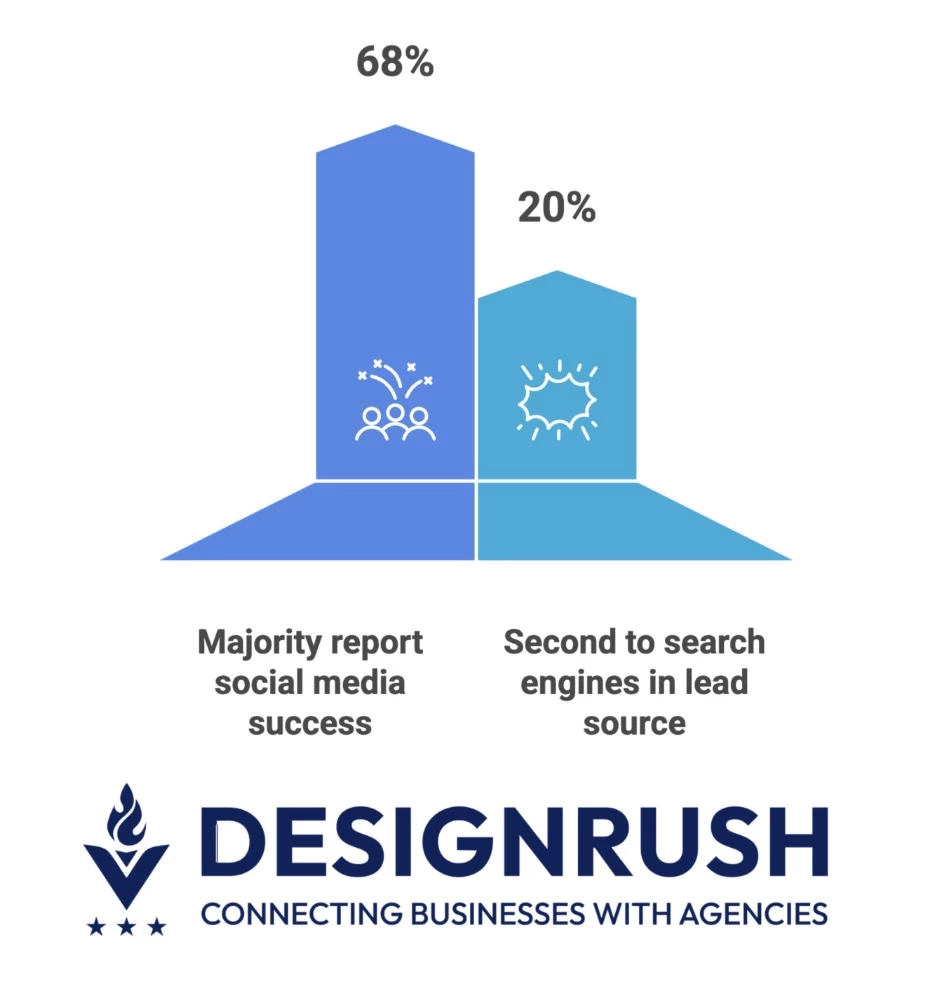
- Social media has matured into a key lead gen channel. 68% of marketers report that social media marketing has helped them generate leads (Social Media Examiner).
- Around 20% name social media as their #1 source of leads, second only to search engines at 27% (Exploding Topics).
- Paid social delivers ROI: In 2024, paid social was the #2 channel for marketing ROI across both B2B and B2C (Hubspot).
- 72% of marketers with 5+ years of experience say social helps generate leads, versus only 42% of newer marketers, highlighting the value of expertise and optimization (Social Media Examiner).
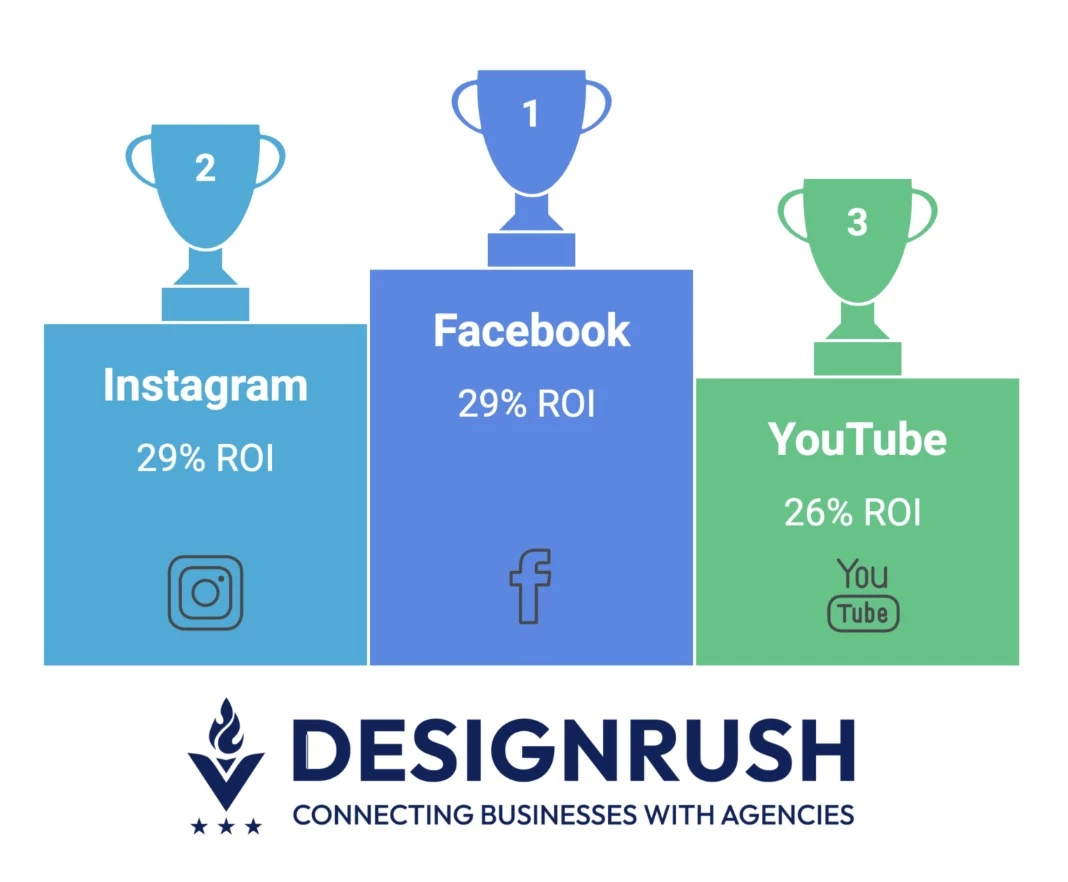
- Facebook and Instagram are tied as top social platforms for ROI (~29% each), followed closely by YouTube (26%) and TikTok (24%) (Hubspot).
- LinkedIn dominates B2B: 89% of B2B marketers use LinkedIn for lead gen efforts (Sopro).
- 40% of B2B marketers even name LinkedIn as the most effective channel for acquiring high-quality leads, and 62% say LinkedIn produces leads for them effectively (Wpromote, State of B2B Marketing Report).
- Instagram powers B2C lead gen: Influencer content and Instagram Live drive high engagement, with 22% of marketers ranking Instagram influencers as a top ROI source after Facebook (Hubspot).
Here’s how to turn these insights into action:
- Double down on proven channels: For B2B, invest in LinkedIn; for B2C, focus on Instagram and Facebook, then expand to TikTok and YouTube where your audience spends time.
- Use rich media: Video, live streams, and interactive content consistently drive higher engagement and lead conversion.
- Partner with influencers who align with your brand, especially on Instagram and TikTok, to build credibility and reach.
Emerging Trends Driving Lead Generation ROI
The lead gen playbook is evolving fast. Multi-touch journeys and owned media channels are changing how brands identify, capture, and convert leads.
Multi-Touch Journeys Are the New Standard
Buyers don’t convert after a single touchpoint. Effective lead gen now orchestrates multiple engagements across channels and devices.
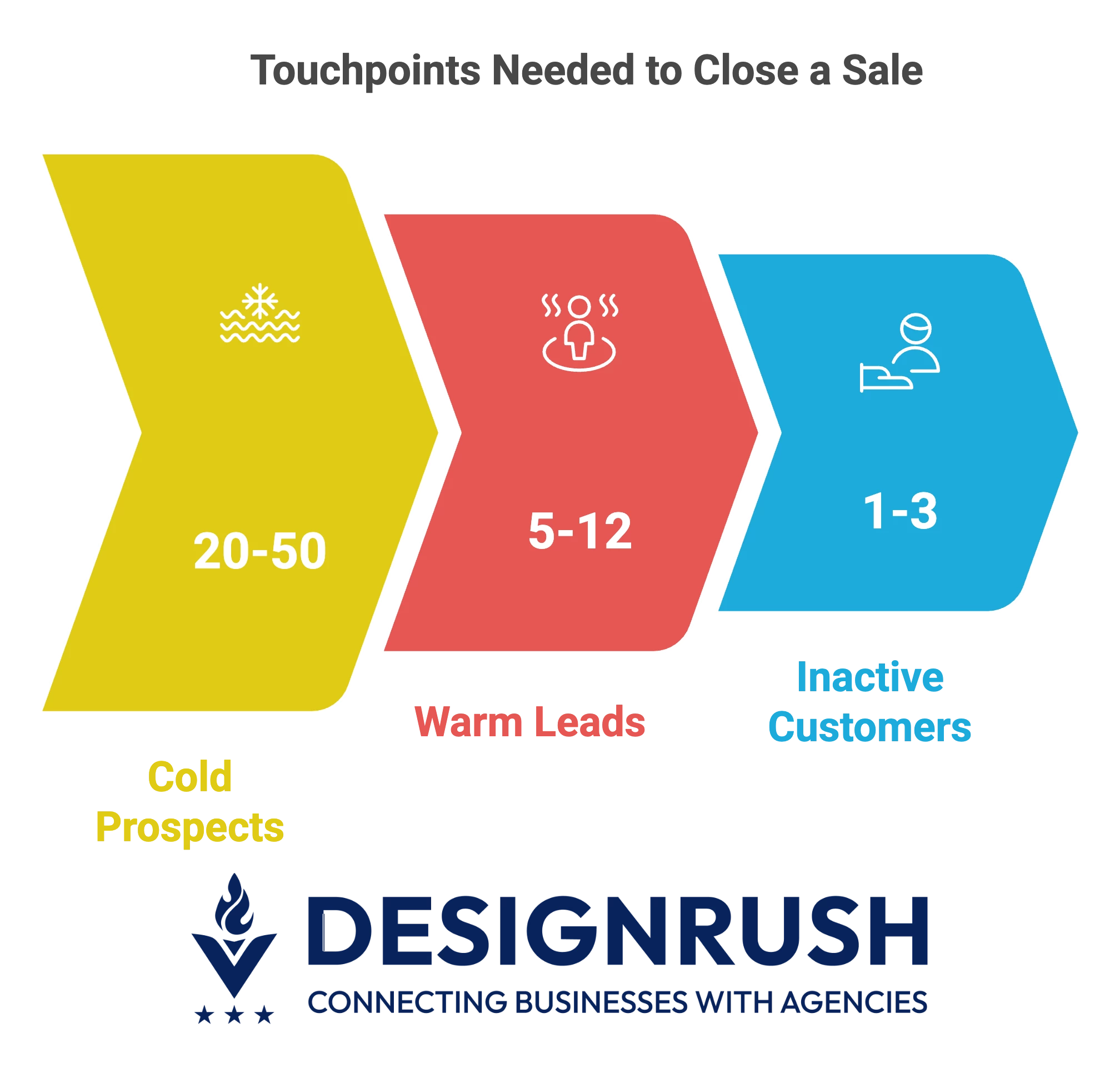
According to EmailToolTester’s research, the number of touchpoints needed to close a sale varies widely — anywhere from 1 to 50 — depending on where the prospect is in their buying journey:
- Inactive customers typically convert after just 1 to 3 touches.
- Warm inbound leads often need 5 to 12 touchpoints.
- Cold prospects may require as many as 20 to 50 touches.
What these stats mean for agencies:
- Run coordinated campaigns: Sync messaging across paid, organic, email, and events to guide leads through the funnel.
- Switch to multi-touch attribution: Tools like HubSpot and Adobe Attribution let you see the full journey, not just the last step.
Rise of Zero-Click Leads From Owned Media
The lead generation strategies are shifting from paid traffic to owned audiences.
Instead of driving clicks to landing pages, brands are capturing leads directly through newsletters, communities, and podcasts, creating more sustainable, lower-cost pipelines.
Recent stats reflect this shift:
- 59% of marketers find email at least twice as effective for lead generation as PPC or social ads, likely because those leads come in warmer through content (Sopro).
- Social platforms are enabling zero-click lead capture, too. 90% of B2B marketers using LinkedIn Lead Gen Forms lowered their CPL by reducing friction (LinkedIn).
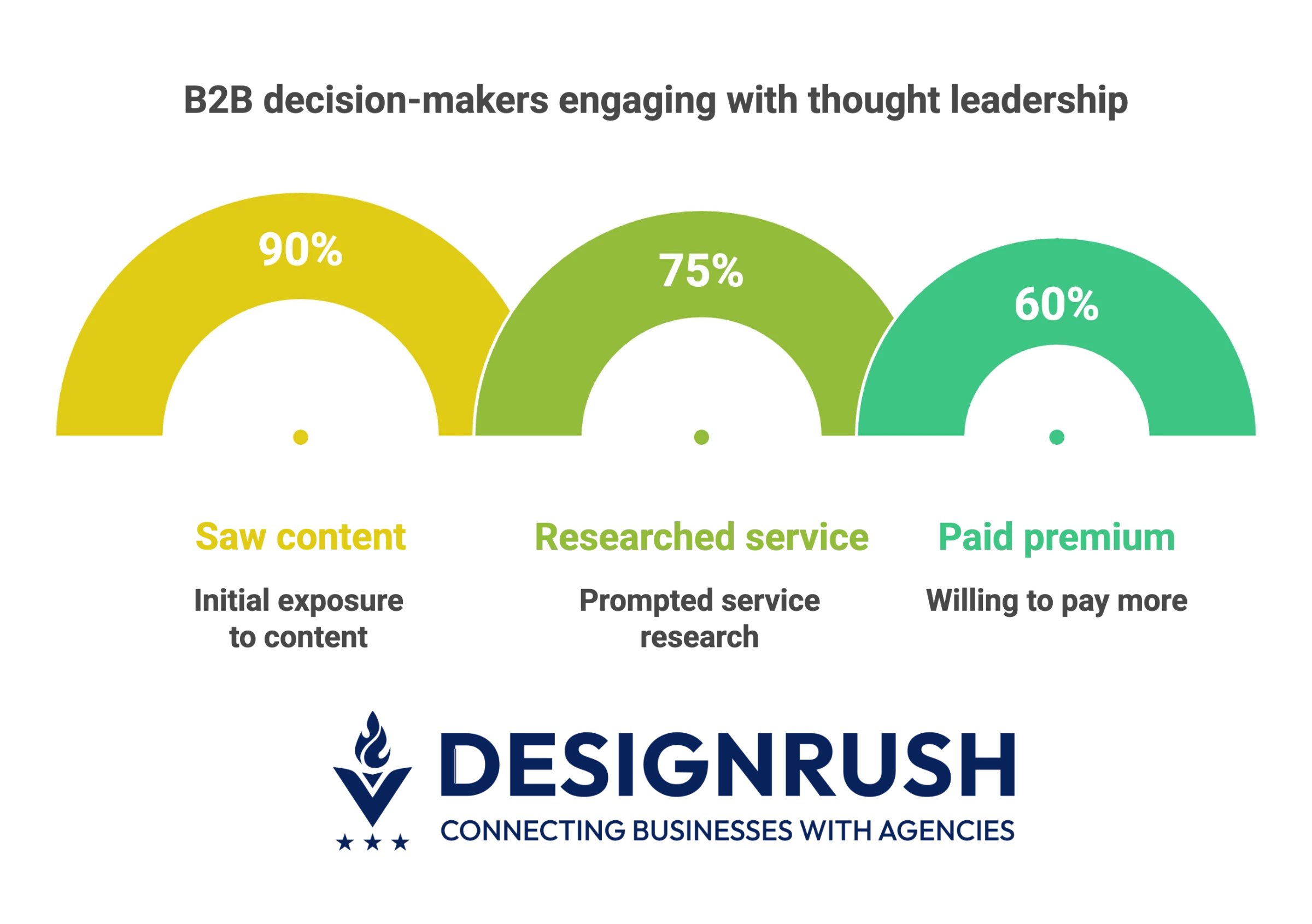
- 9 in 10 decision-makers are more receptive to agencies that consistently produce high-quality, insight-rich content (LinkedIn/Edelman study, 2024).
- 75% of decision-makers say a single piece of compelling thought leadership prompted them to research a service they weren’t considering before (LinkedIn/Edelman).
- 60% of B2B buyers say good thought leadership makes them willing to pay a premium to work with that firm (LinkedIn/Edelman).
What these stats mean for you:
- Shift focus from traffic to trust: Thought leadership content — whether in a blog, email, or podcast — warms up leads before they ever fill out a form.
- Use native lead capture tools: Use platforms like LinkedIn Lead Gen Forms or newsletter subscriptions to remove friction and convert more users without leaving the platform.
- Think like a publisher, not just an advertiser: Consistently produce valuable, educational content that builds audience loyalty and ultimately feeds your sales pipeline.
Average Cost Per Lead by Industry
Industry greatly influences CPL. High-ticket industries (like SaaS and financial services) tolerate higher CPLs due to long-term deal value, while consumer verticals demand efficiency.
2026 benchmarks reveal a huge range in what different sectors pay per lead, as per DemandSage’s Lead Generation Statistics report: 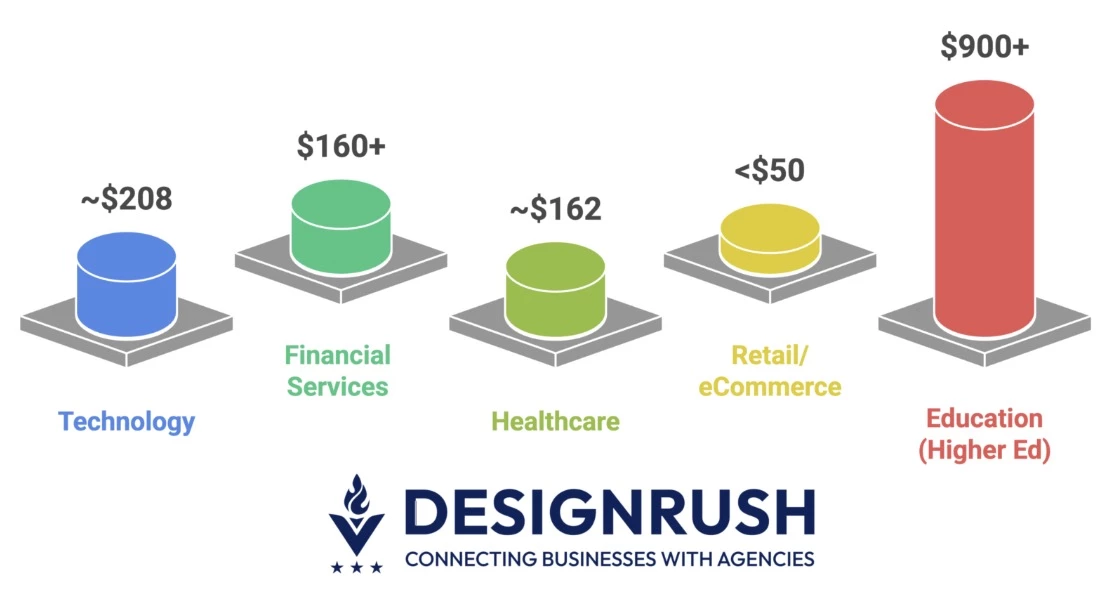
- Technology (B2B Tech/SaaS): ~$208 per lead on average. Tech leads are pricey due to high competition and longer decision cycles.
- Financial services: $160+ per lead, driven by high customer lifetime value.
- Healthcare: ~$162 per lead due to moderate LTV and compliance complexities
- Retail/eCommerce: Often <$50 per lead, thanks to shorter sales cycles and high-volume funnels. Some verticals report an average CPL around $91 (FirstPageSage).
- Education (Higher Ed): $900+ per lead (FirstPageSage); the highest, due to intense competition for students.
What these stats mean for agencies:
- Contextualize CPL targets: Don’t judge performance on cost alone; relate it to your client’s lifetime value and sales cycle length.
- Use sector benchmarks to calibrate expectations: A 3-figure CPL may be normal for B2B tech, but a warning sign in retail.
- Optimize lead mix: Balance costly but high-quality channels (e.g., LinkedIn for SaaS) with scalable, lower-CPL options (e.g., influencer marketing for B2C).
Lead Gen Statistics: Final Thoughts
Lead generation in 2026 is driven by data, not gut feelings. Marketing leaders who stay insight-rich and metrics-focused will allocate resources more wisely, justify their budgets more easily, and ultimately drive more revenue growth than those who rely on outdated assumptions.
The focus today is quality over quantity: nurturing the leads you’d otherwise lose, shifting budget to what works, and aligning campaigns with business outcomes.

Our team ranks agencies worldwide to help you find a qualified partner. Visit our Agency Directory for the Top Lead Generation Companies, as well as:
- Top B2B Lead Generation Agencies
- Top Digital Marketing Agencies
- Top Outreach Companies
- Top Advertising Agencies
- Top Email Marketing Agencies
Lead Gen Stats FAQs
1. What is the average cost per lead by industry?
It varies widely. As of 2024 data, the overall average CPL is about $198 across industries, but specific sectors differ:
- B2B Tech: ~$200+ per lead
- Finance/Legal: $100–$300+
- Healthcare: ~$150–$200
- B2C eCommerce: Often <$50; retail CPL can be $30–$50
These are averages — the right CPL depends on your conversion rates and deal size. A $200 lead is great if it converts to a $20K sale.
2. What’s changing in lead generation in 2026?
Several big shifts are underway:
- AI is streamlining lead scoring and chat interactions.
- Multi-touch attribution gives better insight into the funnel.
- Owned channels (content, email, communities) are gaining ground as ad costs rise.
- The focus is shifting to lead quality and pipeline impact, not just volume.
Lead gen is now a core business growth driver, with tech-savvy, data-driven teams leading the way.