
Hiring skilled restaurant staff is no easy feat, especially when you’re trying to figure out how to find restaurant employees who are qualified, available, and ready to work.
To help you find the right fit faster, we've rounded up 15 of the best restaurant job boards, comparing each restaurant hiring platform by pricing transparency, role fit, regional coverage, and hiring model.
Pricing reflects what each platform publishes as of this writing, and where a platform doesn't publish official rates, that's noted below.
Best Restaurant Job Boards: Key Findings
OysterLink, Poached Jobs, Culinary Agents, Hosco, Hcareers, and Good Food Jobs are best for restaurants that want hospitality- or niche-focused candidates.
Indeed, Snagajob, Sirvo, Hospitality Online, Restaurant Zone, ZipRecruiter, and Craigslist give you the broadest reach, whether in volume, applicant tracking, recruiting support, or cost.
Instawork and Qwick are best for last-minute shifts, event staffing, seasonal demand, and flexible hourly coverage.
Nearly 3 in 4 Restaurant Operators Still Struggle To Hire Experienced Managers and Chefs
According to the National Restaurant Association’s (NRA) 2026 State of the Restaurant Industry report, nearly three quarters of operators plan to hire but expect difficulties finding experienced managers and chefs this year, even as the industry keeps growing.
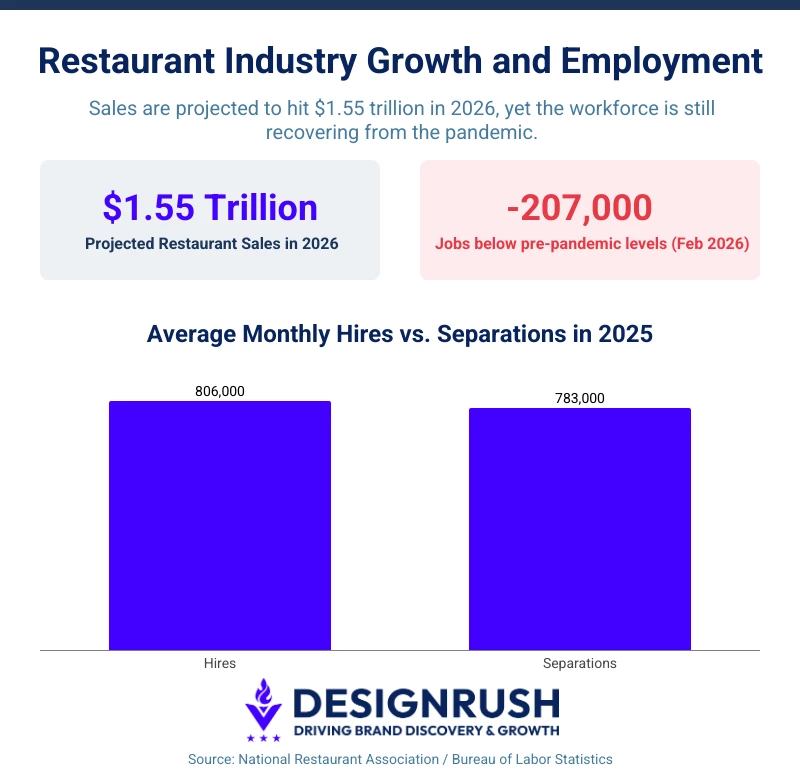
According to the same NRA report, Restaurant and foodservice sales are projected to reach $1.55 trillion in 2026, with operators expected to add more than 100,000 jobs and bring total employment to 15.8 million.
But hiring demand isn't evenly distributed.
NRA's own restaurant employment tracking shows full-service restaurants remain at 174,000 jobs below their pre-pandemic staffing levels, while limited-service and quick-service operators have largely recovered.
Turnover only adds to the pressure, with accommodation and food services posting a 4.3% quit rate in March 2026, more than double the all-industry average and the highest of any major US sector tracked by BLS JOLTS, leaving many restaurant employers replacing staff, filling schedule gaps, preparing for busy periods, and building longer-term teams at the same time.
That is why the platform you choose should depend on the role:
- A server opening may need local reach and fast applicant flow.
- A sous chef role may need a smaller pool of people with real kitchen experience.
- A general manager search may need stronger screening.
- A catering event, weekend rush, or last-minute callout may need shift coverage instead of a permanent job post.
Use the list below to match each restaurant hiring platform to the job you actually need to fill.
Restaurant vs. Hospitality Job Boards: What's the Difference?
Not all restaurant job websites work the same way, and several platforms on this list extend beyond restaurant hiring. Here is the quick breakdown:
- Restaurant job boards cover standalone restaurants, cafes, and bars.
- Hospitality job boards cover restaurants plus hotels, resorts, catering, and event venues, and OysterLink, Hospitality Online, Hosco, and Hcareers all fall here.
- Culinary job boards focus specifically on chef and kitchen roles, and Culinary Agents is the example on this list.
- General job boards aren't industry-specific at all, and Indeed, ZipRecruiter, and Craigslist list restaurant roles alongside every other industry.
Best Restaurant Job Boards in 2026
Use the table below to compare the leading restaurant job sites by price, hiring model, role fit, and strongest market before moving into the full reviews.
| Platform | Price to Post | Best Role Types | Best Market |
| OysterLink | $150/post | FOH, BOH, hospitality roles | NYC and Miami |
| Indeed | Free; paid sponsorships | Volume, management, corporate roles | National US hiring |
| Snagajob | Not publicly listed | Seasonal, entry-level, and shift roles | US, Multi-location |
| Instawork | Shift-based markup | Hourly and temp shift roles | US and Canada metro markets |
| Hosco | Free limited posting | Interns, grads, hospitality talent | Global hospitality hiring |
| Poached Jobs | $65/post | FOH, BOH, chefs, managers | North America |
| Restaurant Zone | 15%-25% placement fees | Management and hard-to-fill roles | Nationwide US |
| Qwick | Around 40% hourly markup | Last-minute and event shifts | US hospitality markets |
| Hospitality Online | $445/post | Hotel, resort, venue F&B roles | US hospitality groups |
| Sirvo | $40/post; from $110/location | Restaurant and service roles | US operators |
| Culinary Agents | Free; paid plans from $39/month | Chefs, kitchen, FOH talent | US culinary markets |
| ZipRecruiter | Not officially published | Volume and management roles | National US hiring |
| Hcareers | $249/post | Hotel, resort, and multi-property F&B roles | US and North America |
| Good Food Jobs | $75/post | Farm-to-table and mission-driven food roles | US, strongest on the coasts |
| Craigslist | $10-$75/post per city | Local hourly FOH/BOH roles | US, city by city |
1. OysterLink: Best for NYC and Miami Restaurants Hiring Across All Roles
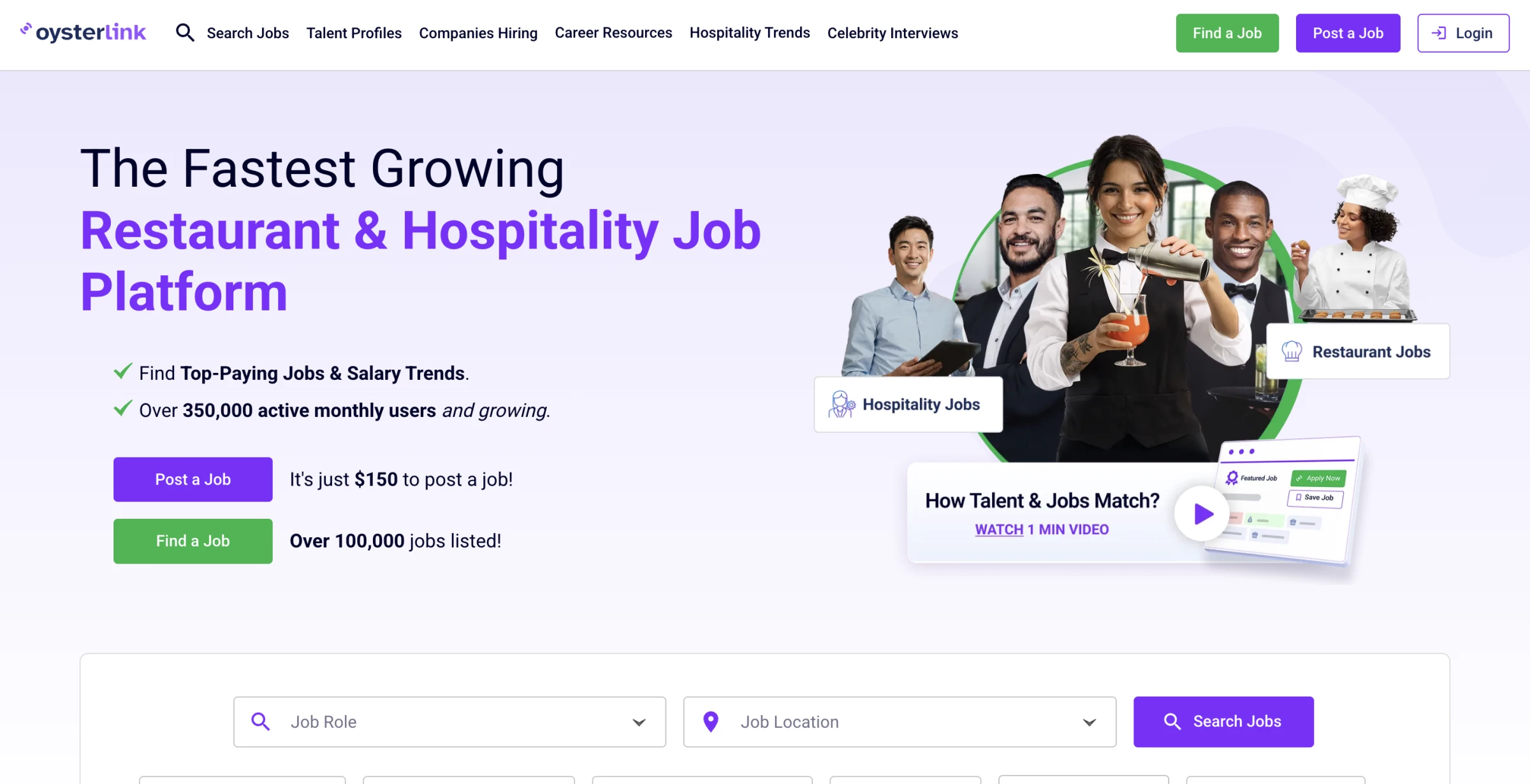
Though still relatively new, OysterLink has established itself as a focused restaurant job board for employers hiring across front-of-house, back-of-house, and wider hospitality roles.
It offers a streamlined interface for employers to post job ads, connect with candidates, and easily review applications.
OysterLink also provides free, easy-to-use resources that simplify your entire hiring process. Think downloadable job description templates, salary and compensation trends, and interview guides.
Another great thing about OysterLink is that its scope extends beyond restaurant jobs to the broader hospitality industry. The platform also features listings for hotels, private members’ clubs, catering and event companies, airport lounges, and more.
Useful features include:
- Restaurant and hospitality-focused job postings
- Flat-fee pricing for predictable hiring costs
- Advanced candidate search filters
- Role-specific job description templates
- Job promotion through newsletters and social media
- Mobile app access for job seekers
OysterLink is a good fit for restaurants that want a targeted hospitality audience without paying enterprise-level job board prices.
- Regional coverage: While it lists jobs throughout the United States, OysterLink focuses on New York City and Miami, giving restauranteurs and hiring managers in these cities access to a broader talent pool.
- Price to post: $150 per post.



2. Indeed: Best for Volume Hiring and National Reach
Indeed is the largest job board in the United States with over 500 million users globally and reaches more job seekers than any other single platform.
For hourly front-of-house (FOH) and back-of-house (BOH) roles, it works, but expect to do more screening, since applicants won't necessarily have food service backgrounds.
For restaurants, Indeed works best when you're hiring for management, corporate roles, or positions that attract candidates across industries like marketing coordinator and events manager.
Key features for restaurant employers include:
- Free job posting options for basic hiring needs.
- Sponsored Jobs for better visibility in competitive local markets.
- Smart Sourcing for direct candidate outreach.
- Screening questions for availability, experience, certifications, and shift fit.
- ATS integrations for larger restaurant groups using hiring software.
If you need to fill multiple positions fast, or if you're in a market where niche platforms have thin coverage, Indeed is the safest bet for sheer volume.
- Regional coverage: Strong US coverage with broad international reach.
- Price to post: Free options available.
- Paid options: Sponsored Jobs with Standard and Premium visibility options based on Indeed's recommendation system.
3. Snagajob: Best for High-Volume Hourly Restaurant Hiring
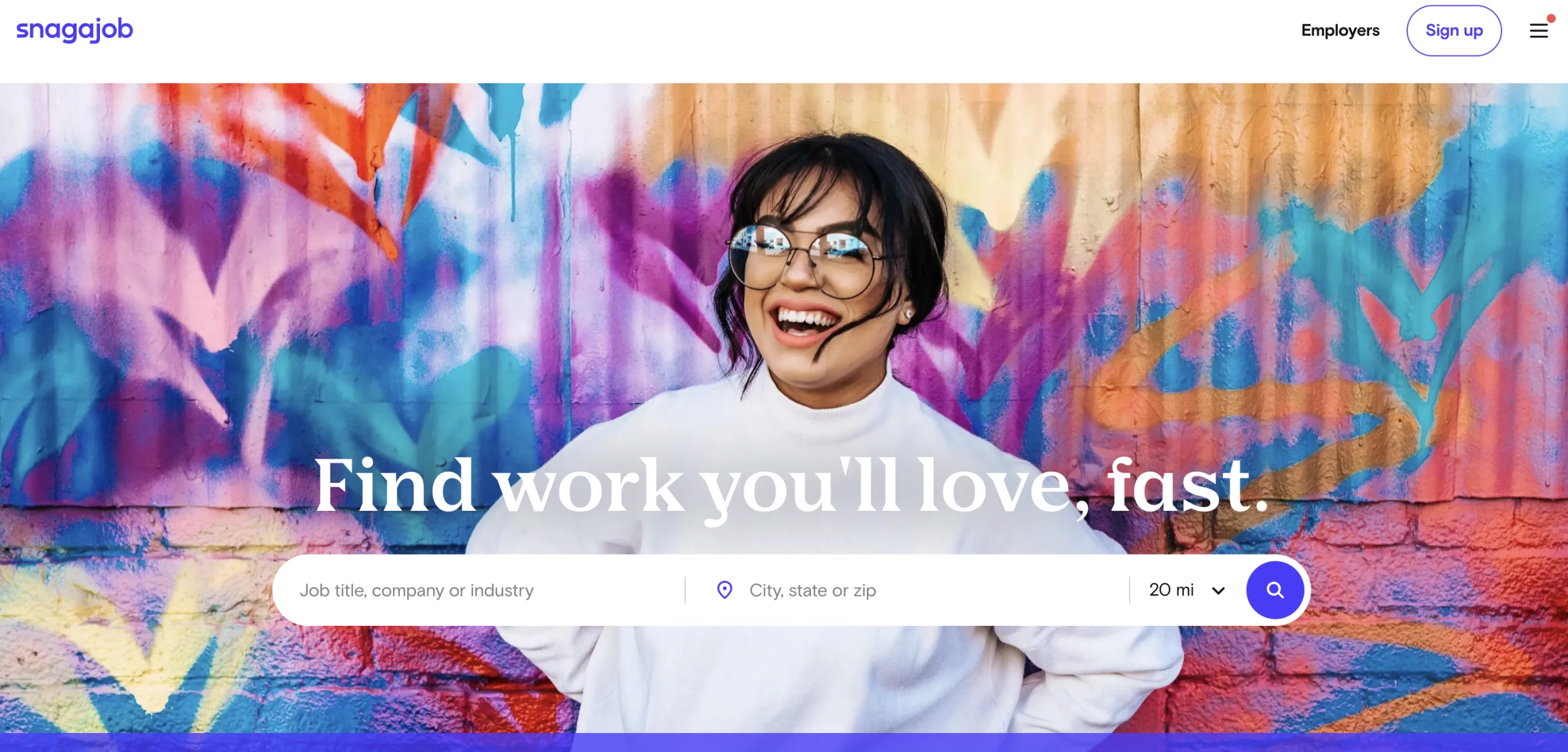
Snagajob is built around hourly work, which makes it a natural fit for restaurants that need steady applicant flow for entry-level, part-time, full-time, seasonal, and shift-based roles.
It is especially useful for QSRs, fast-casual restaurants, cafés, bars, and multi-location operators hiring servers, hosts, cashiers, baristas, dishwashers, cooks, food prep workers, delivery roles, and shift leads.
Snagajob says more than 50% of its members have hospitality experience, so restaurants are not starting from a completely general candidate pool.
Useful features include:
- Hourly job postings for restaurant and hospitality roles
- Candidate matching for local hourly workers
- Sponsored listings for better visibility
- Mobile-friendly applications for part-time and flexible workers
- Applicant tracking and hiring tools for small businesses and enterprise teams
- Enterprise hiring support for employers with ongoing hourly staffing needs
Snagajob works best when the goal is volume and speed for hourly hiring, rather than sourcing senior chefs or executive-level restaurant managers.
It gives restaurants access to candidates already looking for flexible work, which can be helpful when you need to keep applications moving across several locations.
- Regional coverage: US-focused, with strongest value for restaurants hiring hourly workers in local and multi-location markets.
- Price to post: Not clearly listed publicly.
4. Instawork: Best for Flexible Hourly Staffing Across Multiple Cities
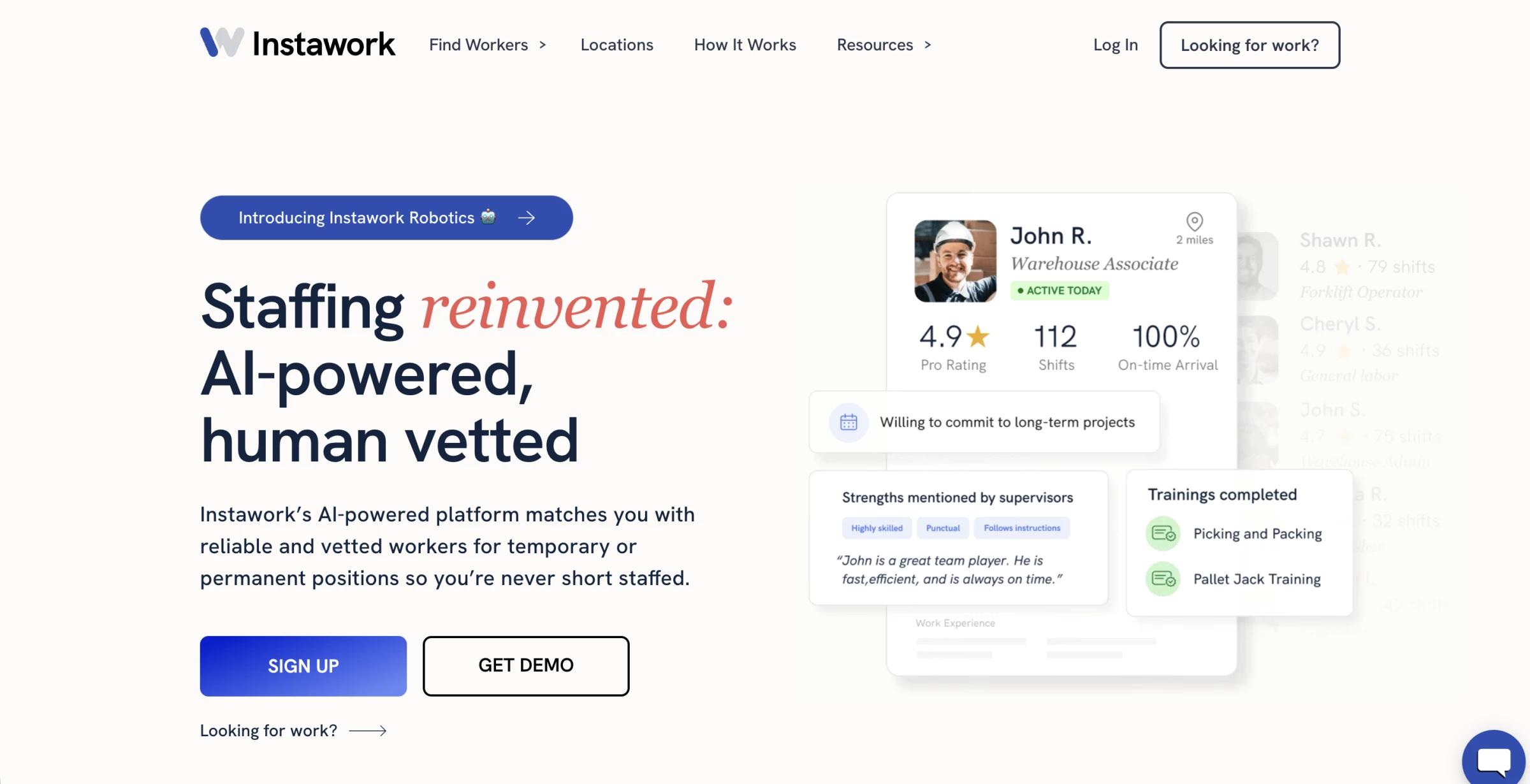
Instawork is built for flexible hourly staffing, so it works differently from a traditional restaurant job board. Instead of posting a permanent opening and waiting for applicants, businesses post shifts that available workers can pick up.
It covers several industries, including hospitality, restaurants, food and beverage, events, retail, warehousing, and cleaning.
For restaurants, it can be useful when you need servers, bartenders, dishwashers, line cooks, prep cooks, event staff, catering staff, or food service workers for short-term coverage.
Useful features include:
- On-demand shift posting for hourly roles
- Access to vetted local workers
- One-time, recurring, seasonal, and temp-to-hire shift support
- Hospitality, restaurant, food service, event, retail, and warehouse staffing
- Ability to search workers by role, city, or ZIP code
- Business app for posting shifts and managing coverage
Instawork makes the most sense when staffing needs are unpredictable. If a dishwasher calls out, a catering job needs more servers, or a busy weekend suddenly looks understaffed, it gives restaurants a way to fill the gap without running a full hiring process.
- Regional coverage: Operates in 60+ cities across the US and Canada, including Los Angeles, Chicago, New York, Austin, and Toronto.
- Price to post: No flat job posting fee publicly listed.
- Paid model: Shift-based staffing with a variable markup over the worker rate.
5. Hosco: Best for International Hospitality Talent and Interns
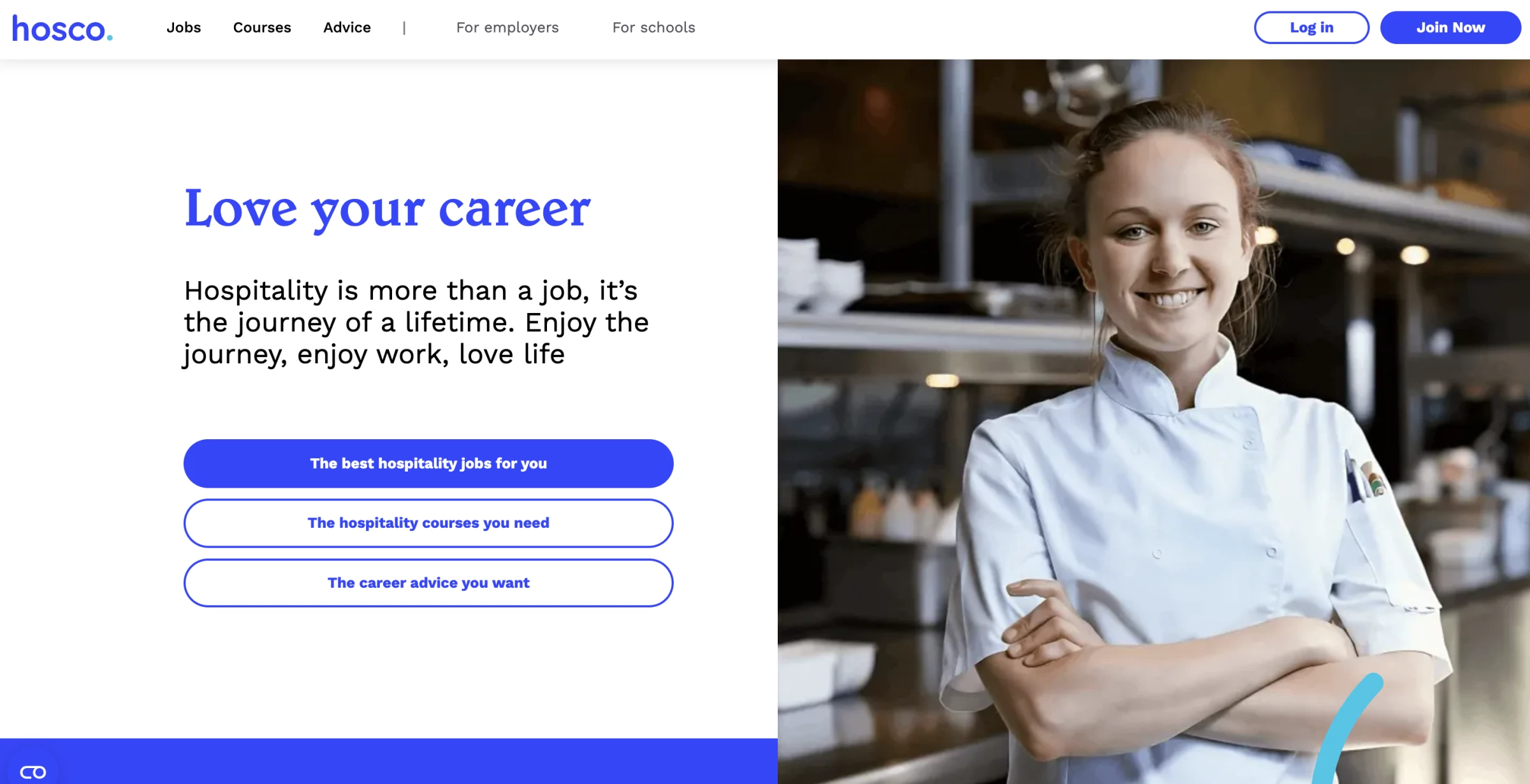
Hosco is a global hospitality career network founded in 2011, headquartered in Barcelona, with a strong presence across Europe, the Middle East, and increasingly the United States.
Its biggest differentiator is its relationship with over 400 hospitality schools worldwide, meaning its candidate pool skews toward motivated students, recent graduates, and early-career professionals who are intentionally building careers in hospitality.
For US restaurants that want to tap into international talent, are open to J-1 visa program workers, or are looking for committed hospitality school graduates rather than career-changers, Hosco gives you access to a pipeline that no other platform on this list can match.
Useful features include:
- Hospitality-focused candidate database
- Access to students and early-career hospitality talent
- Filters for experience, department, language, location, and work permit
- Employer branding through company profiles and career pages
- Job distribution through partner schools, associations, and media channels
- ATS integrations for larger hospitality groups
The platform integrates with ATS systems, offers employer branding tools, and distributes job ads to partner school career centers with premium plans.
- Regional coverage: Global coverage across hospitality markets
- Price to post: Starter: Free {1 Job Ad every 90 days)
- Paid options:
- Pro: €199/month
- Enterprise: Custom
6. Poached Jobs: Best for Food and Beverage Hiring in North America
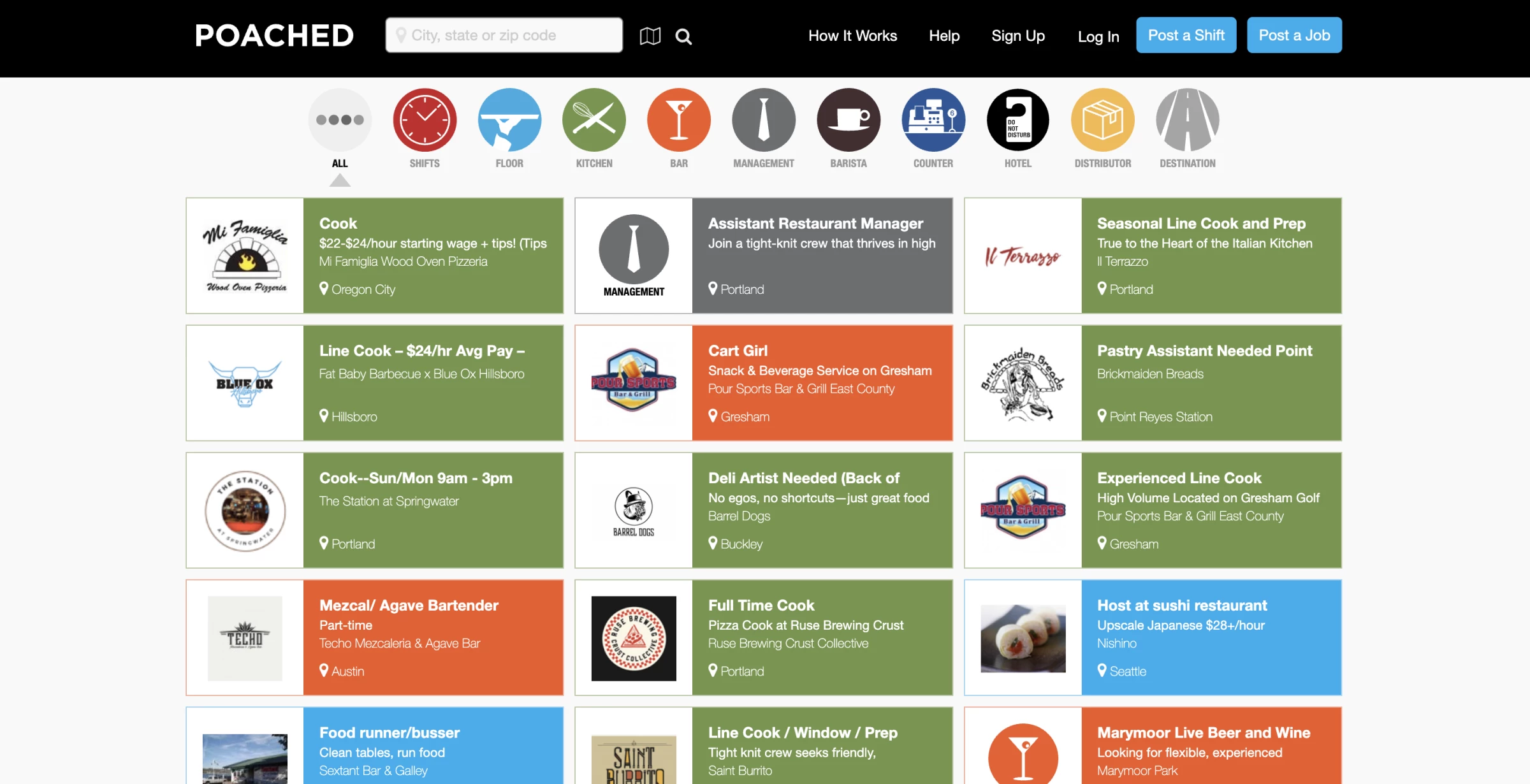
Poached is purpose-built for the food and beverage industry, which means candidates on the platform already understand what restaurant life looks like: they know the hours, the pace, and the expectations before they ever apply.
Beyond its home turf in Portland, Seattle, and San Francisco, Poached distributes listings to 30+ partner job sites, so your reach extends beyond the platform itself.
Poached is especially useful for restaurants hiring front-of-house and back-of-house roles, from servers, hosts, bussers, bartenders, baristas, line cooks, prep cooks, dishwashers, sous chefs, and executive chefs to assistant managers, general managers, and beverage managers.
Useful features include:
- 30-day restaurant and hospitality job posts
- Resume review and candidate messaging tools
- Interview scheduling through the platform
- Job boosts through Poached’s partner network
- On-demand shift hiring for temporary staffing gaps
- Worker ratings, shift tracking, and rehire options
Rather than treating permanent hiring and shift coverage as separate workflows, Poached combines both in one platform, which can be helpful for restaurants dealing with last-minute callouts, seasonal demand, or ongoing turnover.
- Regional coverage: Centered in North America. It supports full-time, part-time, seasonal, and gig hospitality hiring across the United States, Canada, and the Caribbean.
- Price to post:
- Standard post (Reach Job Seekers on Poached): $65
- Premium post (Unlock the features you need to make your next hire): $75
- National post (Promote your job across the USA): $265
Job boosts are available for extra exposure, with Poached saying boosted jobs receive an average of 67% more resumes.
7. Restaurant Zone: Best for Restaurant Recruiting and Hard-to-Fill Roles
Restaurant Zone works more like a restaurant recruiting partner, so it’s better suited for employers that want help finding qualified candidates instead of simply posting a job and sorting through applications on their own.
The platform focuses on restaurant, food and beverage, hotel, and broader hospitality hiring. It covers both management and hourly roles, but its strongest fit is for harder-to-fill positions like general managers, kitchen managers, executive chefs, sous chefs, district managers, multi-unit leaders, and other senior restaurant roles.
Useful features include:
- Restaurant and hospitality recruiting support
- Candidate sourcing, screening, interviewing, and due diligence
- Executive, management, hourly, and multi-location hiring
- RPO support for high-volume staffing needs
- Replacement guarantees for added hiring protection
- ATS-compatible reporting for recruitment process outsourcing
Restaurant Zone is especially useful when a restaurant does not have the time, team, or candidate pipeline to manage the full hiring process internally.
Instead of paying for visibility alone, you are paying for recruiting support, shortlist development, screening, and placement help.
- Regional coverage: Nationwide US coverage, with recruiters working across virtually every US state.
- Price to post: Not a standard self-serve job posting model. Fees often fall in the 15% to 25% range, depending on the role and market.
8. Qwick: Best for On-Demand and Last-Minute Shift Coverage
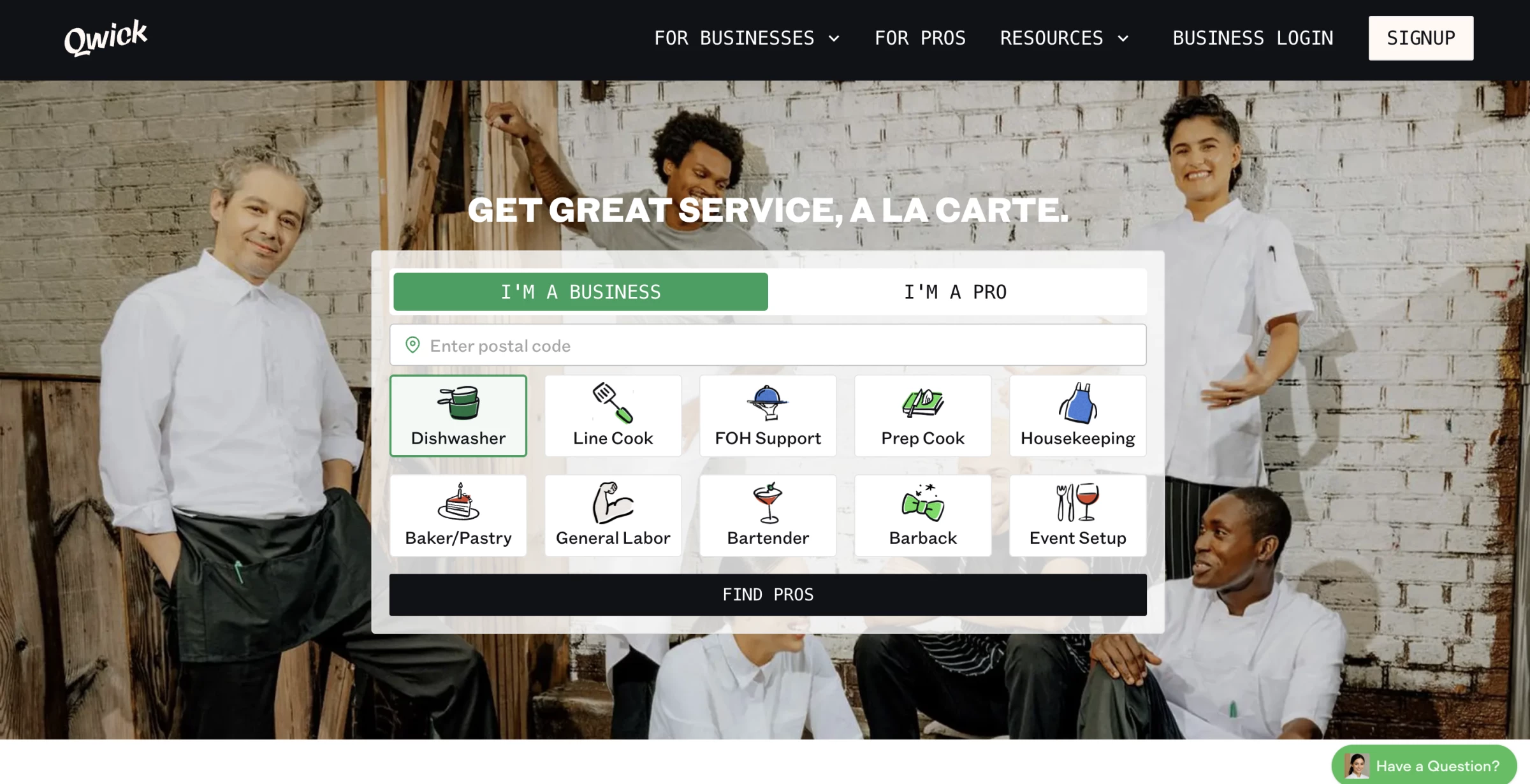
Qwick is a platform built for food and beverage businesses that need vetted hospitality workers for short-term coverage, whether that’s a last-minute no-show, a private event, a catering rush, a seasonal spike, or a weekend where the schedule simply does not stretch far enough.
Qwick pre-vets every worker on its platform, so when you post a shift, only qualified candidates with relevant experience can accept it.
You can set up recurring shifts, post last-minute needs, and invite workers you've used before to come back.
If you need a full-time general manager or long-term line cook, this is not the platform to start with. If you need a bartender for tomorrow night, extra prep help before an event, or FOH support for a busy service, Qwick makes a lot more sense.
Useful features include:
- On-demand shift posting for hospitality roles
- Access to vetted food and beverage professionals
- Ability to bring back workers you liked
- Support for recurring shifts and last-minute coverage
- Roles across BOH, FOH, events, hotels, and foodservice
- In-app worker payments after completed shifts
The pricing model is different from traditional job boards: you pay roughly a 40% markup over the hourly rate you set.
That's higher than posting on a traditional board, but you're paying for a pre-vetted worker who shows up ready to work: no interview, no onboarding paperwork for a one-day shift.
- Regional coverage: US-focused, with coverage in 40+ markets and strongest fit for cities with active restaurant, hotel, catering, and event staffing demand.
- Price to post: No flat job posting fee, roughly a 40% markup over the hourly rate you set
9. Hospitality Online: Best for Hotel, Resort, and Venue-Based Restaurant Roles
Hospitality Online is built for hotels, resorts, casinos, restaurants, foodservice operators, and hospitality management companies, so it works best when the role sits inside the wider hospitality world.
The platform had around 7,500+ current hospitality job openings listed at the time of review, with categories covering bartenders, catering and banquet roles, chefs and kitchen staff, food and beverage, food service, general managers, internships, guest services, operations, and more.
For restaurant employers, Hospitality Online makes the most sense for roles tied to hotels, resorts, casinos, country clubs, event venues, and larger hospitality groups, like banquet cooks, bartenders, servers, F&B managers, executive chefs, catering supervisors, restaurant managers, and guest-facing service roles.
Useful features include:
- 30-day hospitality job postings
- Full-page employer profile
- Property-specific photo gallery
- Applicant tracking system
- Job alerts sent to relevant job seekers
- Automatic posting on major job aggregators
- Pre-screening questions and EEO reports through its higher-tier recruiting package
If you run a standalone local restaurant and need five hourly hires by next weekend, it may feel a little too hospitality-corporate.
If your restaurant is part of a hotel, resort, venue, or multi-property operation, it fits much better.
The same businesses often benefit from a broader hotel marketing strategy that supports hiring alongside guest acquisition.
- Regional coverage: Best for US hospitality hiring, especially hotels, resorts, casinos, venues, and hospitality groups, with some reach into Caribbean and international hospitality markets.
- Price to post: $445 per 30-day job posting
10. Sirvo: Best for Affordable Restaurant Hiring and Applicant Tracking
Sirvo is built for restaurants, retail, and hospitality businesses, so it fits employers hiring for service-heavy roles without moving into full recruiting agency territory.
The platform works well for restaurants that want to post jobs, manage applicants, message candidates, and keep hiring activity in one place.
It is especially useful for operators that hire regularly but do not need a large enterprise HR system just to fill servers, bartenders, hosts, cooks, dishwashers, shift leads, or managers.
When employers post a job, Sirvo says listings can be shared across partner networks, social media, and email channels, with partner syndication that includes sites like Indeed, TopUSAJobs, JuJu, and DiningOut.
That gives smaller restaurant teams a bit more reach without having to manually repost the same opening across multiple places.
Useful features include:
- Restaurant, retail, and hospitality-focused job posts
- Company job board for open roles and business information
- Candidate messaging through a shared inbox
- Applicant tracking system for reviewing and sorting applications
- On-demand talent library for active candidate search
- Custom career pages that sync with Sirvo in real time
It is a better fit for operators that want a niche service-industry hiring platform than for employers looking for broad international hospitality recruitment.
- Regional coverage: Strongest in the US, with Sirvo positioning itself around restaurant, retail, and hospitality hiring and listing Denver, Colorado as its base.
- Price to post: $40 per job
- Monthly subscriptions:
- 1 location: $110/location
- 2-5 locations: $88/location
- 6-10 locations: $72/location
- 11-20 locations: $67/location
11. Culinary Agents: Best for Hiring Experienced Chefs and FOH Talent
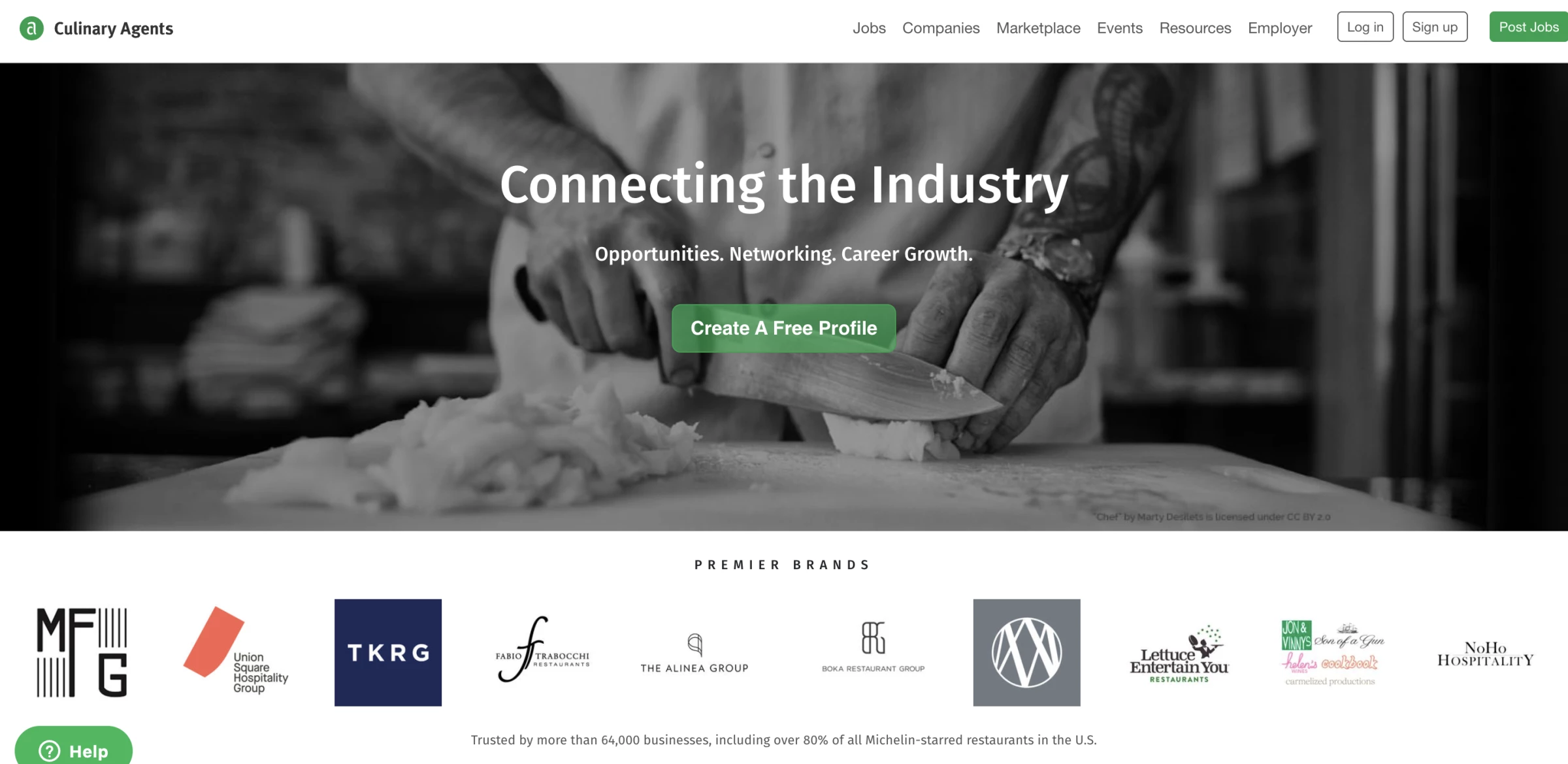
Culinary Agents focuses on hospitality jobs across restaurants, bars, hotels, resorts, catering, foodservice, and related businesses, so the audience is already much closer to the kind of talent restaurant employers usually need.
The platform has a community of 2M+ hospitality members and 50,000+ businesses nationwide, which gives it more scale than many niche restaurant job boards without losing its hospitality focus.
It works well for hiring cooks, chefs, servers, bartenders, hosts, sommeliers, managers, catering staff, and corporate hospitality roles.
Useful features include:
- Free job posts on a business profile and career page
- Paid Job Ads for wider promotion and better reach
- AI-powered candidate matching
- Applicant tracking and hiring workflow tools
- Screening questions, notes, and message templates
- Greenhouse integration for job distribution and application syncing
Culinary Agents is especially useful for restaurants that care about employer branding. Business profiles can show the team, awards, company details, photos, and open roles, which helps candidates get a better feel for the workplace before applying.
- Regional coverage: US-focused, with nationwide hospitality reach and stronger value in major restaurant and hotel markets.
- Price to post: Free
- Paid options:
- Subscription ATS: $39/month
- Subscription ATS and Ad Bundle: $150/month
- Enterprise ATS: $500/month
12. ZipRecruiter: Best General Job Board for Volume and Management Hiring
ZipRecruiter is a broad, cross-industry job board rather than a restaurant or hospitality specialist, which makes it a reasonable alternative to Indeed when you need wide distribution and AI-assisted candidate matching.
Posted jobs are distributed to over 100 partner job sites, and the platform's matching technology proactively invites candidates who fit the role to apply, rather than waiting passively for applications.
ZipRecruiter doesn't publish a standard rate card as pricing is quoted individually per employer based on industry, location, and hiring volume.
Useful features:
- Distribution to over 100 job sites from a single posting
- AI-driven candidate matching that invites likely fits to apply
- Reusable job slots (close a filled role, post a new one at no extra charge)
- Resume database access on Premium and Pro tiers
- Screening questions and applicant filters
Because ZipRecruiter isn't restaurant-specific, expect a higher share of applicants without food-service backgrounds compared to platforms like OysterLink or Culinary Agents.
This is useful for management and corporate hires, less efficient for high-turnover hourly roles unless paired with strong screening questions.
- Regional coverage: National US coverage
- Price to post: Not officially published
13. Hcareers: Best for Multi-Property Hotel and Resort F&B Roles
Hcareers is a hospitality-focused job board positioned similarly to Hospitality Online as its candidate base spans hotels, resorts, and restaurants rather than restaurants alone.
It's listed as a recommended job board by industry associations including the American Hotel & Lodging Association, the National Restaurant Association, and the Canadian Restaurant and Foodservice Association, and reports more than 5.5 million registered members across North America.
Useful features:
- Hospitality-focused candidate database and resume search
- Employer branding through company profile pages
- AI-powered candidate matching
- Applicant tracking tools
- Resume Detective add-on that alerts employers when a matching candidate uploads a new resume
For a standalone independent restaurant, Hcareers is likely to feel more geared toward larger hospitality groups than a niche restaurant board like Poached or OysterLink.
It fits best when the F&B role sits inside a hotel, resort, or multi-property operation and you want access to candidates with cross-property hospitality experience.
- Regional coverage: US and North America, hospitality-industry focused.
- Price to post: 30-day postings start at $249 per job; performance add-ons cost extra per post.
14. Good Food Jobs: Best for Farm-to-Table and Mission-Driven Food Businesses
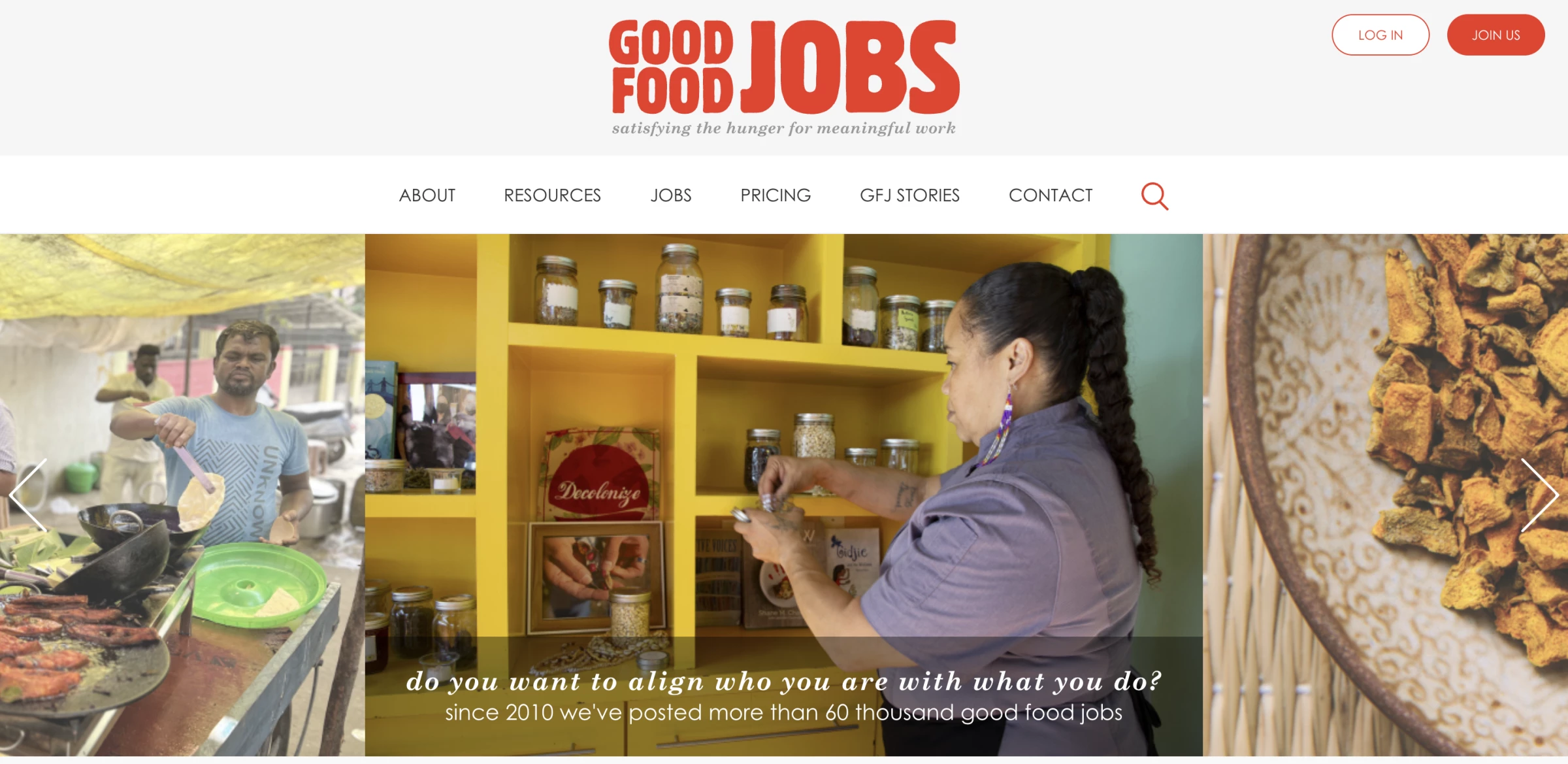
Good Food Jobs is a niche board built around food, agriculture, and sustainability rather than restaurant hiring broadly.
Its audience skews toward candidates who specifically want to work for farm-to-table restaurants, sustainable dining concepts, food-focused nonprofits, and businesses with an explicit food philosophy.
The platform reports more than 180,000 active users, which is a smaller pool than most other boards on this list, and it doesn't offer a resume database or multi-site syndication the way larger platforms do.
What it offers instead is a more self-selected audience and candidates who are already looking specifically for food-and-sustainability-minded employers.
Useful features:
- Pay What You Can pricing option alongside standard flat-fee posting
- Free repost if a role goes unfilled after 60 days
- Editorial resources and food-industry articles for both employers and candidates
- Simple, low-friction posting form with built-in writing tips
Good Food Jobs suits farm-to-table restaurants, sustainable food businesses, nonprofits, and employers that want candidates who care about purpose as much as the role itself.
- Regional coverage: US-wide, with a stronger concentration of listings and candidates on the East and West coasts.
- Price to post: Standard listings run about $75 for a 60-day post
15. Craigslist: Best Ultra-Budget Option for Local Hourly Hiring
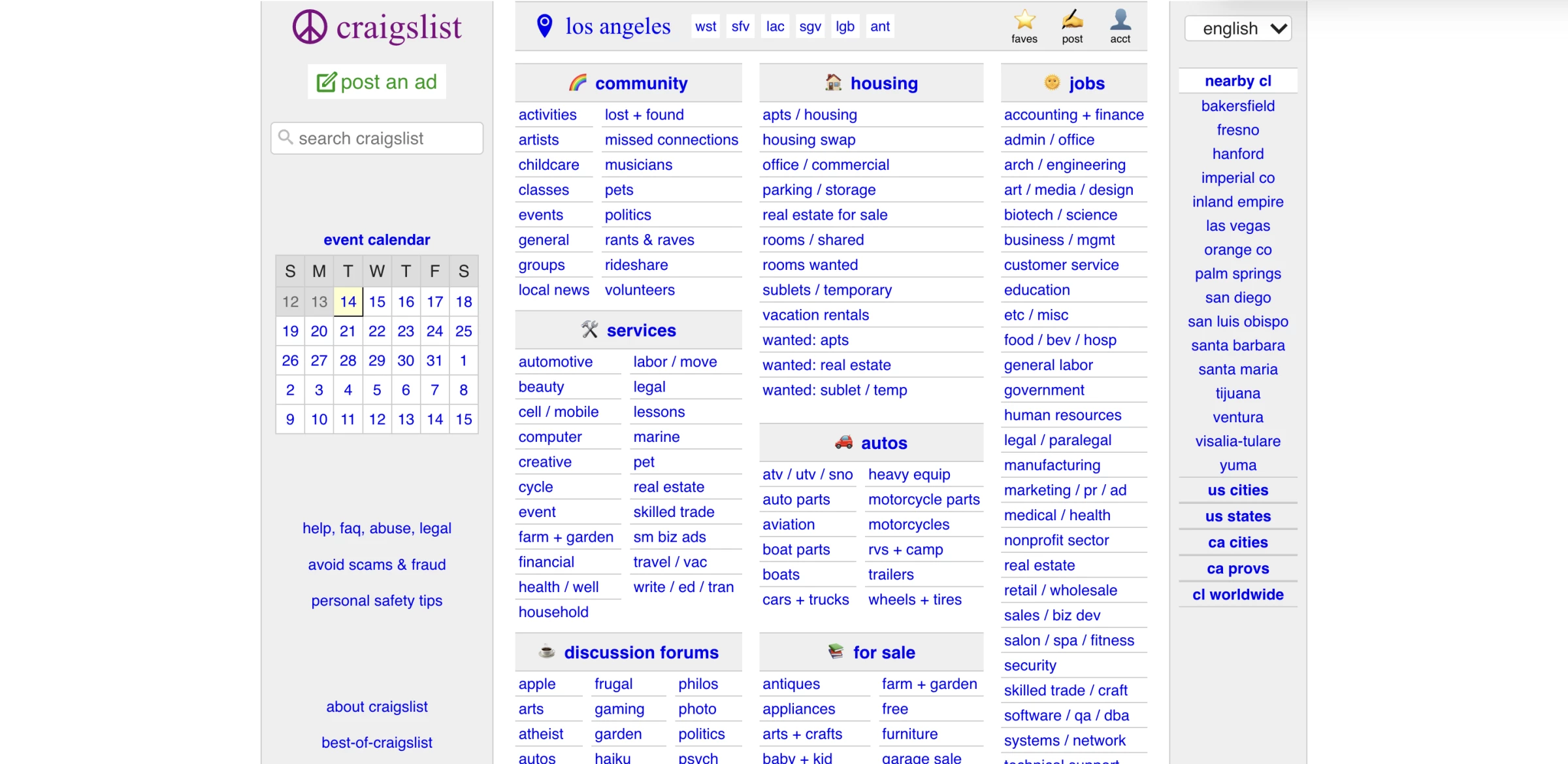
Craigslist remains a functional, if bare-bones, option for restaurant hiring, particularly for local, hourly FOH and BOH roles in mid-size metros.
Most city Craigslist sites maintain a dedicated food, beverage, and hospitality jobs category, and job postings in the US have required a fee in every major metro since 2004.
Pricing is set per city rather than by the platform overall and fees generally range from about $10 in smaller markets to $75 in the largest ones, like San Francisco, New York, and Los Angeles.
Each post runs for 30 days and cannot be renewed. Once it expires, posting again means paying the fee again. There are no premium placement or boosted-visibility options.
Useful features:
- Dedicated food/beverage/hospitality category in most metro job sections
- Flat, one-time per-post fee with no recurring subscription
- Anonymous email relay to filter initial contact
- Fast, no-frills posting process with broad local reach in dense metros
Craigslist works best as a low-cost supplement to a niche hospitality board rather than a primary hiring channel, but the tradeoff for its low price is no resume database, no candidate screening tools, and no applicant-matching technology, so expect to do all the sorting yourself.
- Regional coverage: US, city by city; coverage and candidate volume vary significantly by metro.
- Price to post: $10-$75 per post, per city, for a 30-day listing
Free Restaurant Job Boards vs. Paid Options
If budget is the deciding factor, it's worth sorting out the list before reading all 15 profiles.
Real free tiers:
- Indeed offers free basic posting, with paid Sponsored Jobs for added visibility.
- Culinary Agents includes free job posts through a business profile and career page, with paid ATS features and promotion plans available for employers that need more hiring tools.
- Hosco includes one free job ad every 90 days, with a Premium plan starting at €99 per month for more frequent hiring.
- Good Food Jobs offers a Pay What You Can pricing model, allowing employers to post for anywhere from $0 to $59, alongside its standard flat-fee listing.
Flat-fee posting:
- OysterLink charges $150 per job post.
- Poached Jobs charges $65 for a 30-day job post, plus $39 per shift for on-demand hires.
- Hospitality Online charges $445 for a 30-day job post.
- Sirvo charges $40 per job post, with optional location-based monthly subscription plans.
- Hcareers charges $249 for a 30-day job post.
- Craigslist charges $10 to $75 per job post, depending on the city, with each listing running for 30 days and no automatic renewal.
Percentage-based or markup pricing:
- Restaurant Zone charges a 15%-25% placement fee based on the hired candidate's salary. It follows a recruiting agency model rather than a self-serve job posting model, so the cost increases with the seniority of the role.
- Instawork and Qwick charge a markup over the hourly wage you set rather than a flat posting fee. For Qwick, the markup is roughly 40%, since you're paying to fill a shift rather than to publish a job listing.
Subscription-based, no published rate card:
- ZipRecruiter doesn't publish official pricing, and it quotes each employer individually based on industry, location, and hiring volume.
- Snagajob does not publish pricing and employers need to contact the platform directly for a quote.
Free restaurant job sites can help you test candidate quality, but paid promotion is often necessary when you need stronger visibility or faster applicant flow.
How To Find Restaurant Employees: Choose the Right Platform for Your Situation
The best way to find restaurant employees depends on the role, location, hiring timeline, and level of screening required.
- If you're a single-location restaurant hiring full-time staff:
Start with OysterLink, especially if you're in NYC or Miami, or Poached Jobs for the Pacific Northwest. Each restaurant hiring platform offers a more focused candidate pool than a general job board.
Add a free Indeed listing, or a local Craigslist post, for extra reach.
- If you're a QSR or fast-casual chain filling lots of hourly roles:
Start with Snagajob for steady hourly hiring across cashiers, cooks, servers, baristas, dishwashers, and shift leads.
Layer in Instawork or Qwick when you need short-term coverage for callouts, events, or seasonal spikes.
ZipRecruiter is worth adding if you're filling several roles at once and want AI-assisted matching across a wider, non-hospitality-specific applicant base.
- If you need a chef, sous chef, or experienced kitchen lead:
Culinary Agents is the strongest fit. Hosco is worth adding for international candidates or hospitality-school graduates.
- If your restaurant sits inside a hotel, resort, or multi-property operation:
Hospitality Online and Hcareers are both built around that exact hiring situation, with candidate pools that span hotel and F&B roles across properties.
- If you need someone this week:
Choose Qwick for hospitality-specific staffing or Instawork for broader market coverage.
Both are on-demand staffing platforms, so expect a higher per-hour cost in exchange for filling the gap quickly.
- If you're building an international team or hiring interns and emerging talent:
Hosco. No other platform on this list has the school partnerships and global reach for that kind of pipeline.
- If your concept is farm-to-table, sustainable, or otherwise mission-driven:
Good Food Jobs reaches a smaller but more self-selected audience of candidates who specifically want to work for food businesses with that kind of philosophy.
How To Write a Restaurant Job Posting That Actually Gets Responses
Recent 2026 job seeker data shows that 44% of candidates are unlikely to apply to a job posting without a listed pay range, while 45% say leaving out pay feels disrespectful to applicants.
For hospitality specifically, Restaurant Zone’s 2026 candidate research found that 84% of hospitality job seekers rated schedule predictability as critical, followed by advancement clarity at 78%, management quality at 76%, base compensation at 71%, and benefits and PTO at 68%.
Here’s what high-performing restaurant job postings consistently include:
- If you’re paying $18-$22/hour for a line cook plus tips, say that upfront. Candidates who are outside that range will usually self-select out, and the ones who apply are more likely to understand the offer before the first interview.
- Instead of writing flexible hours, use details like primarily evenings and weekends, with two closing shifts per week. Restaurant workers care about predictability, especially when they’re balancing second jobs, childcare, school, or transportation.
- For FOH roles, tip income can be the difference between a maybe and an application. If servers usually walk out with $150-$250 per night, or bartenders average a certain amount per shift, include it as a realistic range. Just avoid inflated numbers that create disappointment later.
- Phrases like fast-paced environment or family atmosphere are everywhere, so they don’t say much. Something like 12-person BOH team, daily family meal, direct communication with the chef, and a busy weekend service gives candidates a clearer picture of the workplace.
- Hospitality candidates are paying attention to who they’ll work under, how shifts are run, and whether the workplace feels organized. If managers are hands-on, schedules are posted in advance, or feedback is direct and respectful, say that clearly.
- High-performing candidates want to know there’s somewhere to go. Even one sentence can change how they read the listing: We promote from within and currently have two kitchen leads who started as prep cooks. That gives ambitious applicants a reason to take the role seriously.
Pay, schedule, tips, team structure, management style, and growth opportunities tell candidates what they’re really applying for, which helps bring in fewer random applicants and more people who can see themselves in the role.
The job post gets the right person to apply, but background checks, paperwork, onboarding, and first-week training decide whether that person actually shows up, settles in, and stays past the first 30 days.
Hiring is only one part of building a successful restaurant marketing strategy, especially when attracting both customers and employees.

Our team ranks agencies worldwide to help you find a qualified partner. Visit our Agency Directory for the top HR Outsourcing companies as well as:
- Top Staffing Companies
- Top Staff Augmentation Services
- Top HR Consulting Companies
- Top Customer Service Outsourcing Companies
- Top Los Angeles HR Outsourcing Services
Our design experts also recognize the most innovative design projects across the globe. Visit our Awards section for the best & latest designs.
Top Restaurant Job Boards FAQs
1. What is the best restaurant job board overall in 2026?
It depends on your market and the role you're filling. For NYC and Miami, OysterLink is the strongest dedicated hospitality option. For chefs and experienced kitchen staff, Culinary Agents is the best fit. For volume hourly hiring, Indeed. For last-minute shifts, Qwick or Instawork.
2. What is the best free restaurant job board?
Indeed, Culinary Agents, and Hosco each offer real free tiers, and Good Food Jobs offers a Pay What You Can option that can also come to $0, depending on the role.
Indeed offers free posting with limited visibility, Culinary Agents allows free basic posts through business profiles and career pages, and Hosco allows one free job ad every 90 days. Free posting is a good way to test a platform before committing to paid promotion.
3. How much does it cost to post a restaurant job?
Free or pay-what-you-can options are available through Indeed, Culinary Agents, Hosco, and Good Food Jobs.
Flat-fee listings range from about $10 on Craigslist to $445 on Hospitality Online, though most fall between $40 and $250.
Instawork and Qwick charge a markup on hourly wages, while ZipRecruiter uses monthly job-slot subscriptions. Restaurant Zone charges 15% to 25% of the hired candidate’s salary.
4. Is Indeed good for hiring restaurant staff?
Indeed works well for management roles, corporate positions, and high-volume entry-level hiring where you're willing to screen a large applicant pool.
For skilled hourly roles like line cooks or experienced servers, hospitality-specific platforms like Culinary Agents and Poached tend to deliver better-matched candidates with less screening time.
5. What's the difference between a restaurant job board and a staffing platform?
A traditional job board is where you post a permanent or long-term position and candidates apply. An on-demand staffing platform is where you post a shift and a pre-vetted worker picks it up, with no interview required. Most restaurants benefit from using both, depending on the hiring situation.
6. How long does it take to hire a restaurant worker through a job board?
On hospitality-specific job boards, most operators see qualified applicants within a few days. Full hiring cycles (post to start date) typically run one to three weeks for hourly roles and three to six weeks for management. On on-demand platforms like Qwick and Instawork, a vetted worker can be confirmed for a shift within hours.