
High-performing apps in 2026 combine targeted ads, ASO, and retention tactics to drive downloads, engagement, and growth. Let’s explore the strategies behind sustainable app success.
Mobile App Marketing Strategies: Key Findings
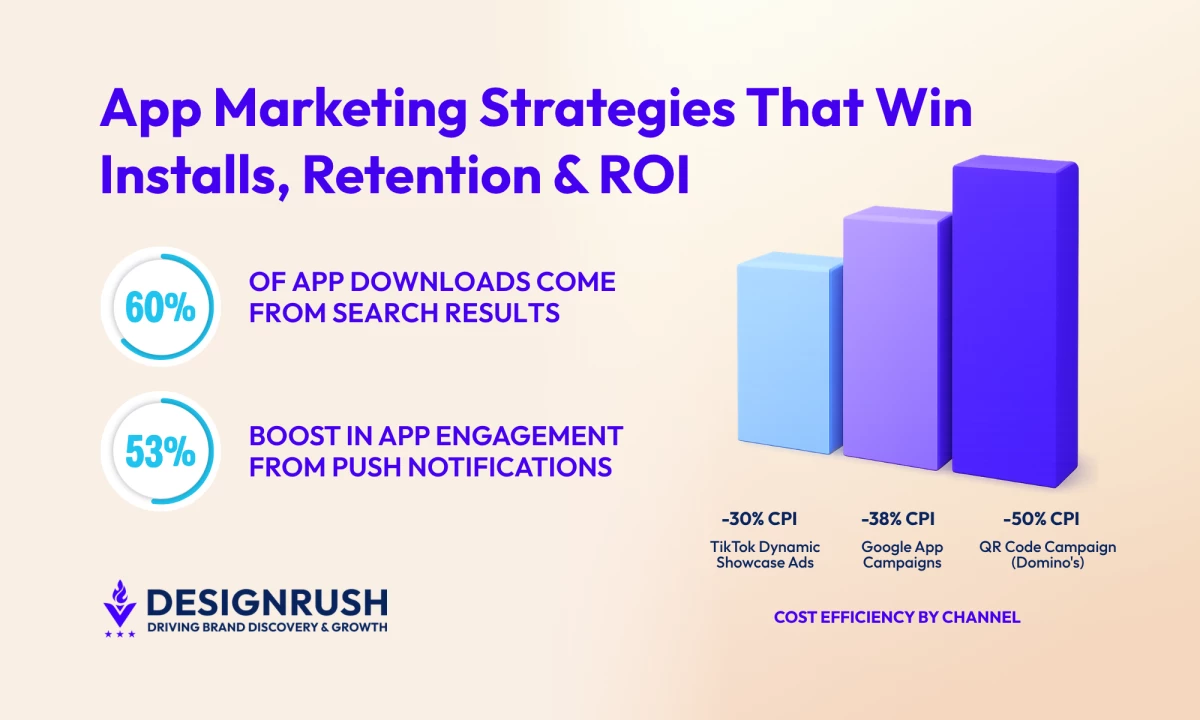
- TikTok’s Dynamic Showcase Ads helped JD.ID boost installs 12× while cutting CPI by 30%, showing how creative social ads can supercharge acquisition.
- Google App Campaigns drove 5× more installs and 38% lower CPI for Tesco, proving the power of automated, AI-driven cross-platform reach.
- Calm saw 50% higher ROI through influencer partnerships, underscoring the impact of authentic endorsements on engagement and trust.
How To Craft a Winning Mobile App Marketing Strategy
Downloads barely moved in 2025, growing less than 1%. But time spent in apps went the other way: users spent 5.3 trillion hours in apps, generating $167 billion in consumer spending.
Marketers are responding by putting more money into retention. Global remarketing spend jumped 37% to $31.3 billion, about three times the growth in user acquisition. It now makes up 29% of app marketing budgets, up from 25% a year earlier.
So acquisition alone won't carry an app marketing strategy. You need the right users coming in, and you need a reason for them to keep opening the app.
Here’s your blueprint for doing it right:
- Test your launch before scaling acquisition
- Choose high-impact marketing channels for growth
- Optimize your app store presence (ASO)
- Use PR and community to build demand
- Focus on regular updates and improvements
1. Test Your Launch Before Scaling Acquisition
Paid channels can pull demand forward. So, first, make sure the app is ready to handle the demand they can bring. A user whose first request goes unfilled is less likely to come back.
As Keith Shields, Cofounder & CEO of Designli, puts it:
“More of it is decided before launch than most founders expect.
The core loop, whether the product gives someone an obvious reason to come back and an obvious reason to tell a friend, is set by product decisions, not by the marketing plan.
If retention is broken, no campaign fixes that. It just buys a more expensive way to find that out.
What campaigns control after launch is the pace and cost of exposure and how fast the right people hear about something that already works.”
1.1. Gate Your Launch on Delivery, Not Installs
A launch is a sequence with gates, wherein each is a question you answer with real usage before you widen exposure:
- Can one request get served from end to end? Does a real user get the outcome they came for, in the market you're about to advertise into, within a window they'd accept?
- Is the harder side of the market ready? Two-sided products often fail on supply. Demand is easy to buy and easy to disappoint, so seed supply first and confirm density before opening the tap.
- Have you proven it in one place? Depth in a single city beats thin coverage across ten, and it's a far cheaper place to be wrong.
Personal Paparazzi, an on-demand photography marketplace app built by mobile app development firm Designli, is a useful case because its supply side can't be rushed: every photographer clears identity verification, a background check, and training before taking a first request.
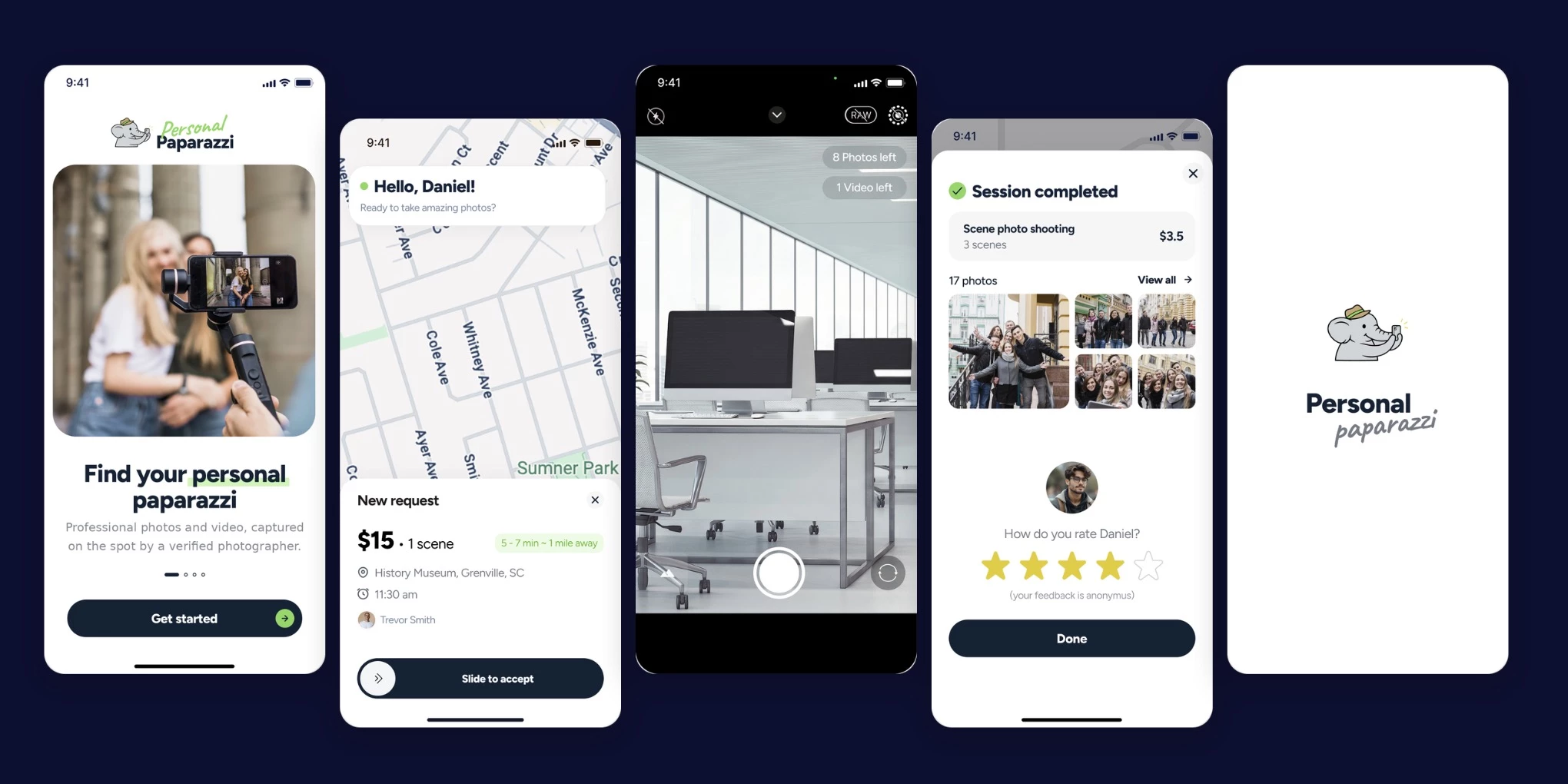
Those steps set a limit on how fast supply could grow, so the launch was staged around that limit rather than around a campaign calendar.
“We didn't open broad paid acquisition on day one. We seeded the marketplace with friends and family first, then took the public debut to a single market, Las Vegas, with a street team on the ground instead of a nationwide ad push.
What we were watching wasn't installs, it was whether there were enough verified, available photographers in that one city to actually fulfill a request within a reasonable window.
Opening paid acquisition before that supply density exists just burns money creating demand the supply side can't serve, and it teaches new clients the app doesn't work before it's had a real chance to,” Keith Shields explains.
The staged approach gave the team a controlled way to put the marketplace in front of real users before expanding acquisition.
Designli reports launch feedback was "nearly 100% positive," and the app is now live on the App Store and Google Play.
1.2. Wire Growth Into the Build
Gates only work if someone is watching them, which makes staffing part of the strategy.
For instance, Designli staffs a go-to-market engineer on the product team from day one, so growth is considered while the product is being built and the app is ready to grow when it launches.
“Analytics and attribution get wired into the app itself before launch.
Onboarding gets designed around the acquisition channel that will actually be used, instead of being built generically and handed to marketing to make work later.
And the roadmap carries features that exist purely to support growth, referral flows, and the ability to trace where a user came from, instead of those showing up as an afterthought post-launch,” Shields says.
The alternative is a handoff after launch, when a separate marketing team must learn a product, it didn't help build or design.
Keith Shields explains why that’s a problem:
“The new team doesn't know why certain choices were made, doesn't have the tracking it actually needs because nobody building the app was thinking about attribution, and spends the first few weeks just figuring out how the thing works before it can start growing it.”
That’s exactly the window after launch when momentum matters most, and losing it to onboarding means less time for running experiments and learning from real users.
Designli’s answer is to avoid the handoff altogether: the same team carries the same context from build straight through growth.
2. Choose High-Impact Marketing Channels for Growth
Choosing the right mix of marketing channels is key to user acquisition. Leading apps combine a blended approach (paid + ASO + content) based on performance data, balancing quick wins with long-term growth and lower CAC.
Social ads drive reach and targeting, search ads capture intent, influencers build trust, and content fuels inbound traffic. The best strategies track installs, retention, and LTV by channel, then optimize spend accordingly.
Here are some top-performing channels to consider:
- Drive targeted installs with social media advertising
- Expand reach using Google App Campaigns
- Build trust and reach with influencer partnerships
- Fuel long-term visibility with content marketing
2.1. Drive Targeted Installs With Social Media Ads
Social platforms like TikTok, Instagram, and Facebook offer precision targeting and high engagement, making them ideal for app promotion.
For instance, TikTok’s Dynamic Showcase Ads helped JD.ID boost installs 12× and cut CPI by 30%. This case highlights how creative, platform-native ads (short videos, music, influencer-style content) can capture attention and keep acquisition costs low.
Similarly, Facebook’s Advantage+ automates optimization and targeting, delivering higher conversion rates with less manual effort.
2.2. Expand Reach Using Google App Campaigns
Google App Campaigns use AI to promote your app across Search, YouTube, Gmail, the Play Store, and the Display Network. Tesco saw 5× more installs and 38% lower CPI by running these campaigns.
The platform’s automation handles bids, creatives, and placements, helping you reach high-intent users efficiently and at scale.
2.3. Build Trust and Reach With Influencer Partnerships
Partnering with influencers (creators, YouTubers, TikTokers, etc.) in your app’s niche can rapidly boost credibility and reach engaged audiences.
Influencers provide authentic endorsements and user-generated content that resonate with their followers. For example, Calm saw over a 50% improvement in ROI by collaborating with wellness influencers, leading to more downloads and greater brand trust.
The key is choosing influencers whose audience aligns with your target users and allowing creative, genuine integration of your app into their content.
2.4. Fuel Long-Term Visibility With Content Marketing 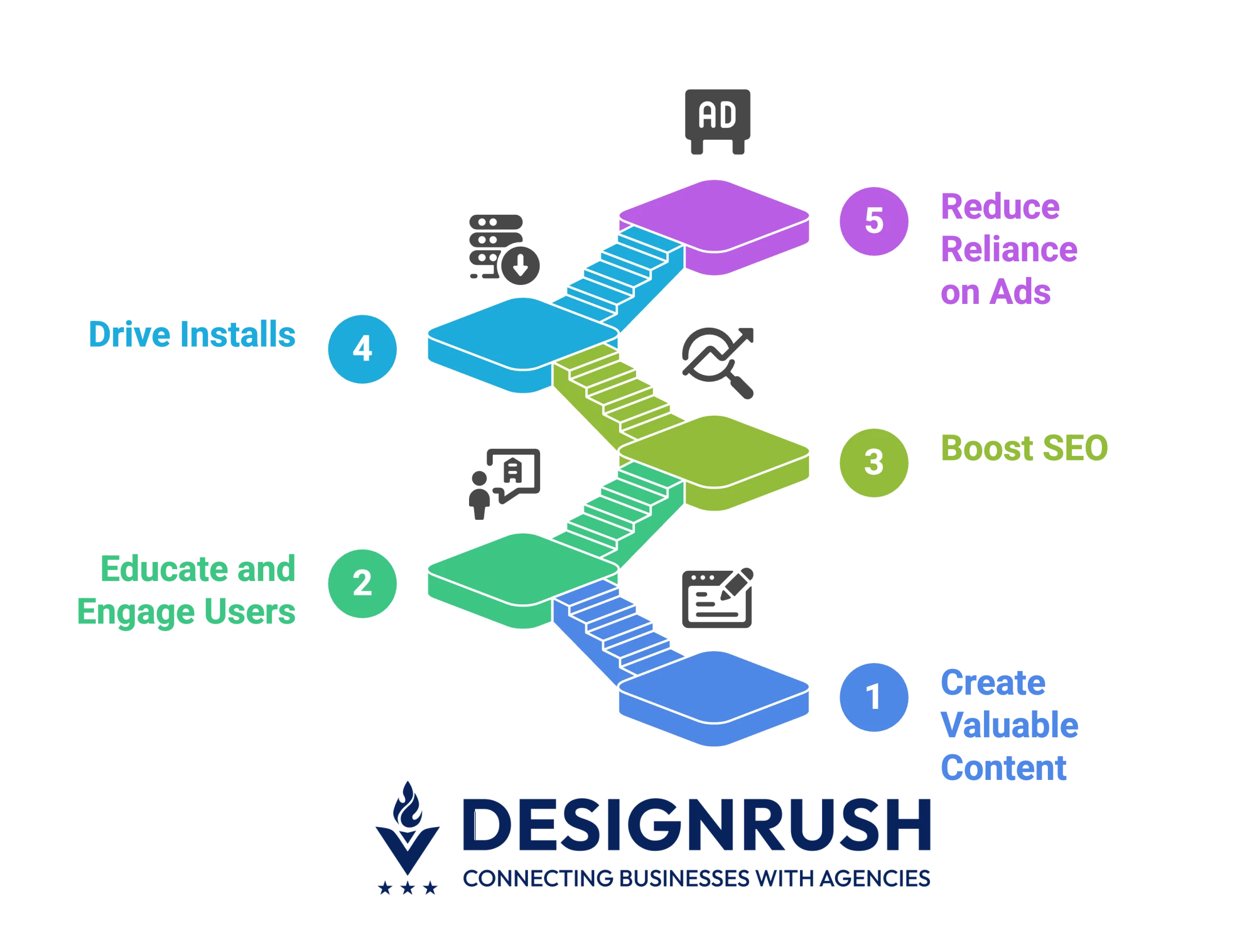
Creating valuable content, like blog posts, how-to videos, webinars, case studies, and user success stories, can build interest in your app and improve organic visibility.
Useful content educates and engages potential users, warming them up to download. Importantly, content marketing boosts your app’s SEO: articles and landing pages can rank in Google searches, and backlinks improve your App Store ranking indirectly.
For example, blog posts that solve user pain points or YouTube demos of your app can attract search traffic and drive installs, reducing long-term reliance on paid ads.
3. Optimize Your App Store Presence (ASO)
With 60% of downloads coming from search results, ASO is essential for discoverability and installs.
Key ASO elements include:
- Craft a keyword-rich title and benefit-led description
- Boost trust with positive reviews and ratings
- Use compelling screenshots and video previews
- Leverage strategic keywords and proper categorization
- Expand global reach with localization
3.1. Craft a Keyword-Rich Title and Benefit-Led Description
Use a clear, keyword-rich title that reflects your app’s core function. Titles carry strong search weight, so include a primary keyword if possible (e.g., CalorieTracker – Diet & Fitness ranks better than a generic brand name).
Write a concise, benefit-driven description that highlights key features up top. Naturally weave in relevant keywords to improve discoverability.
Pro tip: Conduct keyword research and competitor analysis to identify high-traffic terms you can target.
3.2 Boost Trust With Positive Reviews and Ratings
High ratings boost both your search rank and conversion rate. Users rely on reviews: 77% read reviews before downloading, and 8x are more likely to download an app that’s highly rated, even if from an unknown brand.
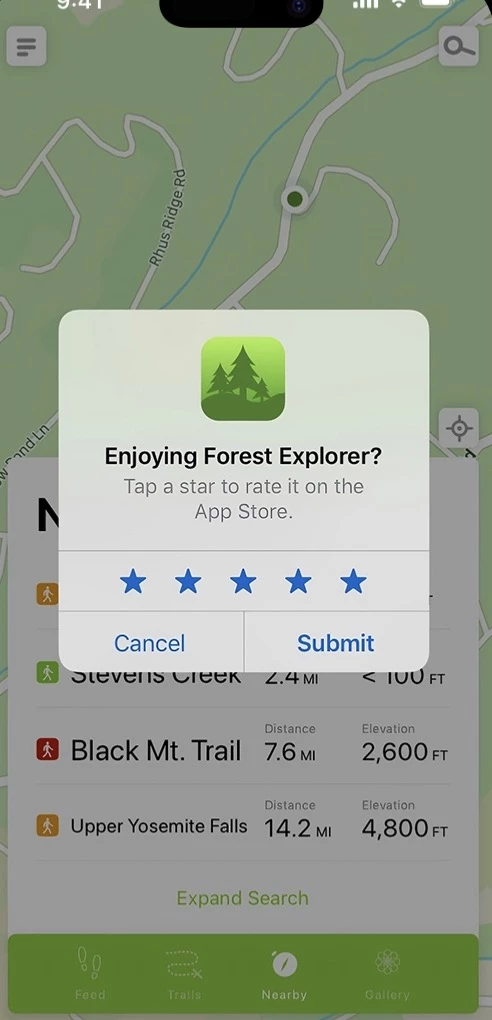
Encourage happy users to leave feedback with well-timed in-app prompts and respond helpfully to negative reviews.
Bottom line: Strong ratings = trust = more installs. Prioritize app quality and support to keep reviews positive.
3.3. Use Compelling Screenshots and Video Previews
Visual assets are what truly sell your app’s value on its store page. Include high-quality screenshots (and an App Preview video if possible) that showcase the app’s interface, features, and user benefits.
Use captions or graphic overlays on screenshots to highlight key points (e.g., “Track Your Workouts”, “Real-Time Alerts”, etc.). These visuals let users experience the app before installing and can significantly boost conversion.
3.4. Leverage Strategic Keywords and Proper Categorization
Use Apple’s 100-character keyword field strategically, and include relevant, non-repetitive terms. On Google Play, place keywords in the first lines of your description for better indexing.
Choose the correct category for your app (and subcategories if available), so that your app appears in the right browsing sections. Keep an eye on trending keywords and update your metadata periodically to maintain visibility.
3.5. Expand Global Reach With Localization
If your app serves international markets, localize your App Store listing (title, description, screenshots) for different languages/regions.
Both Apple and Google support localized listings, which can dramatically expand your reach and improve conversion in non-English speaking markets.


4. Use PR and Community To Build Demand
Content and PR build demand you don't have to keep paying for, generating awareness and organic traffic that keeps working long after a campaign ends.
4.1. Create Content Around User Problems
Use blogs, videos, case studies, webinars, and customer stories to answer questions your ICP is already asking. The best topics connect directly to the problem your app solves.
Organize the content into clusters so one useful page can lead naturally to another and connect high-intent pieces back to the app landing page or relevant store listing.
4.2. Use Media and PR Around Newsworthy Moments
Pitch journalists with a genuine story. Good angles can include a major milestone, original data, a significant product update, a social-impact initiative, a local story, or a timely feature tied to a broader cultural or industry moment.
Local publications can be particularly useful for regionally focused apps because their audiences and networks are already concentrated in the markets you may be targeting.
PR works best when it is planned around the company's calendar. Build relationships before launch, then use launches, major updates, milestones, and relevant events as reasons to re-engage the media.
4.3. Build Community Around the Product
Community can reinforce retention and referral loops by giving users a place to ask questions, share outcomes, and learn from one another.
Depending on the app, that community may live inside the product or in external spaces such as Reddit, Discord, Facebook Groups, or other niche communities.
The goal is to create a reason for users to participate and return.
5. Focus on Regular Updates and Improvements
Continuously updating your app with new features, improvements, and bug fixes keeps users engaged and shows them that the app is actively being improved.
In a competitive market, user expectations are high; if an app stagnates, users may churn in favor of one that’s more innovative or reliable. Regular updates signal “this app is alive and getting better,” which can boost user confidence and satisfaction.
They also let you respond to feedback, fixing pain points and adding requested features, which can re-engage churned users. Plus, consistent updates (with clear release notes) can improve App Store Optimization and prompt lapsed users to return.
Real examples:
- Games that roll out new levels retain players longer.
- Social apps with new interactive features drive ongoing engagement.
- Even utility apps benefit, e.g., adding air quality data to a weather app can re-attract lapsed users.
Best Practices: Keep Your App Evolving
- Set an update cadence: Adopt a regular update rhythm: bi-weekly, monthly, or continuous via feature flags, based on your team’s capacity.
- Ensure each update delivers value: Focus on real improvements like new features, UI/UX upgrades, performance boosts, or bug fixes.
- Communicate transparently: Use release notes to clearly highlight what’s new (“Added profile photo upload, improved speed, fixed login bug”). In-app messages can spotlight major changes (“Dark Mode is here — try it in Settings!”).
- Show users they’re heard: Mention when updates come from user feedback (“Thanks to your input, we added...”). This strengthens user connection and trust.
- Support ASO and re-engagement: Regular updates signal app reliability to both users and app stores, helping improve rankings and prompting lapsed users to revisit.
Final tip: Don’t rush updates. Quality matters. Every release should be tested thoroughly and monitored closely. A buggy update can erode user trust faster than you can fix it.
Luca Mastrorocco, Co-Founder and Head of Growth at REPLUG, reinforces this mindset:
“Sustainable growth in mobile app marketing is about achieving consistent, long-term results by focusing on quality over quantity.
It’s not just about acquiring users; it’s about building a foundation that ensures those users stay engaged, generate value, and contribute to the app’s evolution.”
Proven Techniques for Increasing User Acquisition and Retention
Winning in the app market isn’t just about getting downloads; it’s about keeping users engaged and active. The real value lies in long-term retention and lifetime user value.
Below are proven techniques to drive both user acquisition and retention:
- Implement referral programs
- Use push notifications & in-app messaging
- Add QR codes for offline-to-app acquisition
- Use smart banners to convert mobile web visitors
1. Implement Referral Programs
Referral programs turn your existing users into a marketing force. People are far more likely to try a new app when it’s recommended by a friend or colleague.
A referral program formalizes this by incentivizing users to share the app with others, typically by offering rewards to the referrer, the new user, or both.
This taps into social networks and trust between friends, which can acquire users at a much lower cost than paid ads (often essentially free aside from the cost of the reward).
It also tends to bring in high-quality users because they come with a built-in trust and guidance (the referrer might help them get started).
How To Implement a High-Impact Referral Program
- Align with your app’s value: Offer incentives like virtual currency, premium features, or discounts.
- Choose a structure: Two-sided rewards (both referrer and referee benefit) usually perform better.
- Simplify sharing: Provide unique invite links or codes; enable easy sharing via social, SMS, or email.
- Prompt strategically: Remind users to refer after positive experiences or milestones within the app.
- Track accurately: Attribute new installs correctly to ensure rewards are granted.
- Prevent abuse: Monitor for fraud or system gaming.
- Drive compounding growth: A well-run program can trigger viral loops, where each user brings in more
Real-World Example: Dropbox's Explosive Growth Through Referrals
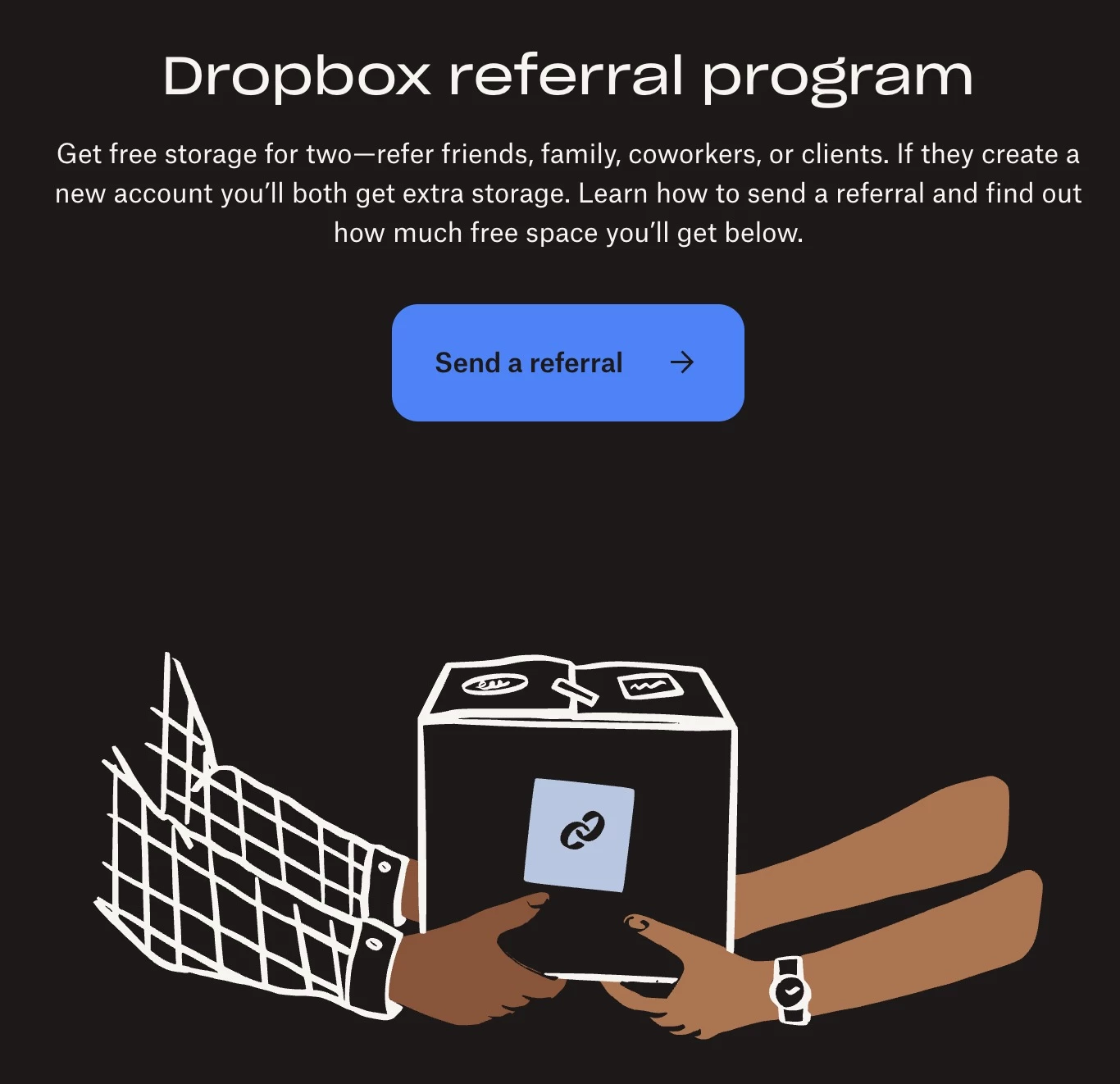
Dropbox famously scaled its user base from 100,000 to 4 million in just 15 months (a 3,900% increase), largely due to its referral program.
The model was simple: users received 500MB of free storage for each friend they invited, and their friends received the same.
2. Use Push Notifications & In-App Messaging
Push notifications and in-app messages are direct channels to re-engage users who’ve installed your app. Well-timed, personalized pushes, like special offers or reminders, can prompt users to return and complete actions.
Data shows push campaigns can increase app engagement by up to 88%, and users who enable push are retained nearly twice as long.
Push notifications essentially help cut through the clutter. Instead of waiting for the user to remember your app, you proactively reach out and pull them back in.
Best Practices for Implementing Push Notifications
- Make notifications relevant, timely, and actionable based on user behavior (e.g., cart reminders, workout nudges).
- Avoid spamming: too many pushes (6–10 per week) can cause 31% of users to abandon the app (Invesp).
- Use in-app messages to guide users during active sessions, such as providing onboarding tips, feature announcements, or feedback prompts.
- Always respect user preferences and privacy. Explain notification benefits during onboarding to improve opt-in rates. And never abuse the privilege of having access to a user’s attention.
Real-World Example: Duolingo’s Pushes Drive Daily Use
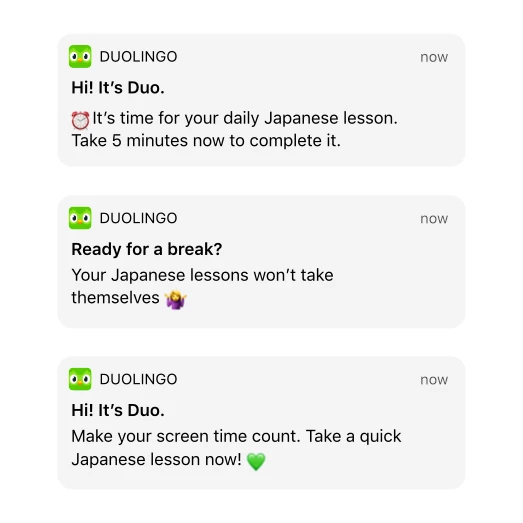
Duolingo sends personalized “streak saver” push notifications reminding users they’ll lose their daily streak — a tactic based on loss aversion.
With over 70% of its 30 million+ daily active users maintaining week-long streaks, Duolingo’s habit-forming push timing drives phenomenal retention and daily engagement.
3. Add QR Codes for Offline-to-App Acquisition
QR codes connect physical touchpoints to app downloads with very little friction. They can work on receipts, menus, packaging, storefronts, event materials, and in-venue signage.
The tactic is especially useful for retail, restaurant, travel, and service businesses that already have a trusted offline relationship with customers.
A discount or other immediate benefit can give people a reason to scan now rather than later.
Best Practices for Using QR Codes
- Place QR codes where users are already engaged: Use receipts, menus, packaging, counters, signage, and other high-traffic touchpoints.
- Offer an immediate incentive: Give users a clear reason to scan, such as a discount, exclusive offer, or app-only benefit.
- Keep the destination relevant: Send users to the appropriate app store or a landing page that explains the app's value.
- Make the call to action clear: Tell users what they get by scanning rather than simply displaying a QR code.
- Track scans and installs: Use unique QR codes or campaign links to measure which offline placements generate downloads.
Real-World Example: Domino's Drives New Users With QR Codes
Domino's Indonesia used QR codes at order counters as part of its #DominosAppAja campaign, offering new app users a 50% discount.
The campaign drove 29% new-user growth per quarter at half the cost of traditional channels.
4. Use Smart Banners To Convert Mobile Web Visitors
Smart banners appear on a mobile website and give visitors a direct prompt to open or download the app.
They are most useful when a brand already has meaningful mobile-web traffic, and the app offers a better experience for repeat users.
Keep the message simple: communicate the app benefit, provide an obvious download action, and deep-link users into the relevant app destination where possible.
Best Practices for Using Smart Banners
- Highlight the app's benefit: Tell visitors why using the app is better than continuing on the mobile website.
- Keep the message simple: Use concise copy and a clear download or open-app CTA.
- Target high-intent visitors: Prioritize users who are already browsing products, content, or services on mobile.
- Deep-link where possible: Send users directly to the relevant screen or content after they open the app.
- Measure conversion: Track banner clicks, app opens, installs, and downstream actions to determine whether the banner is generating valuable users.
Real-World Example: Smart Banners Turn Web Traffic Into App Users
Platforms such as Branch provide smart-banner functionality that lets brands promote their apps to mobile-web visitors.
For e-commerce and retail apps in particular, the tactic can capture users who are already familiar with the brand and give them a faster path from mobile browsing to the app.
Key Metrics for Measuring Mobile App Marketing Success
Tracking the right KPIs is essential to understanding what’s working, what’s not, and how to scale your app marketing efficiently.
Here are the core metrics every mobile app marketer should monitor:
- User acquisition cost (CAC or eCPI)
- Retention rate & churn rate
- Lifetime value (LTV)
- Putting it all together
1. User Acquisition Cost (CAC or eCPI)
This is the average cost to acquire a new user, expressed as:
- CPI (Cost Per Install) for install campaigns
- CPA (Cost Per Acquisition) for post-install goals
Formula: CAC = Total marketing spend ÷ Number of new users
High CAC eats into your margins — especially if users don’t stick around. Your CAC must stay well below your LTV to ensure profitability.
How To Lower CAC:
- Improve ad targeting and creatives.
- Boost conversion rates.
- Blend paid and organic acquisition.
2. Retention Rate & Churn Rate
Retention boosts LTV, reduces CAC waste, and signals app value. Without strong retention, you're constantly refilling a leaky bucket.
Here’s what they are:
- Retention Rate: % of users still active after X days (e.g., Day 1, 7, 30)
- Churn Rate: % of users who stop using your app
How To Improve It:
- Analyze cohort retention by channel or campaign.
- Optimize onboarding.
- Use push messaging, content updates, and in-app rewards.
- Fix bugs and gather feedback early.
3. Lifetime Value (LTV)
This is the total revenue a user generates before churning, including purchases, subscriptions, and ad revenue — minus service costs.
LTV determines how much you can spend to acquire users and still profit. If LTV > CAC, you can scale confidently. If not, growth isn’t sustainable.
How To Grow LTV:
- Increase ARPU via upsells, subscriptions, or ads.
- Segment by user type (e.g., free vs premium).
Putting It All Together
By monitoring CAC, Retention, and LTV, you can:
- Identify high-quality channels (e.g., low CAC + high retention).
- Avoid wasteful spend on campaigns that attract low-value users.
- Test and refine onboarding, messaging, and monetization to maximize ROI.
Mobile App Marketing Strategy: Final Thoughts
Use proven tactics like referrals, personalized re-engagement, and continuous improvement to drive sustainable growth. Acquisition fills the funnel, but retention multiplies value.
Success today requires a multi-channel approach and ongoing adaptation — ads alone aren’t enough. Top apps combine smart acquisition, strong ASO, and retention to build lasting user bases.
With a great product and data-driven execution, there’s still a huge opportunity to succeed.

Our team ranks agencies worldwide to help you find a qualified partner to implement the latest AI solutions. Visit our Agency Directory for the Top Mobile App Development Companies, as well as: