
PPC Statistics: Key Findings
- Mobile-first campaigns are essential as user behavior shifts toward mobile and in-app experiences.
- Embracing automation and AI is key to staying competitive in a rapidly evolving ad landscape.
- Ad fraud and rising costs require stronger fraud prevention measures and smarter attribution.
- Balancing performance with brand-building leads to stronger long-term campaign returns.
Success in 2026 will come down to how well marketers adapt to platform shifts, changing user behaviors, and growing demand for measurable, ROI-driven performance.
We’ve gathered 40 recent, relevant, and reliable statistics in PPC to help advertisers refine their strategy, justify budgets, and stay competitive in 2026.
Key Trends and Challenges Shaping the Future of PPC
1. Global PPC Spending Set To Hit $218.3 Billion in 2026
The global pay-per-click (PPC) landscape is scaling rapidly as brands pour more dollars into paid search to remain competitive, with worldwide search ad spending set to reach $218.3 billion in 2026.
The numbers here show just how much the space is scaling, not only in terms of total spending, but also in per-user investment, platform dominance, and supporting tech like PPC software. It's a clear sign that brands are doubling down on paid media to stay visible and competitive.
Here’s how you can leverage this trend:
- Benchmark budgets against industry trends. If you're under-investing, you risk invisibility, especially in competitive sectors.
- Evaluate software tools. As the PPC software market grows year-over-year, consider platforms that can streamline optimization and reporting.
- Focus on search intent. Higher per-user spend means more competition. Be sure to align your copy and targeting with actual search behavior.
- Localize global strategies. The U.S., U.K., and Germany dominate Google Ads usage, but regional nuances matter. Tailor campaigns accordingly.
Here are some more PPC market stats to take note of:
- The average ad spend per internet user in search is expected to hit $58.21 in 2025, as per Statista’s report.
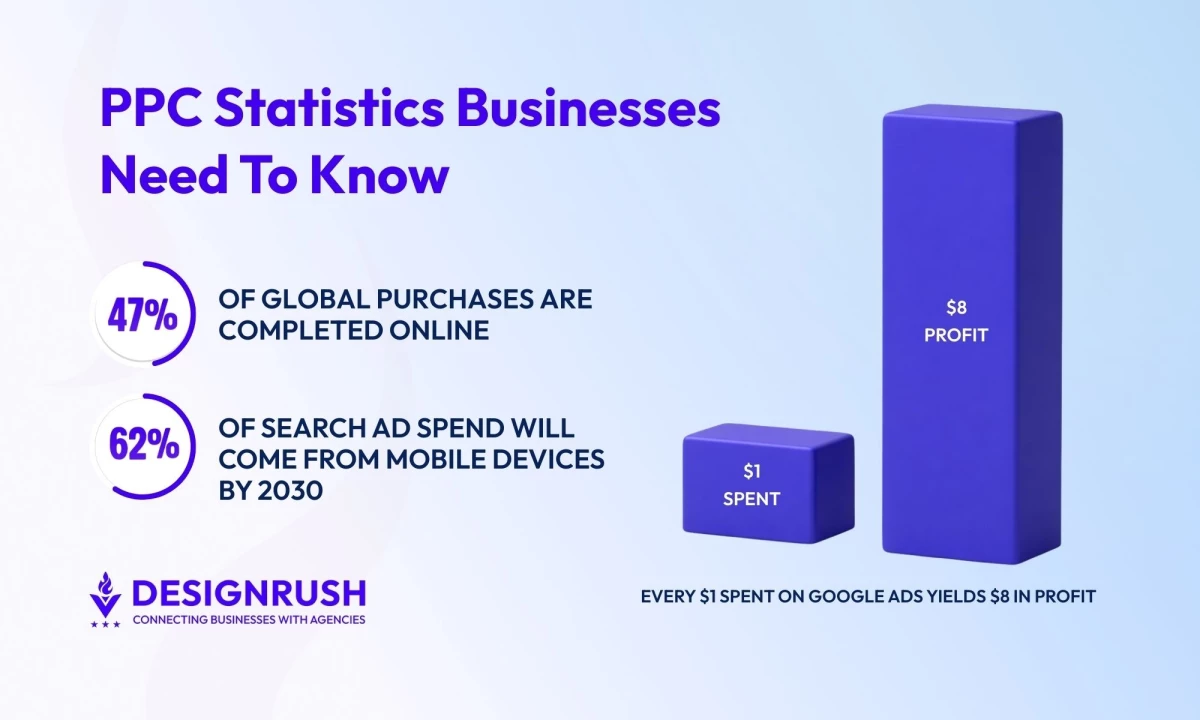
- By 2030, 62% of total search ad spend will come from mobile devices. (Statista)
- Google Ads owns a 69.04% share of the global PPC market.
- The U.S. accounts for nearly 50% of global Google Ads customers, followed by the U.K. (10.07%) and Germany (8.99%). (6Sense)
- The global PPC software market is forecasted to grow from $20.5 billion in 2024 to $22.49 billion in 2025, at a CAGR of 9.8%.
2. Rising In-App Ad Spend Signals a Mobile-First Future for PPC
PPC is undergoing a massive shift thanks to mobile-first behaviors, new platforms, and AI-driven execution. In-app ad spending is forecasted to rise by 135%, from $203.8 billion in 2023 to $479.4 billion by 2028, revealing how much user attention is shifting toward mobile app environments. It’s a signal for brands to rethink where (and how) they connect with their audiences. These aren’t little changes; they’re major shifts that will reshape how every advertiser operates in the coming years.
“Mobile and voice search are reshaping PPC in 2025,” says Tony Paris, owner of AppWT. For marketers, this means focusing on conversational keywords that “match how people actually talk, not just how they type.” He also explains that “location-based ads are huge now that mobile users constantly search for things ‘near me’."
How to leverage these emerging trends:
- Prioritize mobile-first strategy. With mobile expected to drive search ad spend by 2030, responsive design and mobile ad optimization are non-negotiable.
- Shift budget to in-app formats. Explore native and programmatic options within top mobile apps and platforms.
- Test emerging platforms. TikTok and Amazon are gaining PPC share. Don’t rely solely on Google.
- Optimize for voice and conversational search. Consumers are searching in the way they speak so update your keyword strategy accordingly.
- Prioritize location-based targeting. With mobile usage rising, real-time proximity ads can boost relevance and performance.
Take note of these other trend-defining stats:
- Mobile will account for 62% of total search ad spend by 2030, per Statista’s Search Advertising report.
- More than 70% of all paid search impressions and clicks are on mobile devices.
- Google’s share of the US search advertising market is expected to fall below 50% for the first time in 2025.
3. Ad Fraud Crisis Is Taking a Toll on PPC ROI
Ad fraud, rising costs, and complex user journeys are making PPC harder to manage. Juniper Research reports that in 2023, advertisers lost $84 billion to ad fraud, equating to 22% of global ad spend, a staggering loss that threatens ROI across the board.
These figures show just how much money is at risk and why proactive fraud prevention, better tracking, and smarter attribution are vital to protect ROI.
Here’s what you can do to protect your ROI from fraud:
- Implement fraud prevention tools. Use click fraud detection and bot filtering software.
- Monitor unusual traffic patterns. Spikes in clicks with low conversions can be a red flag.
- Audit traffic sources regularly. Don’t just look at volume; assess the quality.
- Focus on attribution modeling. Multi-touch attribution can help identify which sources actually drive results.
- Work with trusted platforms and vetted partners. Fraud rates vary significantly by vendor.
Some more findings in the Juniper Research report include:
- The amount lost to ad fraud is projected to climb to $172 billion annually by 2028.
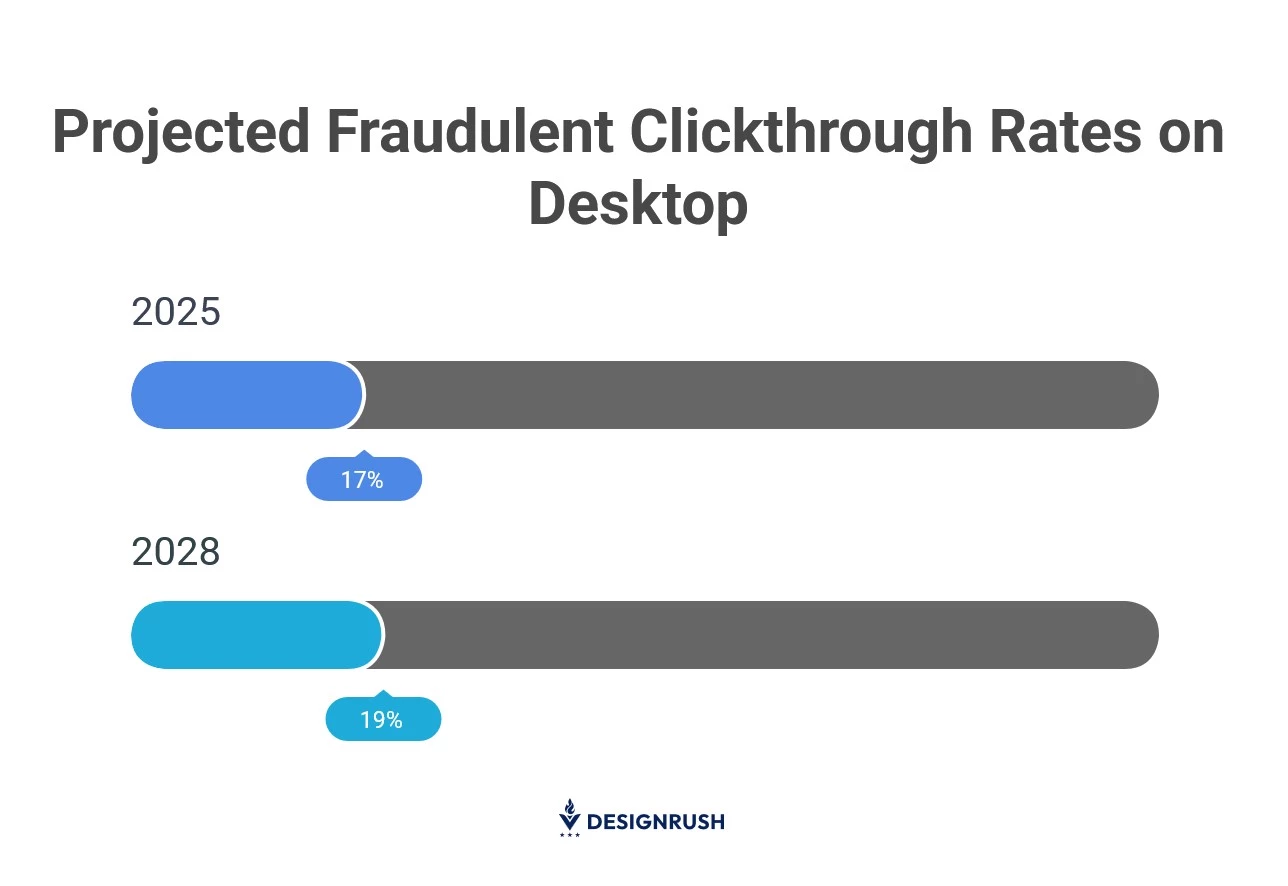
- In 2025, 17% of desktop clickthroughs are expected to be fraudulent.
Decoding PPC Success in 2026: What Will Drive User Clicks
1. Key PPC Metrics To Watch: CTR, CPC, and Conversion Rates
Understanding performance benchmarks will help you identify what success looks like and where to optimize. The average click-through rate (CTR) on Google Ads is 6.42%, a strong baseline to keep in mind.
These figures tell a nuanced story: while engagement is improving across many industries, costs are climbing too. Staying efficient means knowing how your numbers compare and adjusting your strategy accordingly.
Here’s what you can do to ensure your brand remains competitive:
- Know your industry benchmarks. A 6.42% CTR is the average, but top verticals like Arts & Entertainment exceed 13%. Make sure you tailor your goals accordingly.
- Double down on high-intent keywords. Rising CPCs demand a tighter focus on keywords that drive real conversions, not just traffic.
- Optimize for ROI, not just clicks. Monitor conversion rates and CPA alongside CTR to gauge the true efficiency of a campaign.
- Watch for volatility. CTRs are rising in some industries but falling in others, so be sure to continually test and refine.
- Use ad extensions and compelling CTAs. Improve visibility and engagement with more dynamic, actionable ad formats.
Here are some more PPC performance stats worth knowing:
- The best-performing verticals in 2024, per Wordstream’s PPC report are Arts & Entertainment (13.04%), Sports & Recreation (9.66%), and Real Estate (9.20%).
- Year-over-year CTR increases were led by Finance & Insurance (up 24.75%), Shopping & Gifts (up 22.22%), and Home Improvement (up 16.46%). (Wordstream)
- Not all industries saw gains. Wordstream’s PPC report reveals that CTR dropped 8.99% in Pets & Animals, 8.26% in Sports & Recreation, and 5.11% in Fashion & Jewelry.
- The report also shows the average cost per click (CPC) is $2.69 for search and $0.63 for display.
- CPCs increased in 86% of industries in 2024, with a 10% average rise.
- Google Ads and Microsoft Ads CTRs increased by 5% on average between 2023 and 2024. (Wordstream)
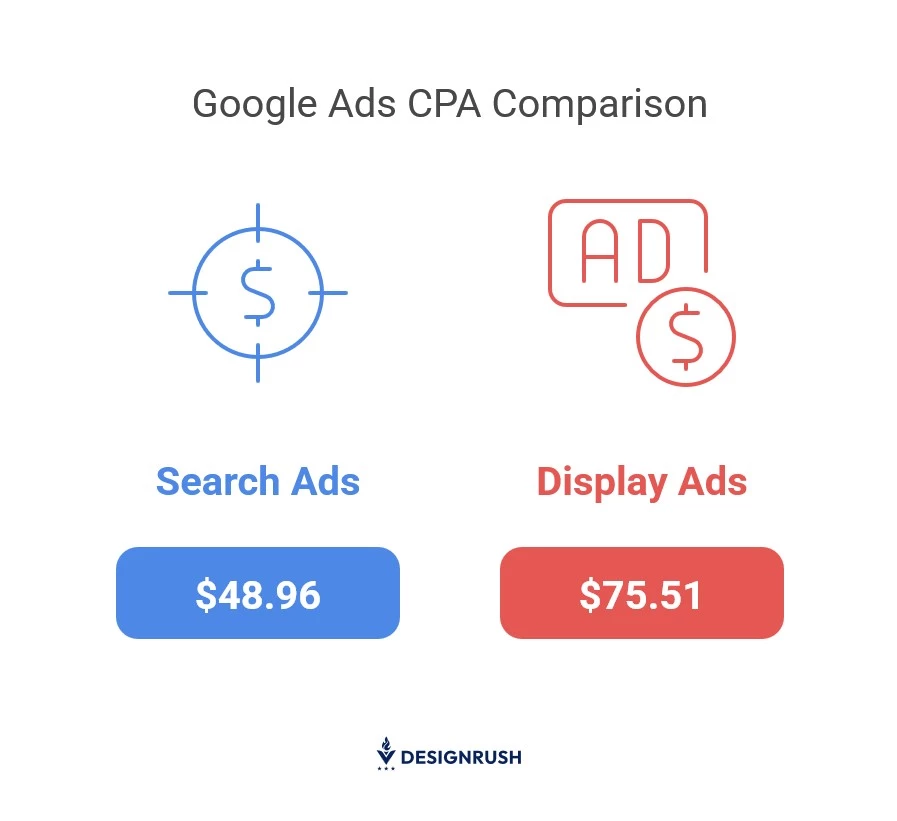
- The average cost per acquisition (CPA) on Google Ads is $48.96 for search and $75.51 for display. (Wordstream)
- The average conversion rate for Google Ads is 2.85%. Additionally, cost per lead rose in 19 of 23 industries, with an average increase of 25%.
- Search ads convert at 4.2%, while display lags at 0.55%, per Databox’s data.
2. User Clicks Are Driven by Information and Brand Trust, Not Visual Appeal
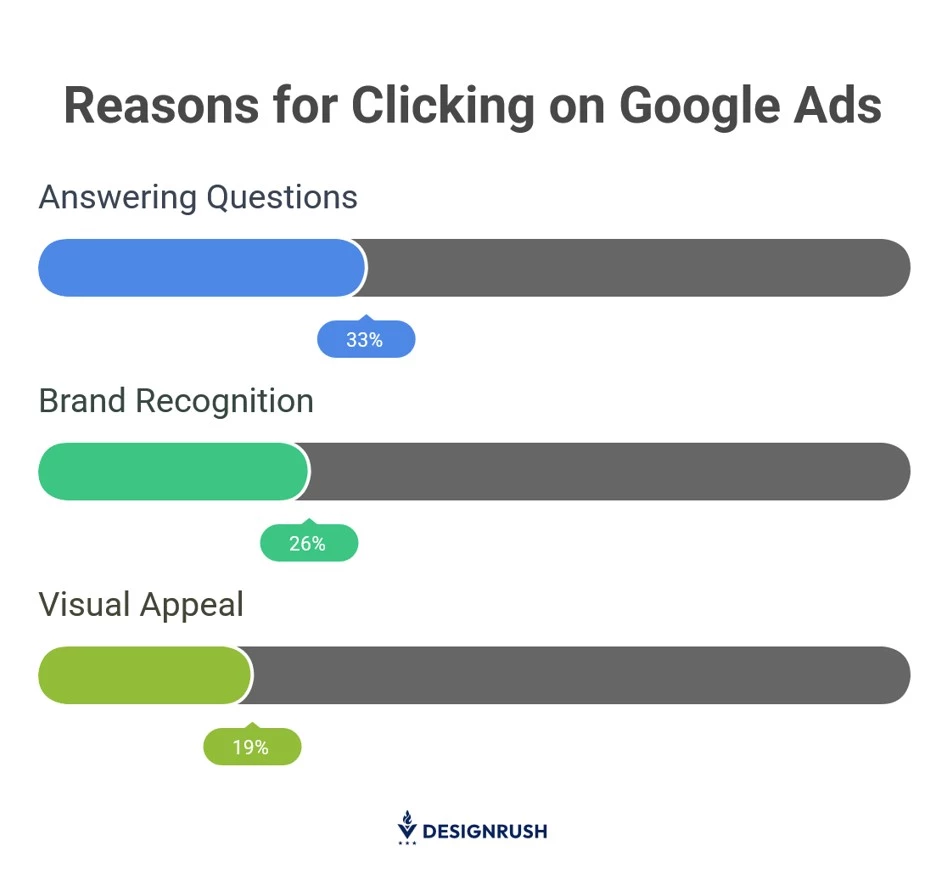
Consumer behavior is evolving quickly, and understanding how users interact with ads is crucial if you want to create campaigns that actually convert. According to research, 33% of consumers click on Google Ads because they answer their questions, while 26% do so because they recognize the brand. In comparison, only 19% of users are influenced enough by an ad’s visual appeal to click on it, per Enterprise Apps Today.
These stats highlight just how varied user responses to ads can be. To write better copies, choose better formats, and build better campaigns, it’s necessary to understand these dynamics so you can meet people where they are.
Here’s what you can do to cater to evolving user behavior:
- Tailor your messaging to solve problems. Relevance will always win the day.
- Invest in brand awareness. Brand recognition remains a crucial factor and can be powerful when combined with performance efforts.
- Don’t over-prioritize aesthetics. Ad visuals don’t sway everyone — substance and relevance ultimately matter more than style.
- Target based on familiarity. Many users don’t even realize they’re clicking on ads, and smart targeting can make ads feel organic.
- Use PPC throughout the funnel. With nearly half of all purchases happening online, PPC should support awareness, consideration, and conversion phases.
Consider these statistics on user behavior:
- 47% of global purchases are now completed online, meaning PPC is a crucial touchpoint in the buying journey.
- In the UK, 80% of users who recognize a Google ad refuse to click it, yet 68.2% don’t recognize paid ads at all.
Optimizing PPC Strategy and Maximizing ROI in 2026
1. Bing Ads Becomes the Next Best Platform After Google in 2026
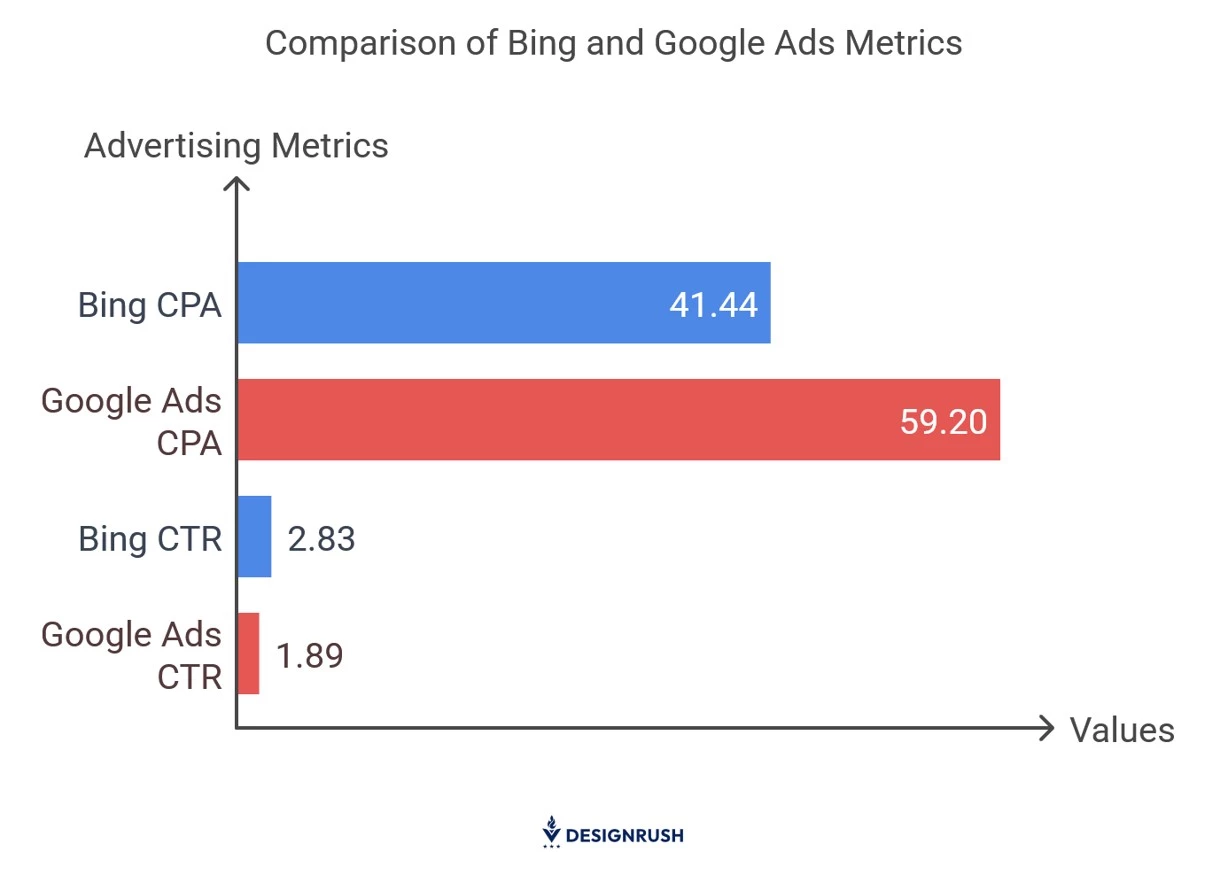
While most paid media budgets are still flowing into Google, there’s growing interest in alternatives like Bing, which are showing competitive performance — particularly in terms of cost-efficiency — and shouldn’t be overlooked. Bing Ads offers a CTR of 2.83% and roughly 50% higher CTAs than Google in some categories. Additionally, Bing’s average cost per acquisition (CPA) of $41.44 is about 30% lower than Google’s.
As more advertisers explore these alternatives, platform-level performance benchmarks offer helpful context when optimizing their ad spend across different platforms.
Here are a few platform-specific actionable tips:
- Explore platform diversification. Don’t rely solely on Google. Try Bing, Amazon, and even TikTok to uncover untapped performance.
- Use performance benchmarks to guide spending. Google may offer scale, but other platforms can offer better ROI in niche markets.
- Segment campaigns by platform strengths. Search-heavy, intent-based products may thrive on Google, but you may find that display and retargeting work better elsewhere.
- Tailor creative per platform. What works on Google doesn’t always work on Bing or social. Be sure to adjust tone, copy, and visuals accordingly.
- Monitor CPA and conversion rates across platforms. Track where your most profitable users are coming from, not just where your clicks are.
Take note of these platform performance stats:
- More than 98% of marketers report using search ads, while 71% also run display campaigns, indicating that most advertisers are taking a multi-format approach within dominant platforms. (Databox)
- Google claims that for every $1 spent on Google Ads, businesses earn $8 in profit.
- Bing’s CPC averages $1.54, with a conversion rate of 2.94%, per Wordstream’s Bing Ads Performance Benchmarks report.
2. Smart Budget Allocation Can Boost Your PPC ROI by 90%
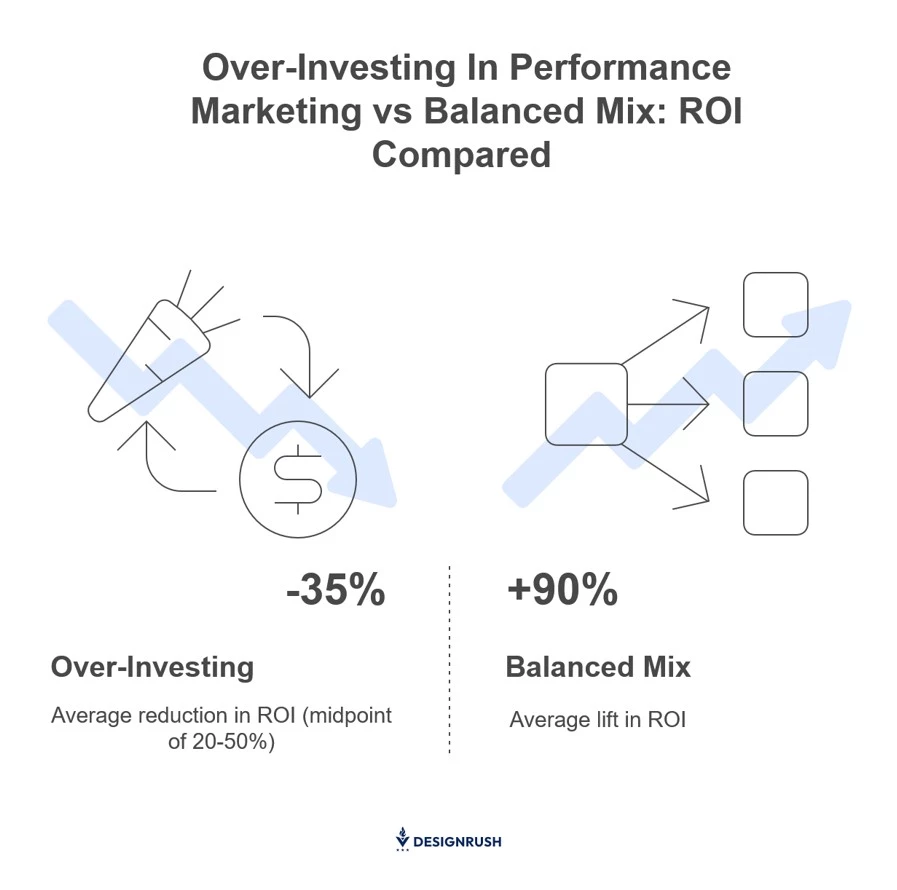 Marketers are under pressure to maximize results while navigating rising costs and shifting priorities. However, blindly pumping spending into short-term results isn’t sustainable. Over-investing in performance advertising can reduce ROI by 20–50%, while a balanced mix of brand and performance can boost ROI by up to 100% (with an average lift of 90%). It means that strategic alignment and smarter allocation are key.
Follow these tips to maximize your ROI for the long term:
- Reevaluate your brand vs. performance split. If your entire budget is focused solely on direct response, you could be limiting your long-term growth potential.
- Use data to prioritize high-performing channels. Don’t spread your spending too thin, rather focus on what consistently drives qualified leads or sales.
- Lean into automation to stretch resources. AI-optimized bidding and budgeting tools can help improve efficiency across campaigns.
- Track ROI at the campaign level. Use consistent attribution models to determine which touchpoints are actually driving outcomes.
- Build flexibility into budgets. Costs are rising across platforms so allow room to shift spend based on real-time performance data.
These statistics from Emarketers’ Mobile Advertising 2024 report are also worth noting:
- U.S. mobile ad spend surpassed $200 billion, now representing 51.2% of all media spend and 66% of digital ad budgets.
- Programmatic display ad spend in the U.S. is projected to reach $180 billion in 2025, up 13.3% year-over-year.

Our team ranks agencies worldwide to help you find a qualified partner. Visit our Agency Directory for the top PPC agencies, as well as:
- Top White Label PPC Agencies
- Top Small Business PPC Agencies
- Top Los Angeles PPC Agencies
- Top eCommerce PPC Agencies
- Best Google Ads Agencies
PPC Statistics FAQs
1. How can smaller businesses stay competitive with rising CPCs and CPLs?
Small businesses can still compete by focusing on tighter targeting, stronger value propositions, and refining their Ideal Customer Profile (ICP). Lean into niche keywords, build highly relevant landing pages, and prioritize quality over volume. A smaller, well-optimized campaign often outperforms a broad one with a bloated budget.
2. How should I adapt my PPC strategy as third-party cookies phase out?
Start building your first-party data infrastructure now. Use lead gen forms, CRM integrations, and email capture to gather consented data. Platforms like Google are also enhancing contextual targeting and AI-driven insights to fill the gap. The shift is a challenge, but it’s also a chance to create more meaningful (and privacy-compliant) connections with your audience.