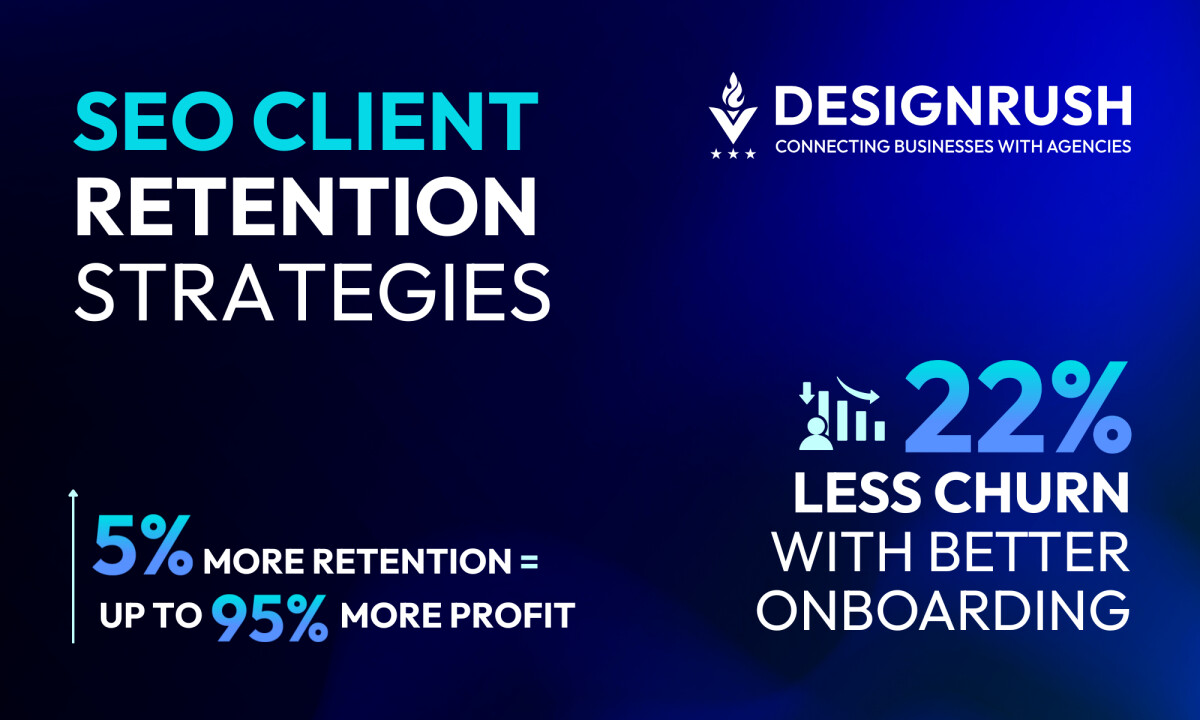

Getting the client is step one; keeping them is the real game. We’ll share practical strategies to reduce churn and build lasting partnerships, covering onboarding, reporting, communication, education, and the right tools to use.
SEO Client Retention Strategies: Key Points
- Retaining clients is cheaper and more profitable: acquisition costs rose 50–60%, while retention boosts profits up to 95%.
- Clear onboarding and proactive communication cut churn by ~22% and build lasting trust.
- Strategic, outcome-focused reporting plus client education turns clients into loyal advocates.
SEO Client Retention Plan Overview
Lost clients don’t just forfeit revenue; they drain team morale, disrupt workflow, and erode hard-won case studies and momentum.
Agency Client Retention: Why This Matters Now
Losing a client hurts far more than just the monthly retainer. Consider the economics: 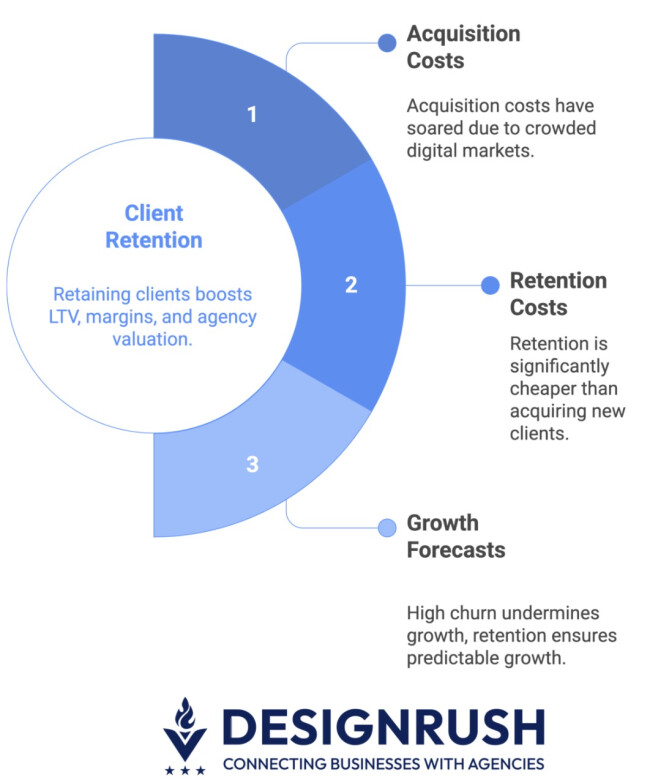
1. Acquisition Costs Are Soaring
With digital ad markets crowded, the cost of acquiring clients has jumped dramatically. Industry research shows customer acquisition costs have increased by 50–60% in just the last five years (Paddle).
You’re paying more than ever to win each client, which means each churned client is a bigger sunk cost.
2. Retention Is Dramatically Cheaper
It remains far cheaper to retain a customer than to acquire a new one: acquiring a new client can cost 5 to 25 times more than keeping an existing one (Harvard Business Review).
Retained clients tend to spend more over time and refer new business at no cost:
- Bain & Company famously found that increasing customer retention by just 5% boosts profits by 25% to 95%.
- BIA Advisory reported that current customers spend about 67% more on average than new customers.
3. Churn Undermines Growth Forecasts
High churn creates a “leaky bucket” where new sales barely replace lost clients, making growth unpredictable. It extends CAC payback periods and drags down your LTV:CAC ratio.
Retention-first agencies achieve superior economics. They recover their sales investment quickly and enjoy high-profit renewals, whereas churn-prone firms spend 6+ months just to break even on CAC.
As one industry report notes, agencies that demonstrated customer lifespans well above the ~6-month average were the ones selling at top EBITDA multiples (8–12×) in recent acquisitions (FirstPageSage).
In short: client retention = higher LTV, higher margins, and higher agency valuation.
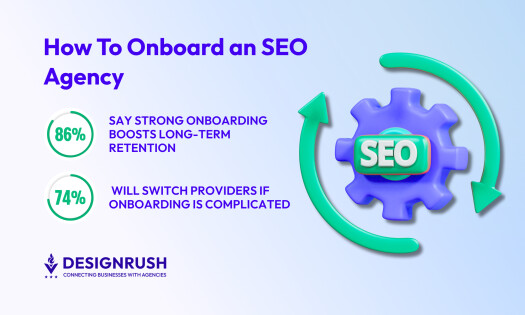
Build Trust from Day One: Onboarding That Reduces Churn
Onboarding is your first real opportunity to bake in retention. Done right, onboarding sets the tone for strategic alignment and long-term collaboration.
A sloppy or unclear onboarding, by contrast, can plant the seeds of doubt that eventually lead to churn. Here’s how to get it right: 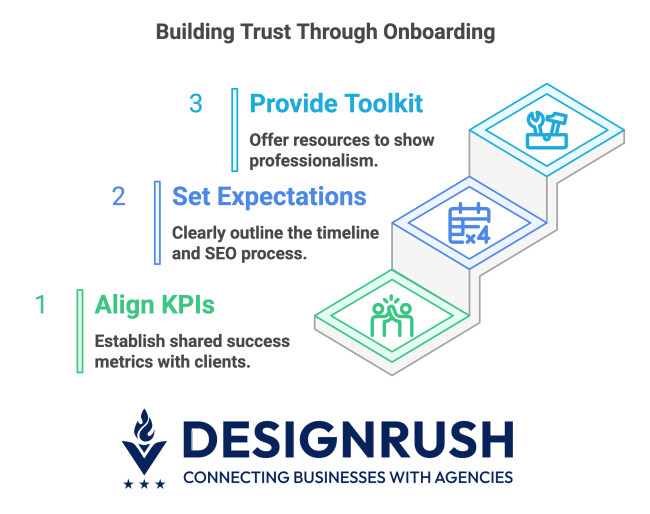
1. Align on Business KPIs — Not Just Keywords
In kickoff meetings, connect SEO deliverables to the client’s business goals. Use a Goal Alignment Canvas or similar tool to capture revenue targets, lead volume goals, sales funnel metrics, and other OKRs the client cares about.
This ensures you and the decision-makers have a shared definition of success from day one, beyond just ranking some keywords.
2. Set Crystal-Clear Expectations
Establish a transparent timeline of what will happen in the first days, weeks, and months. For example, provide a roadmap visual that shows when to expect the site audit, technical fixes, content publications, and initial SEO traction.
Be frank that SEO is a momentum discipline, not an instant fix. Prashant Puri, CEO of AdLift, puts it simply:
“We’ve seen great organic results in 3-6 months as well as 4-5 years. The long-term approach does lead to sustainable results.”
By pre-framing SEO’s time-to-value, you prevent clients from feeling “in the dark” or impatient early on. Clear expectations upfront = fewer disappointments later.
3. Provide an Onboarding Toolkit
Agencies that execute structured onboarding can significantly increase early satisfaction.
By immediately demonstrating professionalism and aligning with what the client’s CMO/CEO cares about, you reduce the risk of buyer’s remorse and set the foundation for long-term trust.
Consider providing new clients with a welcome kit that includes:
- A client welcome deck introducing your team (with photos/roles), point-of-contact info, and a recap of goals and KPIs you’ll be judged on.
- An editable onboarding checklist (e.g., in Notion or Google Docs) that lists all initial tasks, from access provisioning (Google Analytics, Search Console, CMS access) to milestone meetings.
- A baseline “visibility” report capturing current SEO metrics (rankings, organic traffic, conversions) as of the start date. This benchmark lets clients see progress from Day 1 and gets them excited for improvements to come.
Show Strategic Value: Reporting That Retains and Upsells
One of the biggest reasons clients leave is that they “don’t see the value.” Regular reporting is your chance to prove value. Here’s how to do it right: 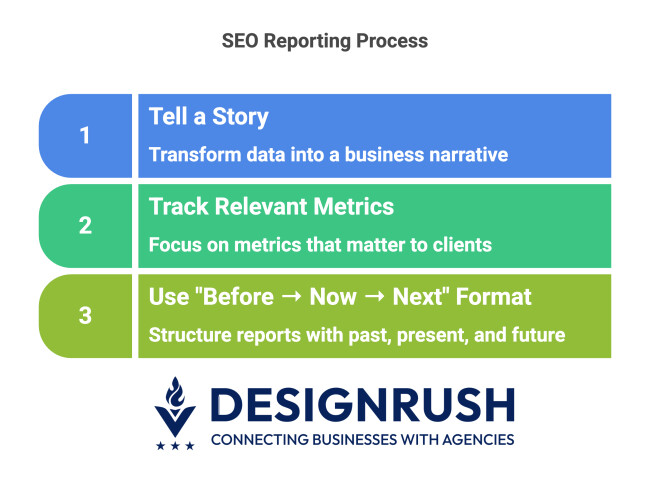
1. Tell a Story, Not a Data Dump
High-retention agencies don’t just send data. They turn reports into business narratives that tie SEO performance to tangible results.
Stop overwhelming clients with 20-page rank reports or raw Google Analytics tables. Instead, tell the story of how your work is impacting their goals.
❌ Instead of: “Keyword A moved from #12 to #3.”
✅ Try: “We pushed 5 high-intent keywords into the top 3 positions, resulting in a 28% month-over-month lift in demo requests.”
For example, rather than just noting keyword rankings, contextualize it:
“This month, we moved 5 high-intent keywords into the top 3 positions, contributing to a 28% month-over-month lift in demo requests.”
Now the client sees SEO not as abstract rankings but as qualified leads and revenue opportunities.
2. Track What Clients Actually Care About
Use tools like GA4, Looker Studio (Google Data Studio), and CRM integrations to pull metrics that business owners care about. Think pipeline generated, conversion rates, CAC, or LTV, and tie those shifts directly to your SEO work.
View this post on Instagram
Don’t just say traffic is up. Say qualified traffic is up and prove it with metrics that show stronger engagement and higher conversions.
Forecast outcomes to show future value: e.g., “If current trends hold, your organic funnel could generate an additional $X in sales this quarter.”
Now, you’re not just reporting. You’re projecting ROI.
3. Use a “Before → Now → Next” Format
Structure your report like a mini strategic review: past, present, and future.
- Before – Remind them where they started:
“Back in Q1, you were averaging 500 non-branded organic visits and struggling to rank for core industry terms.”
- Now – Showcase measurable wins:
“Now you’re getting ~2,000 visits/month, with several ‘money’ keywords ranking on page 1 — a 300% lift in non-branded organic clicks and a noticeable uptick in inbound leads.”
- Next – Preview what’s ahead:
"Next month, we’re launching an authority content hub on [topic] to pursue featured snippets and align with your Q4 lead goals.”
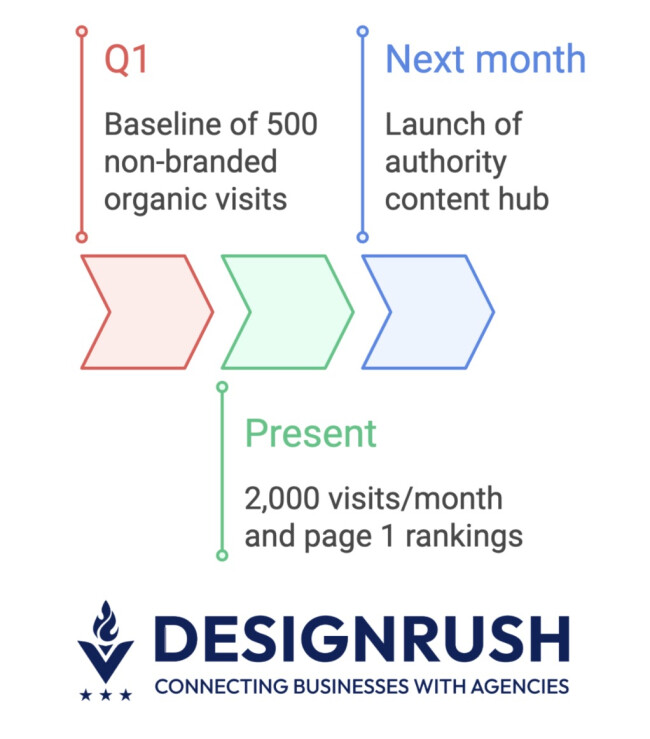
This format frames your work as a journey, with momentum, strategy, and purpose.
Clients who understand the story of their SEO investment are far less likely to churn. Because now, they can clearly explain your value to their stakeholders.
Proactive Communication: Clients Stay When They Feel Seen
Silence is a churn catalyst. In contrast, high-retention agencies lead with transparency, a regular cadence, and high-touch communication.
Clients are far less likely to get anxious or dissatisfied if they constantly know what’s happening and feel you’re on top of things. Here’s what you should prioritize: 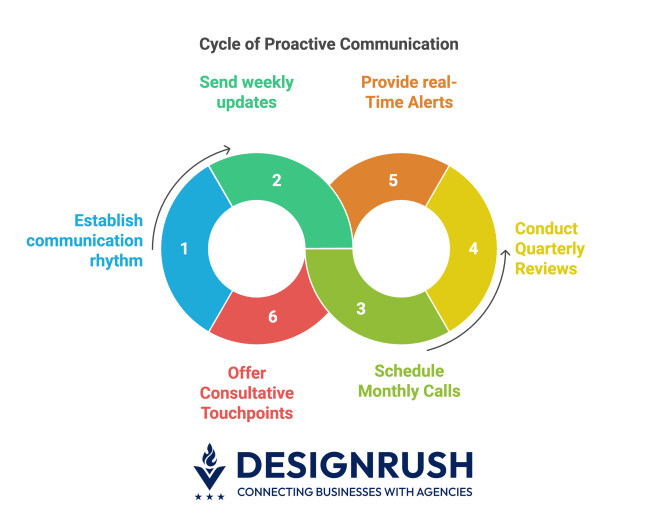
1. Cadence That Builds Confidence
Establish a communication rhythm and set expectations for it early. For example:
- Send async weekly updates every Friday via email or Slack. This ensures the client progress is always being made, even between formal reports.
- Schedule monthly strategy calls to review progress, discuss results, and adjust tactics. Come prepared with insights and questions.
- Do formal Quarterly Business Reviews each quarter to zoom out: revisit KPI targets, show quarter-over-quarter trends, and align on next-quarter strategy.
- Real-time alerts: If something major happens (algorithm update, sudden ranking drop or spike, site issue), proactively inform the client immediately. Don’t wait for them to notice.
Structured check-ins and on-demand responsiveness ensure clients are never left wondering, “What are they even doing?” Regular communication builds confidence that you’re proactive and invested in their success.
2. Consultative Touchpoints (Not Just Status Updates)
@whd.au As we clock over to the new financial year, here are some client retention tips from our Client Experience Coordinator, Letitia! (She lives and breathes happy clients… take it from her)
♬ original sound - WHD
Every interaction is a chance to reinforce your value as a strategic advisor, not just an order-taker. In your check-ins:
- Bring new ideas to the table. For instance: “I noticed Competitor X is gaining ground with a content piece on [topic]. How about we create a targeted campaign to counter that?” Actively look out for their interests to be their partner in growth.
- Share intel on industry changes. SEO is ever-evolving (e.g., Google releasing AI-powered search features). Brief the client on relevant updates to demonstrate thought leadership and that you’re adapting strategy to external changes.
- Ask questions and listen. Use meetings to explore their evolving priorities. By integrating with their broader marketing picture, you can adjust SEO plans and possibly upsell additional services.
The bottom line: frequent, transparent communication = client trust. When clients feel “seen” and know you’re not hiding when things go wrong (or coasting when things go right), they are far more likely to view you as a long-term partner.
Educate to Retain: Turn Clients Into Informed Advocates
Another powerful (and underrated) retention strategy is client education. An educated client who understands the basics of SEO and the "why” behind your strategy will be more patient, collaborative, and appreciative of your work.
On the flip side, clients who don’t grasp SEO often have unrealistic expectations or lose trust when results fluctuate.
In practice, delivering education shouldn’t be ad-hoc; systematize it. Consider implementing: 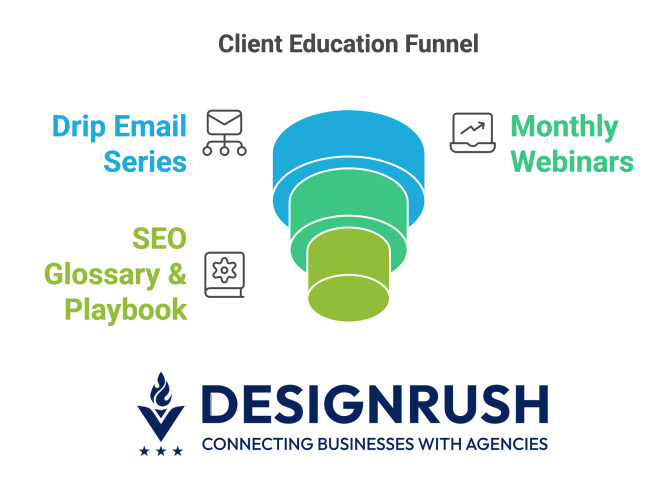
- Drip email series “SEO 101 to 201”: Create an automated email course for new clients that spans their first 8–12 weeks. Start with the basics and gradually introduce advanced topics (technical SEO, content strategy, link building, etc.).
- Monthly client webinars or workshops: Host a short webinar for all clients each month on a hot topic, e.g., “Understanding Google’s Latest Algorithm Update”. Include a Q&A.
- Client SEO glossary & playbook: Maintain a shared document with simple definitions (what’s a canonical tag or domain authority?) and your agency’s SEO process explained. This serves as a reference for clients.
@workramp If you’re using customer education as a last-ditch effort to retain clients, you’re doing it wrong. ❌ ”I would much rather set the customers up for success within those first three months than try to get them to sign a piece of paper in the last three months,” shares Joe Ryan, Founder of Customer Education Newsletter & Training Program Manager Maltego Technologies on the latest LEARN episode. Joe knows how critical customer education is and he discusses with Ted Blosser where organizations are getting it wrong—i.e. their knowledge bases—and chats about the power of paid education services and how to sell them. Check out this episode on your favorite podcast app to discover how customer education can bring massive value to your company. Click the link in the comments to bear the whole episode! #maltego#LEARN#LEARNpodcast#WorkRamp#founder#LEARN#podcast#newepisode#hr#customereducation#cs#onboardingtips#enablement#teambuilding#newhires#manager#leadershipdevelopment#customersuccess#talentstrategy#topperformer#people#trust#CPO#leadership#leadershiptips#hrtips#revenue#domainexpertise#employeeengagement#employees#culture#transparency#enablement#SaaS#saassales#startup#saastips#startuplife#techlife#trustyourteam#communication#saascompany#competition#ROI#saaspodcast#learnontiktok#learnwithus#alwaysbelearning#hrleader#peopleteam#cometogether#share#teamwork#buildtrust#talent#CLO#training#trainingmanager♬ original sound - WorkRamp
By transforming clients into knowledgeable partners, you mitigate panic-driven churn. They’ll stick with you through the ups and downs, because they get it.
Even better, an educated client often becomes your internal champion. They can communicate your value to decision-makers, helping secure those budget renewals.
Tools That Drive Retention and Reporting ROI
Finally, consider using software and tools designed for customer success and retention. A few examples:
Tool | Use Case | Result / Impact |
Customer lifecycle & sentiment tracking | Identifies churn risk ~30 days in advance. Monitor health scores (login activity, engagement, NPS, etc.) to flag unhappy clients, so you can intervene. | |
KPI-driven live dashboards | Visualizes progress → reduces churn. Clients can see up-to-date SEO performance anytime, increasing transparency. | |
Personalized async video reports | Builds trust without extra meetings. Humanizes your communication; clients feel attended to. Many will forward your Looms internally. | |
Centralized onboarding & strategy docs | Aligns client teams with SEO milestones. A shared portal for plans, reports, and FAQs keeps everyone on the same page. |
You don’t need all of these, but investing in one or two client success tools can amplify your retention efforts by adding consistency and scalability.
SEO Client Retention Strategies: Final Words
Agencies that double down on serving and retaining their clients reap the rewards in resiliency and reputation. You build a foundation of trust that can weather traffic dips, algorithm turbulence, and even economic downturns.
A happy long-term client is worth far more than a quick-win client who leaves: they refer, upsell, and champion your work. Over time, that compounds into stable revenue.
So, if you want to future-proof your agency, shift your mindset. Don’t just chase the next client; delight your current ones so they never want to leave. The ROI will follow.

Our team ranks agencies worldwide to help you find a qualified partner. Visit our Agency Directory for the Top SEO Agencies, as well as:
- Top SEO Consultants
- Top Startups SEO Companies
- Top Enterprise SEO Companies
- Top Small Business SEO Companies
- Top International SEO Agencies
SEO Client Retention Strategies FAQs
1. What is a healthy SEO client retention rate?
A typical client-agency relationship lasts 12–18 months (Portent). Retaining clients for over a year is a solid benchmark, while 24+ months is excellent. Aim for 80–90% annual retention; anything above 90% is top-tier.
2. How does retention affect agency valuation?
Retention has a huge effect on valuation. Buyers and investors love agencies with sticky, long-term clients. Predictable revenue = less risk = higher valuation. In fact, strong retention is often a bigger factor than total revenue in determining an agency’s sale price multiple.
3. Why do SEO clients typically leave?
Most churn comes down to a few avoidable issues:
- Unclear ROI – Reports fail to connect the work to the results.
- Poor communication – Clients feel ignored or uninformed.
- Expectation mismatch – Results take longer than expected, and expectations weren’t set early.
- Deliverables not aligned with business goals – SEO feels disconnected from actual objectives.
All of these can be prevented with the strategies outlined above: clear communication, value-driven reporting, expectation management, and strategic alignment