Paid social media advertising can be a boost to your regular content marketing strategy, build brand awareness, and target the right audience. Today, platforms like TikTok, Instagram, and Facebook all have their own advertising options.
Paid social advertising can provide numerous benefits to your business, but only if you know how to use it correctly. In this article, we’ll cover everything you need to get started.
What Is Paid Social Media Advertising?
Paid social media advertising involves promoting your content on popular social media platforms by paying for advertising space. You can sponsor organic content or design custom advertisements specifically for paid social media campaigns.
As one of the fastest-growing markets — paid social media ads are projected to exceed $300 billion by 2024 — there are many platforms today that offer this type of marketing. The current most famous ones include Facebook, Instagram, Twitter, TikTok, LinkedIn, and Pinterest.
Each platform has unique requirements and suggested best practices. For example, Instagram relies on high-quality visuals, while Twitter offers limited space for short-form content. However, all of these platforms display paid ads labeled as “sponsored” or “promoted” content, helping you reach a targeted audience.
Paid ads on social media can be used for many purposes, from increasing awareness and building a brand identity to generating leads, driving website traffic, and increasing sales.
7 Main Benefits of Paid Social Media Advertising
With over 5 billion people using social media in 2024, paid ads offer a good opportunity to spread the word about your brand. Paying for social media advertising can be a powerful way to achieve your business goals, bringing many benefits, such as:
- Increases brand awareness: Paid social media advertising can increase your brand’s visibility and help more people become aware of your business by showing your ads to a larger audience.
- Improves engagement: Increased visibility — combined with quality and engaging content — leads to more likes, comments, and followers, which can help build a stronger relationship with your audience.
- Encourages brand loyalty: Brand loyalty is determined by the sentiment and perception of your brand. Paid social media advertising can help your business retain the interest and sympathy of your customers by keeping your business visible in their feeds.
- Allows more precise targeting: Social media platforms offer a variety of targeting options. You can target your ad to a specific demographic based on gender, age, education, income, interests, online behavior, and other criteria.
- Helps with lead generation: Precise targeting can assist you in finding potential customers and capturing their information so that you can follow up on them and guide them through your sales funnel.
- Boosts conversion rates: In addition to generating leads, paid advertising can drive customer actions through precise targeting and carefully crafted ad copies.
- Provides measurable results: Paid social media advertising provides valuable insights into your ad performance, allowing you to make informed decisions about campaign adjustments and future advertising efforts.
Organic vs. Paid Social Media: 4 Key Differences
Organic and paid social media have the same goals but they are not the same. Let’s go over the main differences:
1. Cost
The cost is the first and most obvious difference. Organic social media is free, while paid social media requires a budget for advertising campaigns. The cost of paid social media advertising varies depending on the platform, the type of ad, and the targeting options you choose.
2. Reach
Social media content can be shared with your followers without any paid promotion. However, the reach of this content is typically limited to your existing followers or individuals who come across your posts through hashtags, shares, or interactions from others. On the other hand, paid social media allows you to reach a much larger audience beyond your existing followers.
3. Targeting
Organic social media does not offer targeting options; your content is only visible to your existing followers and, eventually, their followers if they engage with your content, extending its reach.

Paid social media, on the other hand, allows you to reach a more specific audience by targeting demographics, interests, behaviors, and locations.
4. Analytics
Paid social media campaigns provide detailed analytics and insights to help you adjust and optimize your campaigns for better results. Organic social media analytics are more limited; you'll need social media marketing tools to get more detailed insights.
How To Create a Winning Paid Social Media Strategy in 7 Steps
While paid social media advertising differs depending on your industry and business goals, here are some general guidelines for developing a strategy that brings great outcomes:
- Establish your business objectives
- Identify your target audience
- Determine which platforms to advertise on
- Examine your competitors’ social media advertising strategy
- Perform keyword research
- Use a content calendar to plan your content
- Track the success of your paid social media ad campaign
1. Establish Your Business Objectives
Setting clear business goals helps you guide your paid social media advertising in the right direction. To achieve this, you can set SMART goals: Specific, Measurable, Achievable, Relevant, and Time-bound.
SMART goals are specific (for example, 20% more traffic in three months instead of just "more traffic"). They should also be something you can achieve, track progress on, and connect with your brand's message and values.
Some popular social media goals include driving more traffic to your website, gaining new customers, increasing sales or signups, boosting engagement, and monitoring conversations about your brand.
By setting SMART goals, you can measure your success and get the most out of your social media strategy.
2. Identify Your Target Audience
One of the most important steps of successful paid social media advertising is identifying your target audience. Knowing your audience's interests and pain points will help you create content they will find interesting and enjoyable.
An excellent way to accurately identify your target audience is to create a customer persona — imaginary persons representing your audience's different types of people.
To create your customer personas, group your customers into small groups and find out what they have in common. Look at their age, gender, job, where they live, and what they're interested in. Reflect on how your content can help them — do they want to learn a new skill, get in shape, or pursue similar goals?
3. Determine Which Platforms To Advertise On
Discover which social media platforms your target audience uses and focus your efforts there. Think about where you want to create a community for your audience.
You don't have to be present on every social media platform. If your target audience is not using the platform, there is no reason for you to use it either. For example, if you're trying to reach an older demographic, you probably won't have much success on TikTok.
By focusing on the platforms most relevant to your audience, you can maximize the effectiveness of your social media efforts.
In general, it's a good idea for most brands to have a presence on the "big four" social media platforms: Facebook, Twitter, Instagram, and LinkedIn.
4. Examine Your Competitors’ Social Media Advertising Strategy
Some of your competitors are likely using social media to promote their business too. To get ahead of the game, investigate their profiles and content to get a sense of what kind of content your target audience likes, as well as what they don't find interesting.
Pay attention to which social media platforms your competitors have the most success on and which ones they might be neglecting. This insight will tell you which platform your target audience prefers or if your competitors are missing out on potential opportunities.
Keep an eye on your competitors' social media activity regularly to stay informed and to learn from their successes and mistakes.
5. Perform Keyword Research
Using keyword research tools, choose the keywords most relevant to your business and include them in your paid social media advertising. Then, include your keywords in your copy, image, and video descriptions to boost your audience’s likelihood of discovering your advertising.
If your business is new and you operate in a highly competitive niche, focus on long-tail keywords that will deliver more qualified prospects. They are frequently less expensive to bid on and have less competition.
6. Use a Content Calendar To Plan Your Content
Before creating paid social media advertising content, consider what you’re promoting and what your audience likes to ensure your content aligns with your SMART goals. Depending on the platform, your content can take various forms, including texts, images, videos, links to blog posts, or anything valuable and engaging.
Make sure your content is not purely promotional; it should also provide value to your audience. Informative and entertaining content will likely generate more engagement and shares.
To maintain a consistent posting schedule, create a content calendar that outlines when and where you'll post your content. Finding the right posting frequency can be tricky, but it's essential to balance between posting too often and not posting enough.
7. Track the Success of Your Paid Social Media Ad Campaign
After launching your paid social media advertising campaign, you can track its performance by looking at metrics. Social media platforms often provide built-in analytics for business users, where you can monitor many important metrics, such as reach, impressions, cost per click, and response rates.
Monitoring campaign success will give you insights into which content performs well and which doesn't, so you can make necessary adjustments promptly.
7 Best Platforms for Paid Social Media Advertising
Here are the seven most popular platforms for paid social media advertising:
1. Facebook
With over 3 billion monthly users, according to the October 2024 Global Statshot Report, Facebook is the largest and most popular social media platform to date. While it may not be a favorite among younger audiences, Facebook offers many advertising advantages, such as its Messenger app, which is excellent for customer support.
- Who uses Facebook? Facebook is the most popular social media platform among American adults, particularly those between 25 and 34. In this group, it’s males who use it more frequently than females — 18.4% against 12.7%.
- What kind of content has the most success on Facebook? Interactive content is a great conversation starter and has the potential to go viral. Consider humorous, inspirational, and video content for your Facebook marketing strategy, as these types tend to yield the best results.
- What kind of paid advertising is available on Facebook? Meta ads (previously known as Facebook ads) are available in various formats, including image, video, dynamic, instant experience, poll, carousel, slideshow, and Messenger ads.
- Why should you advertise on Facebook? Advertising on Facebook is an excellent way to raise brand awareness, reach new customers, and grow your business.
2. Instagram
According to the same Global Statshot Report, Instagram has 2 billion monthly active users (MAU). Ideal for personal and professional usage, this social media platform attracts lovers of high-quality visual content from around the world. It’s likely that a portion of your target audience is among them.
- Who uses Instagram? Small and large businesses, brands, influencers, and artists — essentially, everyone uses Instagram. However, it is particularly popular among younger people. Consider including Instagram in your social media marketing plan if your target audience is under 40.
- What kind of content has the most success on Instagram? Instagram is all about high-quality images and videos. For the best results, create entertaining, humorous, and motivational content.
- What kind of paid advertising is available on Instagram? Instagram offers various advertising options, including story, explore, feed, and reel ads, in various formats such as photo, carousel, collection, video, and shopping ads.
- Why should you advertise on Instagram? Instagram is an ideal platform if your target audience is under 40 and your business relies on visuals. It also provides excellent targeting options, increasing the likelihood that your target audience will engage with your content.
A great Instagram strategy is to collaborate with influencers. If you’re looking to partner with influential people in your industry but are having difficulty finding them, reach out to top influencer marketing agencies and level up your business game.
3. YouTube
As the world's second most popular search engine, YouTube has more than 2.5 billion active monthly users, with YouTube Premium users expected to go over 27 million by the end of 2024. If your company aims to connect with its customers through video content, this is the platform to be on.
- Who uses YouTube? YouTube is equally popular across all genders, but it’s visited mainly by internet users aged 18 to 34.
- What kind of content has the most success on YouTube? The only type of content you can publish on YouTube is video. Whether you will use short- or long-form video content depends on your business niche and audience’s interests.
- What kind of paid advertising is available on YouTube? Ad formats available on YouTube include text, images, and responsive ads within Google Ads on Display Network. Video ads are available in TrueView, non-skippable, and bumper ad formats.
- Why should you advertise on YouTube? YouTube advertising is a cost-effective way to promote your business and reach millions of users. Almost every business can find its target audience within the YouTube user base. It becomes even easier when you have the help of top YouTube marketing agencies.
4. X (Formerly Twitter)
Twitter is a highly conversational platform, which means users are more likely to engage with your content. As of September 2024, Twitter had 586 million active users participating in a wide range of topics, including entertainment, business, political and social issues.
- Who uses Twitter? Twitter is most popular among Americans. The most active age group being individuals between 25 and 34.
- What kind of content has the most success on Twitter? You have 240 characters to capture your target audience's attention and interest. For the best results, follow trending topics, ask questions, and interact with your audience in real time.
- What kind of paid advertising is available on Twitter? Twitter offers many ad formats to suit your business goals. You can choose from images, videos, carousels, and takeover ads.
- Why should you advertise on Twitter? Twitter is ideal for increasing brand awareness, cultivating a loyal customer base, and driving conversions and sales.
5. TikTok
One of the most downloaded apps, TikTok, generates more than 1.5 billion active monthly users. With its debut in 2018, this social media platform created quite a stir, and its popularity hasn't waned in the last five years — in fact, it has grown even more!
- Who uses TikTok? Most TikTok users are between the ages of 18 and 24. Within this age group, 19% are male users and 16% are female.
- What kind of content has the most success on TikTok? TikTok primarily supports short-form video content. The most popular types include pranks, tutorials, and other amusing, catchy videos.
- What kind of paid advertising is available on TikTok? The cost of your TikTok ad will depend on the type of campaign you’re using. Use TikTok Promote, a paid feature, to achieve your advertising goals, whether that’s increasing video views, driving website visits, or gaining new followers.
- Why should you advertise on TikTok? TikTok should be a key part of your social media marketing strategy if you're trying to reach a younger audience that needs to be entertained to engage.
6. LinkedIn
LinkedIn is a professional network that’s ideal for job opportunities but can equally benefit your brand. Today, LinkedIn is estimated to have around 900 million active monthly users worldwide, with the possibility of reaching 942.84 million by 2028 — indicating your LinkedIn ads' potential reach.
- Who uses LinkedIn? LinkedIn is utilized by entrepreneurs, employees, men and women, and young and older adults who seek to advance their professional careers.
- What kind of content has the most success on LinkedIn? LinkedIn supports text, photo, and video formats, but it emphasizes consistency, as each post reflects your brand image.
- What kind of paid advertising is available on LinkedIn? You can choose from various ad types: sponsored content, message ads, dynamic ads, text ads, or a combination of all four.
- Why should you advertise on LinkedIn? Use LinkedIn to improve your business branding and network with other companies in your industry.
7. Pinterest
Ideal for product discovery, Pinterest is known for having the most bookmarked pages. It is a great platform for getting inspiration and ideas for DIY projects, fashion and style, interior design, cooking recipes, inspirational quotes, etc. Today, Pinterest has 522 million active monthly users (according to the Global Statshot Report).
- Who uses Pinterest? The majority of Pinterest users are women, making up 69.4% of its active audience. As for the age group, it’s most popular among individuals aged 25 to 34.
- What kind of content has the most success on Pinterest? Just like Instagram, Pinterest is all about visuals; use high-quality vertical images with concise copies for the best results.
- What kind of paid advertising is available on Pinterest? Pinterest has promoted pins, which are available in two formats: single image and video.
- Why should you advertise on Pinterest? If your business’s audience is primarily women and your content is focused mainly on visual appeal, Pinterest is the place to be.
Effective Paid Social Media Advertising Examples
To give you an even better overview of how paid ads can boost your brand, here are two successful examples:
1. Fendi + Meta Advantage+
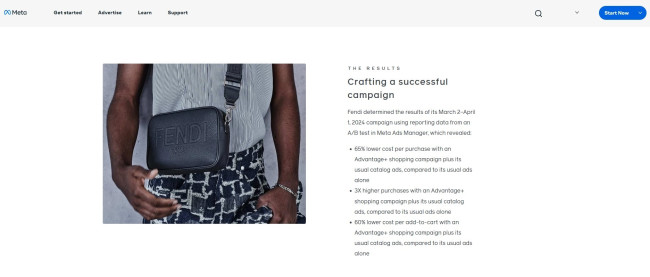
Fendi used Meta Advantage+ to boost its ad sales. As Francesco Mennella, Digital Performance Coordinator at Fendi put it, “We successfully tested Advantage+ shopping campaigns to streamline the number of campaigns with different targeting audiences and give our system more opportunities to reach people who are likely to buy our products, and it worked.”
Previously, the company ran catalog ads on Facebook and Instagram, using the algorithm to automatically pull photos of relevant products and show them to potential customers. But with Meta Advantage+, Fendi streamlined this process even further. They conducted A/B testing across several campaigns and used AI and machine learning features to automatically distribute the campaign budget to the best-performing ads.
The results were as follows:
2. Lacoste + Carousel Ads in Instagram Stories
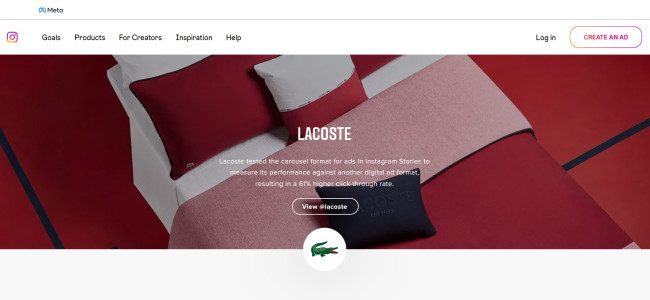
The carousel ad format made a significant impact when it was first launched, and companies are still exploring its benefits today.
Lacoste decided to test the effectiveness of the carousel ads on Instagram to see if they could increase the brand’s sales. In collaboration with Ogilvy, they created 3-card carousels that promoted their bedding collection. These campaigns targeted individuals aged 25 to 54 across six major US cities.
These were the reported results:
- 2X higher online return on ad spend
- 61% lift in click-through rate (CTR)
- 32% lower cost per link (CPL) click
Paid Social Media Advertising: Final Thoughts
Thanks to precise targeting, various ad formats, and measurable results, paid social media advertising can be a powerful tool that helps businesses reach their target audience and achieve their marketing goals.
To maximize the full potential of paid ads on social media, you must carefully plan and implement your campaigns, keeping in mind your audience, goals, and budget.
If you’re not a marketer, you may struggle to understand and implement the steps we outlined for a successful social media advertising plan. To guide you, we've compiled a list of the top social media marketing agencies that can help you develop a personalized approach that drives engagement, conversion, and growth for your business.
Our team ranks agencies worldwide to help you find a qualified partner. Visit our Agency Directory for the top social media marketing agencies, as well as:
- Top Social Media Agencies in Houston
- Top Advertising Agencies
- Top AI Social Media Marketing Companies
- Top Enterprise Social Media Agencies
- Top Community Management Agencies
Paid Social Media Advertising FAQs
1. What is paid advertising on social media?
Paid advertising on social media is a form of online advertising where businesses pay to promote their brand, product, or service to a targeted audience on social media platforms.
2. How do PPC vs. paid social media differ?
PPC (pay-per-click) is a form of online advertising where businesses pay each time a user clicks on their ad. PPC ads are typically displayed on search engines and targeted based on keywords that users are searching for.
Paid social media is also a form of online advertising, but businesses pay to promote their content on social media platforms like Facebook, Instagram, Twitter, LinkedIn, and others.
3. What is an example of paid advertising?
Examples of paid ads include Pay-per-click (PPC), Google Ads, Google Display, programmatic advertising, and social media advertising (Meta Ads, Twitter Ads, LinkedIn Ads).