
A social media RFP (Request for Proposal) is a formal document businesses use to find the right agency to manage their social media strategy. It outlines project goals, expectations, and evaluation criteria to ensure a structured selection process.
This guide walks you through the key components of an effective RFP, essential questions to ask agencies, and a checklist to streamline your search — plus, a free downloadable template to make the process easier.
Why You Need a Social Media RFP
Having a well-crafted RFP offers several key advantages:
- Ensures agencies align with your goals: Not all agencies are the right fit. An RFP helps you define your social media objectives, whether it’s increasing engagement, running paid campaigns, or managing brand reputation. This ensures vendors propose strategies that match your needs.
- Saves time & streamlines the selection process: Instead of sorting through countless pitches, an RFP standardizes responses, making it easier to compare agencies side by side. It eliminates vendors who don’t meet your requirements, so you only engage with qualified candidates.
- Encourages data-driven proposals: A well-structured RFP asks agencies to back up their expertise with case studies, metrics, and strategic approaches. This ensures you receive detailed, results-oriented proposals rather than generic sales pitches.
- Reduces risks & sets clear expectations: Once an agreement is in place, there’s little room for major revisions. An RFP ensures agencies understand timelines, deliverables, and key performance indicators (KPIs) upfront, minimizing miscommunication and scope creep.
7 Things To Include in Your Social Media RFP
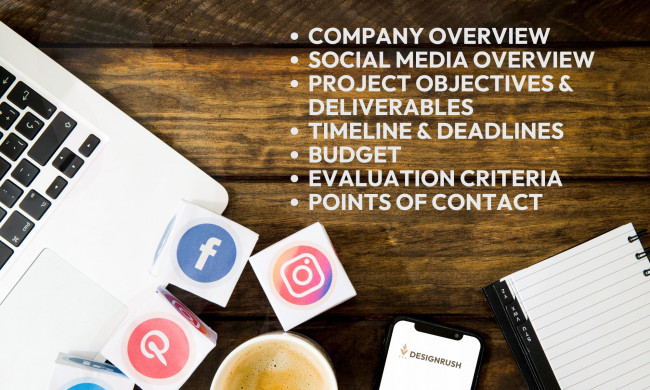
A well-structured social media RFP ensures agencies understand your goals, expectations, and requirements. While every RFP will differ based on project scope, these key sections should always be included:
- Company overview
- Social media overview
- Project objectives & deliverables
- Timeline & deadlines
- Budget
- Evaluation criteria
- Points of contact
1. Company Overview
Provide a brief introduction to your company so agencies can tailor their approach to your brand’s identity. This section doesn’t need to be a detailed company history, but it should include:
- Industry & business focus
- Mission, values, and key differentiators
- Target audience & customer demographics
A well-defined company overview helps agencies understand how their social media strategies should align with your brand.
2. Social Media Overview
Share insights into your current social media presence so agencies can assess opportunities for improvement. Include:
- Active & inactive social media accounts (with links)
- Key metrics (e.g., follower count, engagement rates, ad performance)
- Past campaign highlights & results
- Challenges you’ve faced (e.g., low engagement, inconsistent content, lack of ROI)
If possible, include both quantitative data (performance metrics) and qualitative insights (campaign reviews, SWOT analysis). This helps agencies craft tailored strategies.
3. Project Objectives & Deliverables
This is one of the most critical parts of your RFP. While you should provide clear objectives, allow agencies some flexibility to propose SMART goals (Specific, Measurable, Achievable, Relevant, Time-bound) that align with their expertise.
Clearly outline:
- Your goals: Are you looking for full social media management, a specific campaign, or just ad strategy?
- Expected deliverables:Content creation, community management, paid ad campaigns, influencer collaborations, etc.
4. Timeline & Deadlines
Define your project timeline so agencies can develop realistic proposals. If your RFP is tied to a larger marketing initiative or seasonal campaign, be sure to provide that context. Also, consider your internal approval process — how quickly can your team review and approve content?
Ensure to include:
- Project start date
- Key milestones & review phases
- Campaign launch deadlines (if applicable)
5. Budget
Set clear budget expectations to ensure you receive realistic proposals. Being transparent about your budget helps filter out agencies that aren’t the right fit and ensures proposals are aligned with your financial expectations.
Consider the following:
- Ongoing vs. one-time services (hourly rate vs. project-based pricing)
- Ad spend expectations (if running paid campaigns)
- Payment structure (upfront deposits, milestone-based payments, or monthly retainers)
6. Evaluation Criteria
Let agencies know how you will assess proposals so they can tailor their responses accordingly. You can also specify if you require client testimonials, references, or portfolio samples as part of the proposal.
Common evaluation factors include:
- Relevant industry experience
- Past campaign results & case studies
- Approach to content strategy & paid media
- Tools & technologies used
- Team structure & account management style
7. Points of Contact
To streamline communication, specify:
- Who agencies should contact for questions or clarifications
- Who will be involved in the decision-making process
For larger projects, you may have one point of contact for the sales process and another for ongoing project management after the contract is signed.
Key Questions To Ask Agencies Before Hiring

Choosing the right agency isn’t just about their portfolio — it’s about finding a team that understands your goals, has a proven track record, and aligns with your working style. Asking the right questions helps you assess their expertise and ensure they’re the right fit for your project.
Experience & industry expertise:
- Have you worked with businesses in our industry before?
- Can you share case studies or success stories from similar clients?
- What types of social media campaigns have you executed successfully?
Strategy & approach:
- How do you develop a social media strategy tailored to a business like ours?
- What platforms do you recommend for our brand, and why?
- How do you balance organic and paid social media efforts?
- How do you handle crisis management and negative feedback online?
Performance & reporting:
- What key performance indicators (KPIs) do you track?
- How do you measure success, and what reporting can we expect?
- Can you provide examples of past performance reports?
Team & collaboration
- Who will be managing our account, and what is their experience?
- How do you handle communication and approvals?
- What tools do you use for project management and reporting?
Pricing & contract terms
- What pricing structure do you offer — retainer, hourly, or project-based?
- Are there any additional costs we should be aware of?
- What happens if we need to adjust our scope of work or end the contract early?
What’s next? Once you’ve asked these questions, you’ll have a clearer picture of which agency aligns best with your needs. Now, let’s go over a checklist to ensure your RFP covers everything agencies need to submit a strong proposal.
Social Media RFP Checklist
Before sending out your social media RFP, use this checklist to ensure it includes all the essential details agencies need to craft a strong proposal.
Company Information
☐ Brief company background (industry, mission, target audience)
☐ Links to website and social media accounts
Social Media Overview
☐ Current social media platforms (active & inactive)
☐ Key performance metrics (followers, engagement, ad performance)
☐ Challenges or gaps in your current strategy
Project Objectives & Scope
☐ Clear social media goals (e.g., brand awareness, engagement, lead generation)
☐ Expected deliverables (content creation, ad management, influencer collaborations, etc.)
☐ Preferred social media platforms and content formats
Timeline & Deadlines
☐ Project start date and key milestones
☐ Content approval process and turnaround times
☐ Any time-sensitive campaign dates
Budget & Pricing
☐ Total budget for the project or ongoing services
☐ Expected ad spend (if applicable)
☐ Preferred pricing model (hourly, retainer, project-based)
Evaluation Criteria
☐ Key factors for selecting an agency (experience, past results, creative approach)
☐ Required case studies, testimonials, or portfolio samples
Points of Contact
☐ Primary contact for questions and submissions
☐ Key decision-makers involved in agency selection
Social Media RFP Template
Now that your RFP is ready, the final step is sending it to agencies and collecting proposals. To make the process even easier, download our free Social Media RFP Template and streamline your search.
Our free Social Media RFP Template provides a ready-to-use structure, saving you time and ensuring you don’t miss any critical details:
[Company Name]
[Company Address]
[Website URL]
[Point of Contact Name & Email]
Company Overview
- Industry & Business Focus: [Brief description]
- Mission & Values: [What drives your brand] Target
- Audience: [Demographics, key customer insights]
Social Media Presence
- Active Platforms: [List of social media accounts with links]
- Engagement Metrics: [Follower count, average engagement rate, past performance]
- Challenges & Opportunities: [What’s working, what needs improvement]
Project Scope & Objectives
- Goals: [Brand awareness, lead generation, engagement, etc.]
- Deliverables: [Content creation, community management, ad strategy, etc.]
- Key Performance Indicators (KPIs): [Metrics used to measure success]
Timeline & Deadlines
- Project Start Date: [MM/DD/YYYY]
- Key Milestones: [Content approvals, launch dates, reporting deadlines]
- Campaign End Date (if applicable): [MM/DD/YYYY]
Budget
- Total Budget: [$XX,XXX]
- Ad Spend Allocation (if applicable): [$XX,XXX]
- Pricing Model Preference: [Hourly, project-based, retainer]
Evaluation Criteria
- Agency Experience: [Relevant industry expertise required]
- Case Studies & Portfolio: [Links or examples requested]
- Strategic Approach: [Key factors you’re looking for in an agency]
Submission Guidelines
- Proposal Deadline: [MM/DD/YYYY]
- Required Documents: [Case studies, pricing breakdown, references]
- Submission Method: [Email address or portal for submissions]
Final Tips & Next Steps: Choosing the Right Agency
A well-crafted social media RFP is just the first step. Once you receive proposals, it's time to evaluate agencies and select the best partner for your needs. Here’s how to ensure a smooth selection process and a successful collaboration.
- Review and compare proposals strategically. Look beyond cost — evaluate agencies based on experience, past performance, and strategic approach. Prioritize proposals that align with your goals and demonstrate a clear understanding of your brand.
- Ask for clarifications and negotiation. If a proposal isn’t clear or lacks details, request additional information. Negotiate contract terms, scope, and pricing before finalizing an agreement.
- Be realistic about budget and timelines. Ensure your deadlines are feasible and your budget reflects the level of expertise and services you expect. Discuss flexibility in deliverables if needed.
- Involve key decision-makers early. Get input from internal stakeholders to avoid delays and ensure alignment before signing a contract.
- Make your selection and set expectations. Once you’ve chosen an agency, establish clear communication channels. Define expectations for deliverables, reporting, and collaboration to ensure a smooth working relationship.
RFP Social Media: Key Takeaways
A well-crafted social media RFP is the foundation for finding the right agency. It helps you set clear expectations, streamline the selection process, and ensure your investment delivers results. By outlining your goals, budget, and evaluation criteria, you attract agencies that align with your vision and can drive meaningful impact.
If you’re ready to take your social media strategy to the next level, start by sending your RFP to experienced agencies that can turn your goals into action.
Our team ranks agencies worldwide to help you find a qualified partner. Visit our Agency Directory for the top social media marketing agencies, as well as:
- Top Affiliate Marketing Companies
- Top Digital Marketing Agencies
- Top AI Social Media Marketing Companies
- Top B2B Social Media Marketing Agencies
- Top Social Media Agencies in Santa Fe
Social Media Request for Proposal: FAQs
1. How long should a social media RFP be?
An RFP should be detailed enough to provide clarity but concise enough to keep agencies engaged. Ideally, 3–5 pages are sufficient to cover key details like objectives, deliverables, budget, and evaluation criteria.
2. How many agencies should I send my RFP to?
It’s best to send your RFP to 5–7 agencies that match your industry and needs. This gives you a range of proposals without overwhelming your team with too many options.
3. What’s the biggest mistake businesses make when creating an RFP?
One of the biggest mistakes is being too rigid in requirements. While it's important to set clear expectations, allowing agencies some flexibility in their approach can lead to more innovative and effective strategies.