
NFTs in 2026 look nothing like they did at their peak. Trading volumes have cooled, speculative hype has faded, and buyers are far more selective.
But that doesn’t mean opportunities are gone — it just means the rules have changed.
Best NFT Marketplaces: Key Findings
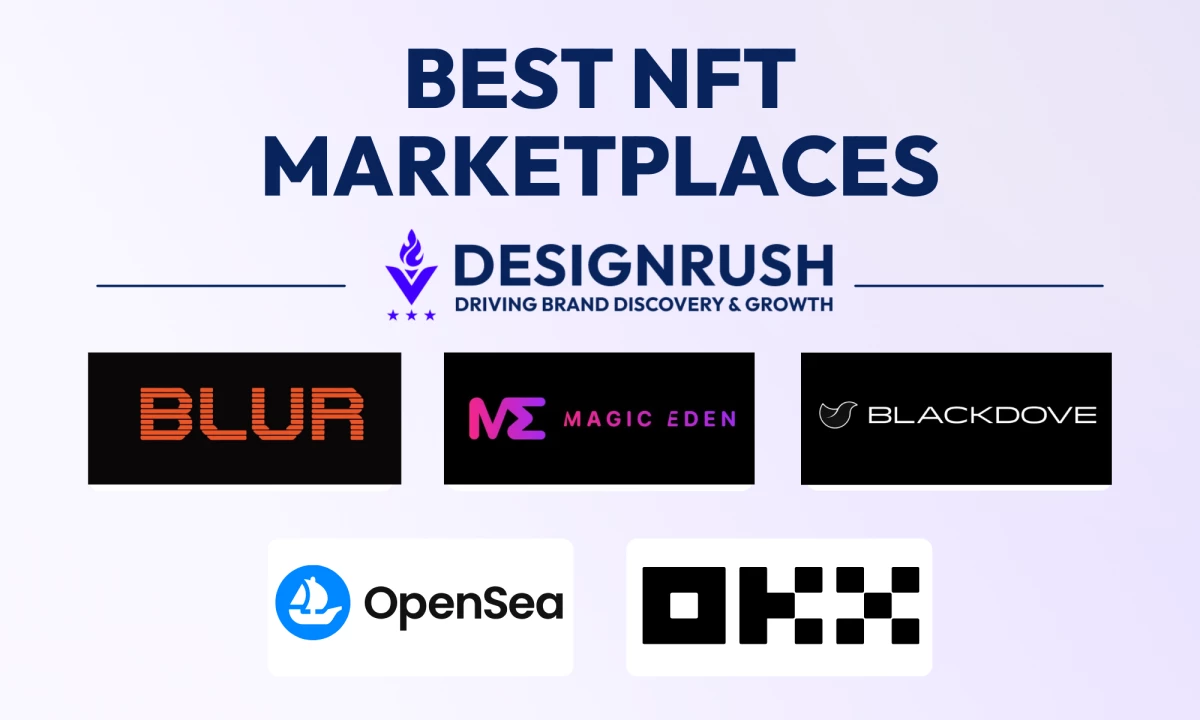
- If speed, analytics, and execution matter most, Blur and Tensor stand out. Both cater to high-volume users with advanced tools, real-time data, and performance-driven interfaces.
- For beginners and broad accessibility, OpenSea, Magic Eden, OKX, and Element Market offer multi-chain support, strong liquidity, and user-friendly experiences.
- For curated art, consider Blackdove and SuperRare; JPG Store suits Cardano users, while Rarible supports creators with decentralized tools.
The NFT Market in 2026
The NFT market looks dramatically different in 2026 than it did at its peak.
At the height of the boom in January 2022, NFT sales volume peaked at $23 billion, supported by roughly 5 million buyers and 3 million sellers actively trading.
By January 2026, monthly volume had plunged to just $600 million, with participation shrinking to around 400,000 buyers and 400,000 sellers.
Overall trading activity has fallen by more than 95%, accompanied by a steep decline in average NFT prices and overall market liquidity.
However, the market hasn't vanished entirely. The era of speculative flipping and hype-driven buying has largely faded, while digital collectibles backed by strong communities, established brands, gaming ecosystems, or real-world utility continue to attract committed buyers.
In this more selective, utility-driven landscape, choosing the right platform matters more than ever. Below, we break down the top NFT marketplaces in 2026 and the types of buyers and creators each one is best suited for.
Best NFT Marketplaces Compared
Below is a summary comparison table based on official platform documentation and widely published marketplace information. Fees may vary by transaction type and can change over time.
| NFT Marketplace | Best For | NFT Types | Blockchain | Service Fees |
| Blur | Professional traders & high-volume strategies | Art, PFPs, collections | Ethereum | 0.5% |
| OpenSea | Beginners, mainstream users, brands | Art, PFPs, gaming, domains, collectibles | Ethereum, Polygon, Solana (multi-chain) | 2.5% |
| Magic Eden | Gaming NFTs & cross-chain collectors | Art, gaming, ordinals, collectibles | Solana, Ethereum, Bitcoin ordinals, multi-chain | 2% |
| Blackdove | Premium digital art collectors | Curated digital art | Ethereum (primarily) | Varies |
| OKX | All-in-one crypto + NFTs users | Art, collectibles, multi-chain NFTs | Ethereum, Solana, and other supported chains | 0% to 2% |
| Tensor | Data-driven Solana traders | Solana NFTs, collections | Solana | 1% to 2% |
| Rarible | Creators & decentralized governance supporters | Art, Ccollectibles, multi-chain NFTs | Ethereum, Polygon, others | 1% |
| Element Market | Multi-chain NFT aggregation users | Art, gaming, aggregated listings | Ethereum + Layer-2s & multi-chain | 0% to 2% |
| JPG Store | Cardano NFT users | Art, collectibles, Cardano-native NFTs | Cardano | 2% |
| SuperRare | High-end, curated digital art | Fine art NFTs | Ethereum | 3% |
Top 10 NFT Marketplaces in 2026
1. Blur: NFT Platform for Professional Traders
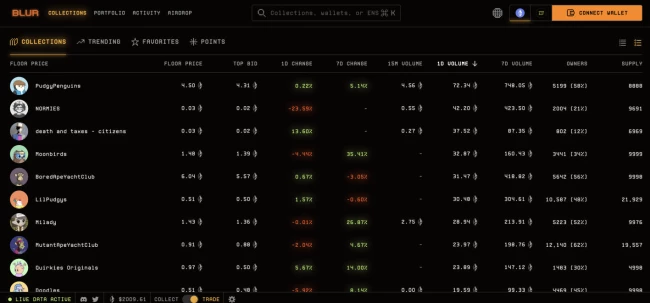
Blur is a pro-focused NFT marketplace built for speed, scale, and advanced trading strategies. Unlike more retail-oriented platforms, Blur prioritizes real-time data, deep liquidity aggregation, and tools designed for high-volume traders.
During the NFT downturn in the last few years, Blur has gained traction by catering to power users who care about execution speed, portfolio management, and competitive bidding rather than casual collecting.
Key Features:
- Real-time price feeds and advanced analytics
- Bulk listing and sweeping tools
- Aggregated listings from multiple marketplaces
- Incentive-driven reward and points systems
2. OpenSea: All-in-One NFT Marketplace
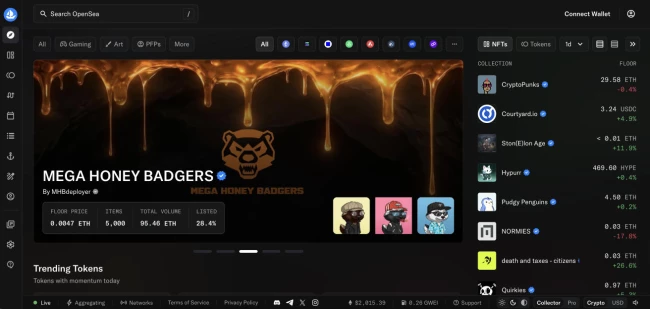
OpenSea remains the most recognized NFT marketplace, even after the market downturn. It has retained relevance by expanding multi-chain support, improving creator tools, and focusing on mainstream usability.
The platform continues to serve as the default entry point for new buyers and brands entering Web3.
View this post on Instagram
Key Features:
- Multi-chain support (Ethereum, Polygon, Solana, and more)
- Creator royalties and launch tools
- User-friendly interface for beginners
- Broad category coverage (art, PFPs, gaming, domains, etc.)
3. Magic Eden: Cross-Chain Marketplace for Gaming NFTs
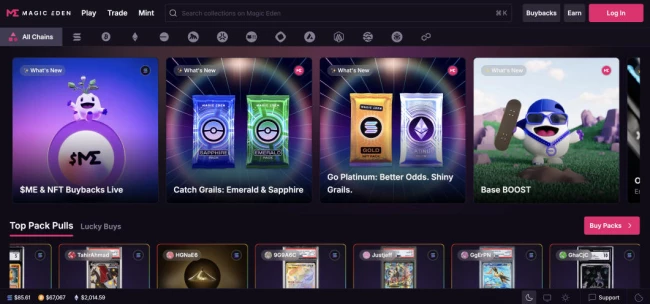
Magic Eden has remained resilient through the NFT downturn by diversifying beyond its Solana roots and expanding into Ethereum and Bitcoin Ordinals.
It continues to capture strong activity in gaming NFTs and cross-chain collectibles. Its focus on creator launchpads and emerging ecosystems has helped it stay competitive in a more fragmented market.
Key Features:
- Cross-chain marketplace support
- NFT launchpad for new projects
- Gaming-focused ecosystem partnerships
- Competitive marketplace fees
4. Blackdove: Premium, Gallery-Style NFT Platform
Blackdove has positioned itself in the post-boom NFT market by focusing on high-end digital art rather than mass-market collectibles.
Rather than competing on trading volume, it emphasizes curated selections, established and emerging fine artists, and seamless real-world digital display integrations. This approach attracts collectors who view NFTs as long-term art investments.
View this post on Instagram
Blackdove’s acquisition of Foundation — a well-known artist-first marketplace that helped popularize curated NFT drops and independent creator communities — reinforces its commitment to premium, community-driven digital art.
Key Features:
- Integration with luxury digital display systems
- Artist-first positioning and exclusivity
- Emphasis on long-term art collecting over flipping
5. OKX: Full-Service Crypto Exchange Ecosystem
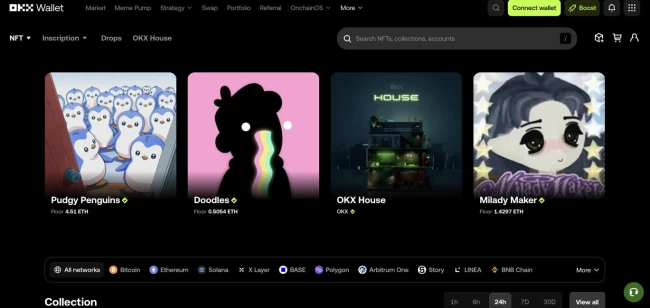
OKX has maintained relevance post-NFT boom by integrating its marketplace directly into a broader Web3 ecosystem. It benefits from its exchange infrastructure, strong liquidity base, and seamless wallet integration.
For users who want crypto trading, DeFi access, and NFTs within one platform, OKX reduces friction and simplifies asset management. Users can move quickly between trading, investing, and collecting.
Key Features:
- Integrated exchange and NFT marketplace
- Built-in Web3 wallet support
- Cross-chain compatibility
- Access to broader crypto ecosystem tools
6. Tensor: Data-Centric Marketplace for Informed Collectors
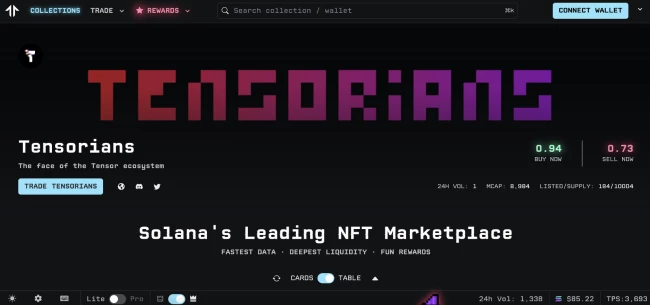
Tensor has carved out a reputation as a data-driven NFT marketplace that prioritizes transparency and efficiency. In the post-boom landscape, it continues attracting users who value real-time metrics and streamlined trading tools.
Tensor is built primarily around the Solana ecosystem, which remains relevant in 2026 as a leading blockchain for NFT activity, especially in gaming, low-cost transactions, and high-frequency trading.
Key Features:
- Fast, low-friction listing and bidding tools
- Bulk actions for power users
- Clean, performance-focused interface
7. Rarible: Creator-First NFT Marketplace
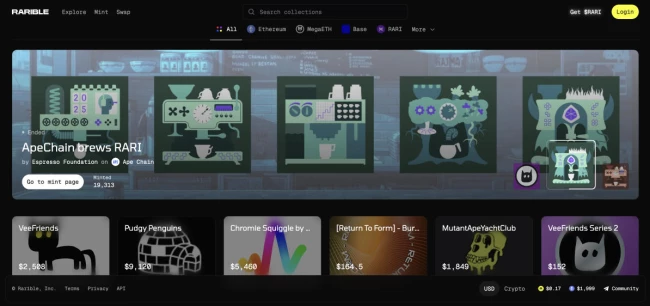
Rarible has resilient by doubling down on decentralization and community governance. It appeals to creators and collectors who value protocol-level control, flexible minting options, and a multi-chain presence.
View this post on Instagram
Rarible’s open ecosystem keeps it relevant for builders and independent artists, giving creators more ownership over royalties and supporting long-term sustainability through community-led development.
Key Features:
- Decentralized governance (RARI token voting)
- Flexible minting tools with customizable royalties
- Marketplace rewards and incentives
8. Element Market: Multi-Chain NFT Aggregator
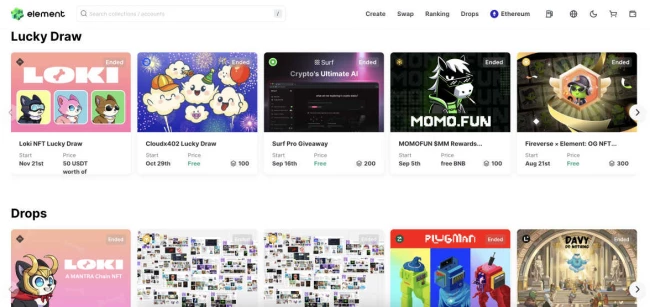
Element Market has carved out a strong position in the post-boom NFT landscape by serving as a multi-chain, community-driven NFT aggregator.
Its focus on Layer-2 networks and cross-chain liquidity has helped it attract users looking for lower fees, fast transactions, and broader access to listings beyond single-chain platforms.
Key Features:
- Lower gas fees and faster transactions
- NFT Drops and “NFT as a Service” creator tools
- Bulk actions and advanced search/filter capabilities
9. JPG Store: Go-To Marketplace for Cardano NFTs
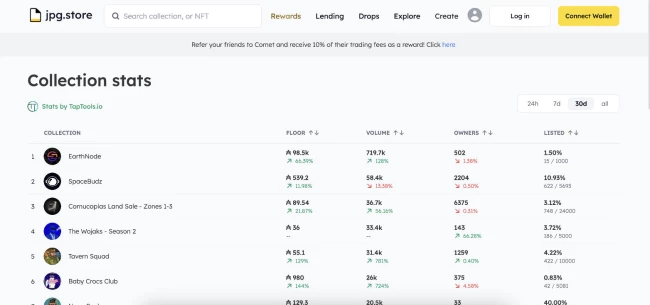
JPG Store is the largest NFT marketplace on the Cardano blockchain, remaining active thanks to a low-fee, eco-friendly network and engaged community.
It continues to attract artists and collectors who want accessible minting, trading, and curated listings without the high costs seen on other chains.
Key Features:
- Built-in rewards and incentives like XP and discounted fees
- Easy minting and listing tools for creators
- Mobile app support for on-the-go browsing and trading
10. SuperRare: Best for High-end Digital Art Collectors
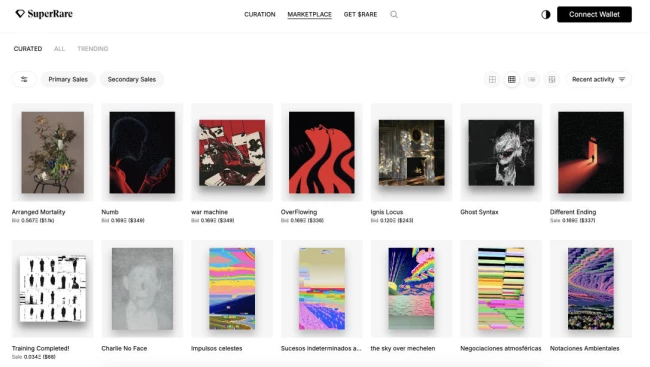
SuperRare has sustained its reputation by doubling down on curation, quality, and exclusivity. It remains a favorite for serious art collectors and digital creators who value scarcity, storytelling, and high-end digital art experiences.
View this post on Instagram
Exclusive community events and collaborations connect collectors and artists through curated exhibitions, partnerships, and limited releases that deepen engagement and cultural value.
Key Features:
- High-quality, exclusive NFT drops
- Artist royalties and provenance tracking
- Immersive galleries and storytelling tools
Choosing the Best NFT Marketplace For You
In 2026, NFTs are less about hype and quick flips and more about long-term value.
Buying purely to resell can be risky, especially since overall trading activity is lower. However, opportunities still exist in projects with active communities, trusted brands, gaming applications, or clear real-world utility.
For beginners, focusing on purpose and longevity is the smartest approach.
Here are the most important factors to consider when choosing an NFT marketplace in 2026:
- Target focus (art, gaming, collectibles, utility, enterprise): Choose a platform that specializes in the type of NFTs you’re interested in, since niche marketplaces often provide better discovery and community alignment.
- Blockchain support (Ethereum, Solana, Cardano, multi-chain access): Make sure the marketplace supports the network where the projects you want to buy or sell are hosted. Different blockchains offer different fees, speeds, and ecosystems.
- Fees and transaction costs: Consider marketplace fees, gas fees, and listing costs, as these directly impact profitability and overall returns.
- Liquidity and trading volume: Higher activity generally means easier buying and selling, with better price discovery and faster exits.
- User experience and onboarding simplicity: A clean interface, easy wallet setup, and intuitive navigation are especially important for beginners.
- Security and platform reputation: Look for established platforms with strong track records, reliable infrastructure, and transparent policies to reduce risk.
Best NFT Marketplaces Final Thoughts
The NFT market in 2026 is smaller, more selective, and far more utility-focused than during its boom years.
Choosing the right marketplace is about aligning platform strengths with your goals, whether that’s trading, collecting, building, or integrating NFTs into a broader strategy.
As NFTs evolve into tools for digital ownership, memberships, and in-app assets, more and more organizations work with software development companies to build and integrate these capabilities into their platforms.
Our team ranks agencies worldwide to help you find a qualified partner. Visit our Agency Directory for the top software development companies, as well as:
- Top App Development Companies
- Top Blockchain Development Companies
- Top AI Companies
- Top Web Development Companies
- Top Managed IT Service Providers
Best NFT Marketplaces FAQs
1. Are NFT marketplaces safe to use?
Reputable platforms use secure smart contracts and wallet-based authentication. However, users must still practice good security habits, such as using hardware wallets and verifying contract addresses.
2. Can I sell NFTs on multiple marketplaces at the same time?
In many cases, yes, especially if the NFT is not restricted by exclusivity terms. However, you must avoid duplicate listings that could create confusion or failed transactions.
3. Do NFT marketplaces support creator royalties in 2026?
Yes, but enforcement varies by platform. Some marketplaces allow optional royalties, while others provide tools for creators to encourage compliance. Always check platform policies before launching a collection.
4. Do NFT marketplaces charge gas fees?
Yes, gas fees depend on the underlying blockchain. Marketplace service fees are separate from network fees, so both should be considered when evaluating costs.
5. Which blockchain is best for NFT trading in 2026?
There’s no single “best” chain. Ethereum offers the largest ecosystem, Solana emphasizes speed and low fees, and Cardano focuses on cost efficiency and sustainability. The right choice depends on your goals.