Internet of Things (IoT) software development is the process of creating software and systems that enable physical devices to connect to the Internet and communicate with each other. IoT development combines hardware, embedded systems, networking, cloud computing, and data analytics to provide real-time insights, automation, and inter-device connectivity.
To give you a better idea of current standards and future trends in IoT development, we consulted our trusted partners for insights on its benefits, key trends, best practices, and cutting-edge tools to leverage.
Benefits of IoT Software Development
The technology offers several benefits for developers, including:
- Increased innovation: IoT software development is one of the most prominent innovation drivers in software, as additional solutions and technologies are needed to support their features and functions.
- New market opportunities: IoT technology is rapidly creating new markets for applications and devices.
- Better efficiency: IoT apps can help businesses boost their productivity and efficiency by gathering data that improves decision-making. They can also automate workflows, which frees up time.
However, IoT software engineering also poses some considerable challenges, including:
- Privacy and security concerns: These systems can be vulnerable to cyber threats.
- Complexity: The custom development process of IoT systems will also involve several networks, devices, and multiple applications.
- Data management: The huge amount of data these systems generate must first be efficiently collected, stored, and processed to be of use.
Regarding development challenges, Meenakshi Vashisht, marketing manager at Visiontech Systems International, tells us that ensuring seamless connections between different platforms and devices can become very complex. She offers a real-life example on the topic:
“In one project, we faced compatibility issues with various legacy systems and new IoT devices. To address this, we implemented a middleware solution that acted as a bridge, translating and normalizing data between different protocols. This middleware not only facilitated smooth data flow but also allowed us to implement centralized control and monitoring, improving overall system efficiency."
"Additionally, we ensured robust security measures, including encryption and secure APIs, to protect data integrity and privacy throughout the integration process.”
IoT Software Development Lifecycle
The development lifecycle for IoT software is like other traditional development workflows, but a few considerations need to be addressed.
Here are the key phases of IoT development:
1. Gathering Requirements and Analysis
In the very first step, you need to identify the needs of your users and stakeholders. The development team should also understand the system’s purpose, the different data types it will gather and process, and the necessary security, reliability, and scalability requirements.
2. System Design
After all the requirements have been addressed, the development team can start designing the system. During this process, they create the system architecture and create the software and hardware components, along with the communication protocols.
3. Developing the IoT Software
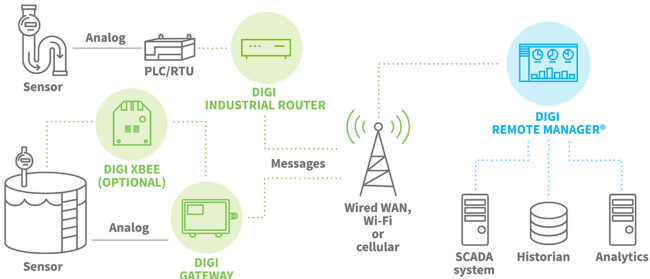
Software development for the system can now commence. This phase includes creating the software’s firmware, the middleware for cloud and edge platforms, and the user interface for the apps.
4. Testing and System Deployment
Once development is done, the software must undergo thorough testing to ensure it’s free of defects and meets the predefined requirements. After the testing and approval process, the software can be installed into the IoT system.
5. Maintenance and Support
To perform optimally, post-development support and maintenance are crucial. Scanning for and fixing bugs, adding new features, rolling out updates, and providing user support all fall under this phase of IoT development.
Additional IoT Software Development Considerations
A few more specifics need to be addressed during the development cycle of IoT technologies:
- Reliability and scalability: IoT generates huge amounts of data, which should be able to handle a large user base. Developers must create a system that can be easily scalable and robust enough to handle data and user traffic.
- Privacy and security concerns: IoT systems are vulnerable to cyber threats. Developers need to address common security issues and create protocols that protect them from data breaches and unwanted access.
- Device heterogeneity: IoT systems may include a wide range of different devices with varying operating systems and capabilities. Your development team must create a system that is compatible with different devices.
- Real-time data processing: Most applications process data simultaneously. It is important for developers to use software frameworks and programming languages that are the most suitable for real-time data handling.
- Power management: For most battery-powered IoT devices, power consumption can be a significant concern. Developers should look for ways to optimize the software, so it won't consume too much power.
Best Practices for IoT Development
What are the guidelines developers should follow during the development lifecycle? Here’s what experts recommend:
- Data minimization: Applications should only focus on gathering and processing the data needed to fulfill their original purpose.
- Security by design: Privacy and security concerns should be addressed at every stage of the development process to create a safe application.
- Transparency: Developers must be transparent about the gathered data and how they intend to use it.
- User control: App users should have control over how their data is used and stored.
Best Practices for IoT Software Testing
According to Meenakshi Vashisht, thorough testing and listening to user feedback are also essential in developing a successful IoT product. She believes that the following testing protocols are imperative:
- Test planning: The development team must develop a detailed test plan covering all aspects of the system, such as device interoperability, security, network performance, and user interface.
- End-to-end testing: This helps validate the entire IoT ecosystem, such as devices, their sensors, user applications, and backend systems, ensuring that every component works seamlessly together.
- Security testing: Your development team should perform thorough security testing, from penetration testing to vulnerability and data encryption checks. This ensures that the system can withstand cyber threats.
- Performance and scalability testing: Simulate peak loads to confirm that your system can maintain performance under stress and how you can scale if needed.
- Network testing: Check the system’s performance over different networks, such as cellular networks and Wi-Fi, and test how the system behaves in network failures.
- Data accuracy and integrity testing: Verify that the gathered data is consistent, accurate, and reliable and is stored and processed correctly and safely in the backend.
- Interoperability testing: See if devices from different manufacturers and operating systems can function and communicate without problems.
- Power management and battery testing: Thoroughly evaluate the device’s power consumption to ensure it will meet the required power management and battery life specifications.
- Regulatory compliance: See whether your application, device, and system are all compliant with relevant industry regulations and standards, including GDPR and other industry-specific standards.
- Real-world environment testing: Your applications and devices should also be tested in real-world conditions to detect performance issues not accounted for in controlled environments, such as humidity, temperature, and interference.
- Usability testing: Make sure that the interface is intuitive and meets user needs. Gather feedback from real-life users and focus groups to address any issues in usability and brainstorm ideas for new features.
On the note of usability, real-world testing, and user feedback testing, Vashisht told us about a specific case from Visiontech Systems:
“In a smart home system project, we initially focused on creating a seamless user interface to control various IoT devices. However, during beta testing, user feedback revealed that security and data privacy were their primary concerns, not just ease of use. They also wanted more customizable automation options.
Based on this feedback, we shifted our focus to enhance security features, including end-to-end encryption, two-factor authentication, and granular privacy controls. We also developed a more flexible automation framework, allowing users to create personalized automation rules.
Incorporating this feedback led to a more secure, functional, and user-friendly product, resulting in higher adoption rates and positive reviews.”
Rohit Kumar, Founder and CEO of Zedsoftpoint, agrees that user feedback is paramount for the success of any IoT product.
“User feedback can make a big difference! In a smart oven project, our users wanted recipe integration, remote monitoring, and safety features. The project adapted to include these, making the oven more user-friendly,” he pointed out.
Internet of Things Software Development: Key Trends
Here are a few of the trends that drive growth in this type of custom development:
- Edge computing is a distributed computing paradigm with the aim of bringing data storage and computation closer to data sources. This is pivotal for IoT apps to improve performance by decreasing latency.
- Cloud computing systems have also become an integrated part of IoT development, because the technology can help IoT reliability, and scalability, making building IoT applications easier.
- Artificial intelligence (AI) is also integrated into IoT applications to help them adapt to new environments. For instance, such applications can be used for predictive maintenance tasks, where applications can pinpoint potential issues before they can happen.
Technologies and Tools for IoT Software Development
Developers use several technologies and tools to create IoT software apps. Let’s explore some of the most popular ones:
- Programming languages
- Development frameworks
- Cloud computing platforms
- Platforms for IoT device management
- Data analytics platforms
1. Programming Languages
To create IoT apps, developers use C, C++, Java, and Python. These options are usually best suited for the job as they offer good performance, library support, and flexibility.
2. Development Frameworks
Software development frameworks speed up the development cycle of IoT apps. Popular options include:
- Node-Red is a flow-based programming tool that requires no coding knowledge.
- Tessel 2 is a software development kit and hardware platform for IoT development, providing a seamless way to create and deploy IoT apps.
- Eclipse is an open-source set of frameworks and tools for IoT development, including device management and application development tools, along with data analytics.
3. Cloud Computing Platforms
Cloud platforms host IoT and are often used for deployment. Usually, developers opt for the following cloud solutions:
- Azure IoT: Azure can be used to develop, deploy, and manage IoT apps with a variety of services for data analytics, app development, and device management.
- Google Cloud Platform (GCP) IoT Core: Google’s cloud platform enables development, deployment, and IoT app management, providing similar services to Azure.
- AWS IoT: Amazon’s dedicated cloud computing platform for IoT devices supports development, deployment, and hosting, providing a variety of services for management, analytics, and development.
4. Platforms for IoT Device Management
These platforms are used to oversee and manage IoT devices. They enable you to organize your data, as well as manage and monitor your application’s features and performance remotely.
Some of the most popular management platforms include:
- Home Assistant: With this open-source home automation platform, you can monitor and manage a variety of IoT devices.
- ThingsBoard: This is another open-source device management platform, which provides similar services to the cloud computing options mentioned above.
- Devicehive: This is an open-source management platform, offering a range of IoT-related services.
5. Data Analytics Platforms
Data analytics platforms for IoT applications help the software transform the copious amounts of unstructured data from devices and sensors into meaningful and actionable insights for users and developers alike. These analytics platforms enable you to identify data set patterns from historical and current data, so you and your development team can make more accurate predictions and better choices to improve your application in the future.
Some of the most popular analytics platforms include Kafka, Hadoop, and Spark.
5 Most Common Use Cases of IoT Software
Where are IoT applications the most prevalent, and which are the most exciting use cases of the technology? Below are a few examples of how IoT is changing the world:
1. Smart Cities
Smart cities are among the most astonishing examples of IoT’s capabilities. They use IoT Devices to collect and manage data about energy consumption, traffic, and other aspects of the city’s functions. The data is used to improve the city’s sustainability and efficiency.

Meenakshi Vashisht tells DesignRush about her company’s experience with smart cities: “The most creative use of IoT technology we've implemented was in a smart city project, where we developed an intelligent traffic management system. We installed IoT-enabled traffic sensors and cameras at key intersections to monitor traffic flow in real-time.”
She then expanded on the specific measures taken, as well as the results: “Using this data, we built an adaptive traffic signal control system that adjusted signal timings dynamically based on current traffic conditions. This system significantly reduced traffic congestion, with average travel times decreasing by 15% during peak hours.”
2. Smart Wearables
Smart wearables are another important segment of IoT technology. They are worn on the body and track health data, provide fitness coaching, and control other devices. Smart watches are a great example of a smart wearable that can help people track their fitness goals, heart rate, and sleep patterns.
3. Smart Homes
Smart or connected homes use various IoT devices and applications to automate and control several aspects of a home, from security to heating and lighting. Technology can be used to turn the lights on when someone enters the room, adjust the temperature automatically, and more.
4. Industrial IoT
Industrial IoT refers to the use of IoT applications and devices in industrial environments to control and monitor machinery, automate workflows, and, ultimately, improve efficiency. For instance, temperature and pressure sensors, industrial robots, and even barcode sensors fall under this category.
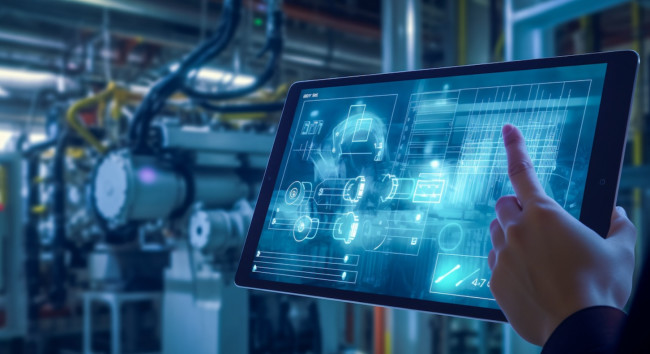
Such devices are used to monitor industrial machinery conditions and identify potential issues before they occur. They can also be used for automation purposes, especially in quality control and production.
5. Connected Health
These applications and devices can be used to monitor health, provide remote care, streamline the healthcare system’s processes, and make care more effective. For instance, IoT devices can monitor heart rate and blood sugar levels and may be used to provide remote care for people living in secluded areas.
Concluding Thoughts on IoT Software Development
IoT technology is reshaping the world rapidly. It has changed the way we live, boosting efficiency and sustainability in healthcare, homes, industries, cities, and even in our personal habits in the form of wearable devices.
As artificial intelligence and edge computing continue to advance, developers will create new IoT protocols and applications, pushing the boundaries between real life and digital to benefit humanity.
IoT Software Development FAQs
1. Are AI and IoT the same?
No. However, artificial intelligence and the Internet of Things are two different technologies that can be used together. With the advancement of AI, developers have found several ways to incorporate the two technologies. One great example of IoT and AI working together is predictive maintenance.
2. What are the ethical challenges of IoT development?
The most apparent challenges of IoT relate to data management and privacy. Developers gather huge amounts of user data, which they need to store safely and shouldn’t exploit. As such, IoT apps and devices should be compliant with industry-relevant standards and privacy regulations.
3. How can IoT improve the healthcare system?
The technology can enable remote patient monitoring, and health tracking in real time, and may even perform predictive analytics for detecting diseases early. IoT allows for personalized care and treatment via constant data collection, making patient care and management more efficient.