
Drawing from the hands-on experience of DesignRush’s Director of Development across diverse tech stacks and software planning, our guide on the software development life cycle offers an executive-backed perspective.
We reveal what it takes to build high-impact, future-ready software.
Software Development Life Cycle: Key Points
- “Build for 5,000, not 2,000,” says Oliveira. Scalable, secure architecture and maintainable tech stacks prevent costly rebuilds.
- 59.2% of tech leaders blend structure with agile methods, balancing speed with strategy; ideal for SaaS and startups.
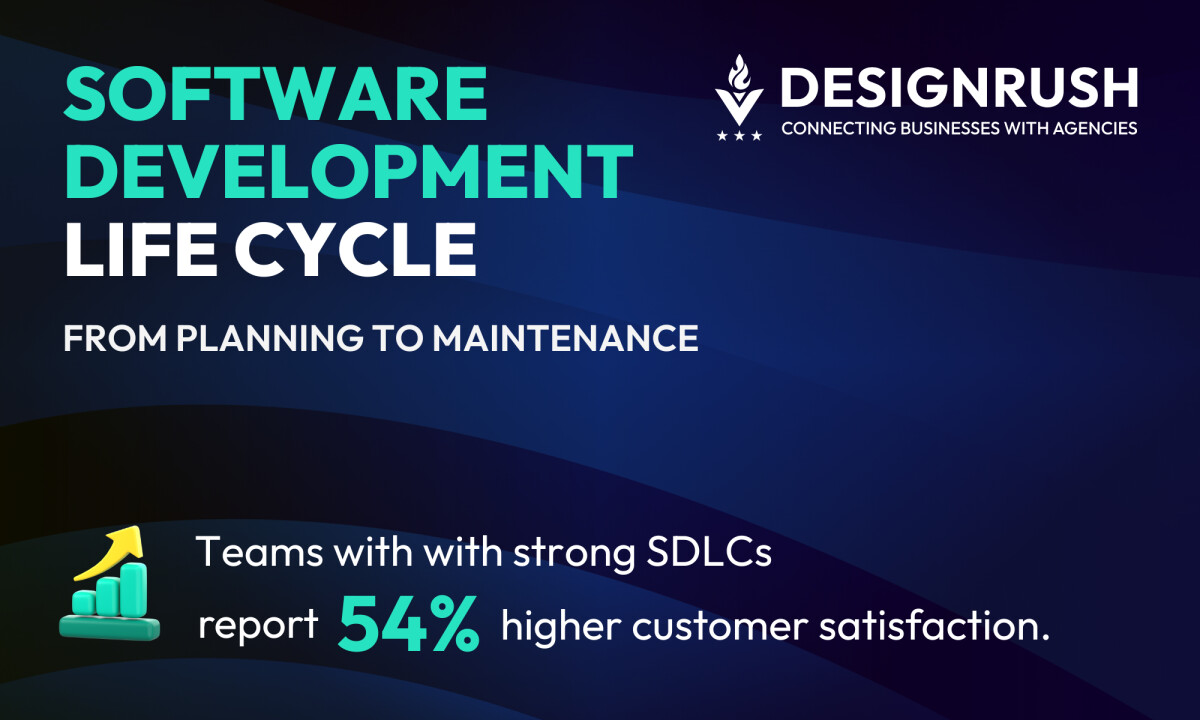
- Teams with strong SDLCs report 64% better collaboration, 58% more efficiency, and 54% higher customer satisfaction.
Why Optimized SDLC Is Key to Business Success
The difference between scalable software and fragile code often comes down to one thing: how well you manage your SDLC.
We spoke with Sergio Oliveira, Director of Development at DesignRush, who walked us through what the SDLC really looks like when done right.
Who is Sergio Oliveira?
Sergio Oliveira is a tech leader and software engineer with expertise in scalable systems, C#, .NET, SQL, and Azure. At DesignRush, he leads the full development lifecycle, ensuring technical execution aligns with business goals, growth, and innovation.
Below, we’ve distilled his firsthand insights into a strategic breakdown every executive should understand because software isn’t just built anymore.
It’s planned, tested, scaled, and measured.
1. Requirements and Feasibility: Define, Validate, Plan
"Planning is the foundation," Oliveira stresses. "You're not going to build a house by pouring concrete and hoping for the best."
In practice, this means skipping the assumptions and gathering measurable input from the start.
Oliveira warns that a lack of proper planning is more than just inefficient; it’s a root cause of tech debt.
“When decisions aren’t grounded in strategic objectives, teams waste time solving the wrong problems.”
Instead, he advocates for a data-driven, business-aligned approach from the very beginning.
Here are the key steps:
- Analyzing user behavior across devices and browsers using tools like Hotjar or Microsoft Clarity
- Auditing friction points by mapping real user journeys and identifying drop-offs
- Studying market leaders to see how top products solve similar UX or responsiveness challenges
- Validating demand internally with input from product, SEO, and content teams
- Defining success metrics early to tie features to measurable business outcomes
Business Goals To Validate via Planning
- What problem are we solving?
- Who are we solving it for?
- How will we measure success?
Non-Negotiables in the Planning Phase
- Align with all stakeholders: engineering, marketing, compliance
- Use data from user behavior, analytics tools, and market research to validate demand
- Identify risks, including security and scalability
- Confirm feasibility: can we build it within budget, tech stack, and team capabilities?
Get planning right, and every phase that follows becomes faster, smarter, and easier to course-correct, saving time, money, and sanity down the line.

2. Design and Architecture: Future-Proof or Fall Behind
Oliveira believes thoroughly defining architecture before development is one of the most undervalued stages in software development.
This phase is where you take abstract goals and translate them into infrastructure that can support not just your launch, but your growth.
“Everyone develops for the now, but very few design for what comes next. If you’re aiming for 2000 users, build for 5000. Otherwise, success will break your system,” says Oliveira.
That said, lofty goals should be tempered with reason. Designing for scale doesn’t mean overengineering from day one.
Budget, team capacity, and market readiness all come into play, as future-proofing should be strategic, not excessive.
Non-Negotiables During Architecture Design
Oliveira urges businesses to think about:
- Security and compliance architecture upfront, particularly in industries like finance and healthcare
- Choosing a tech stack with strong community and support
- Designing for responsiveness based on actual device data
- Avoiding niche tools or new languages no one else can maintain
A well-architected system keeps your codebase clean, scalable, and supportable, even if your team changes tomorrow.
3. Development: Stick to the Plan or Sink in the Middle
By the time code is being written, there should be no major unanswered questions.
Oliveira compares this phase to a battlefield: if you’re pausing to rethink your strategy, you're already losing time, money, and momentum.
Key Principles During Development
- Break work into outcome-driven sprints to stay focused and adaptable
- Use CI/CD pipelines to automate testing and deployment from the start
- Automate early to avoid bottlenecks and unstable builds later
- Write clean, well-documented code to reduce tech debt and bus factor risk
- Choose proven technologies with strong community support for long-term viability
One of his most cautionary insights is about technology hype. Just because something is trending doesn’t mean it’s maintainable:
“It's great to try new tech, but if the developer community is tiny or the language is new, you're risking longevity,” Oliveira explains.
To stay efficient and adaptable, businesses should adopt an MVP-first approach, prioritizing core functionality while leaving room for future expansion, as Benjamin Džaferović, CEO and Co-Founder of Outecho, advises.
And remember: just because you can build something quickly doesn’t mean it will last.
That’s why Oliveira emphasizes code maintainability and reducing the "bus factor" — the risk that only one person knows how to drive the bus, i.e., how your system works.
4. Testing: Validate Everything, Especially What Seems Obvious
Testing is more than debugging. It’s about simulating real-world environments, real devices, and real users.
The best way to go is to "Put the product in front of different minds. The creative and the analytical will spot entirely different problems," says Oliveira.
Crucial Manual Testing
View this post on Instagram
In addition to automated testing, teams should test:
- Cross-device responsiveness
- Security vulnerabilities
- User flow and conversion paths
- Load handling and latency
Testing should begin early and never stop. If the first real test happens after launch, you’re not doing SDLC. You’re doing damage control.
5. Deployment: Launch Should Be Uneventful (If You Did It Right)
In a healthy SDLC, deployment feels almost boring. Why?
As Oliveira points out, “A good deployment isn't memorable. It just works. You've tested, you've automated, you've prepared.”
Deployment Principles
- Deploy to staging first to catch issues before they hit production
- Automate build, test, and release using CI/CD tools like Jenkins or GitHub Actions
- Enable rollback and monitor uptime with tools like Sentry or Datadog
- Document deployments and logic so your system isn’t reliant on one engineer
When deployment is seamless, it’s a sign you’ve done the real work upfront, proving that predictability, not drama, is the hallmark of a mature SDLC.
6. Maintenance: The Lifecycle Doesn’t End at Launch
Too many teams treat deployment as the finish line. Oliveira insists this is a mistake:
“Are we hitting our KPIs? Is user retention improving? Did the last feature move the needle — or break something else?”
Ongoing Priorities
- Patch bugs and close gaps quickly, especially issues flagged through user feedback or error tracking
- Run regular security and compliance updates, especially if you’re handling user data or operating in regulated industries
- Track live performance and responsiveness to catch issues before users do
- Refine your product roadmap using real usage data, not assumptions — double down on what’s working, fix what’s not
Treat launch as the starting line because the real ROI comes from what you do after release: listening, refining, and evolving with your users.
Choosing the Right SDLC Model: Waterfall, Agile, or Hybrid?
Not every project should be agile. Not every team can thrive with waterfall.
| Model | Best For | Benefits | Pitfalls |
| Waterfall | Regulated industries (e.g., healthcare, banking) | Highly predictable, structured, easy to manage when requirements are stable | Highly structured, but inflexible and slow |
| Agile | SaaS, startups, evolving products | Fast iterations, collaborative workflows, continuous feedback | Fast feedback loops, but prone to scope creep |
| Hybrid | Enterprise or legacy tech environments | Flexibility where needed + structure where required | Balanced speed and control, but requires oversight |
“Waterfall works in finance because there’s no room for risk. Agile works in tech because you have to move fast. The trick is knowing what your environment demands.” – Sergio Oliveira
According to Brainhub's report, when tech leaders were asked how they consistently deliver business objectives on time:
What does that tell us? Flexibility wins.
As Keith Shields, CEO and Co-Founder of Designli, puts it: “By following agile methodologies, we ensure constant iteration and refinement, allowing businesses to stay flexible while making informed decisions.”
This blend of structure and agility empowers teams to adapt, respond to change, and still hit deadlines without sacrificing quality or strategy.
Final Thoughts: Why an SDLC Checklist Isn't Optional
Too often, businesses focus on the output: shiny apps, new dashboards, better workflows — without realizing that a flawed SDLC creates fragile foundations.
The truth is, without a disciplined yet adaptable development lifecycle, even the best-looking solutions won't deliver lasting impact. In fact, when teams align around a clear SDLC, the payoff is real:
- 64% of organizations report improved collaboration
- 58% see gains in operational efficiency
- 54% experience better customer satisfaction
Whether you're an agency leader pitching a build or a CMO overseeing product execution, having a disciplined yet adaptive lifecycle ensures long-term ROI.

Our team ranks agencies worldwide to help you find a qualified partner. Visit our Agency Directory for the top software development companies, as well as:
- Top Enterprise Software Development Companies
- Top Custom Software Development Companies for Small Business
- Top Mobile App Development Companies
- Top AI Development Companies
- Top Software Testing Companies
Our design experts also recognize the most innovative design projects across the globe. Given the recent uptick in app usage, you'll want to visit our Awards section for the best & latest in app designs.
Software Development Life Cycle FAQs
1. What is SDLC in a business context?
SDLC is a structured approach to planning, building, testing, and delivering software, ensuring efficiency, quality, and predictable outcomes.
2. Can small businesses benefit from SDLC?
Absolutely. Even lean teams gain focus and clarity from lightweight frameworks like Agile, helping avoid missteps without adding unnecessary overhead.
3. How long does it take for a business to implement an effective SDLC?
Small teams can adopt basic SDLC practices in 2–4 weeks. Larger agencies typically need 2–3 months for a full rollout, including tools and training.