
Software development outsourcing is now a core delivery model for scaling speed and specialized execution without growing headcount.
These are the latest stats on pricing, provider maturity, risks, and what’s next.
Software Dev Outsourcing Stats: Key Findings
- Outsourcing is now an always-on delivery model, with 78% of companies engaging with an outsourcing provider in the last 6 months.
- Software development outsourcing pricing is easing in key regions, with developer hourly rates down 9%-16%.
- Outsourcing failures are mostly operational, with the top gaps being benefit tracking, change management, and poor integration into operating models.
Software Development Outsourcing Is Getting Cheaper and Riskier
Software development outsourcing is getting easier to buy, but harder to run well.
Rates may be softening and provider options are expanding, yet delivery still comes down to ownership, governance, and how cleanly a partner fits into your workflow.
Let’s break down the stats behind pricing, maturity, and the risks that create overruns.



The Market Is Growing, but “Market Size” Stats Need a Reality Check
You’ll see a lot of giant numbers in outsourcing reports. They’re useful for direction, but not every “market size” number reflects real contracts signed.
 If you want a clearer picture of why outsourcing is still expanding, focus on two things:
- How much companies are spending on software and IT overall
- How much engineering work they’re shifting to external partners
Stats that show real momentum:
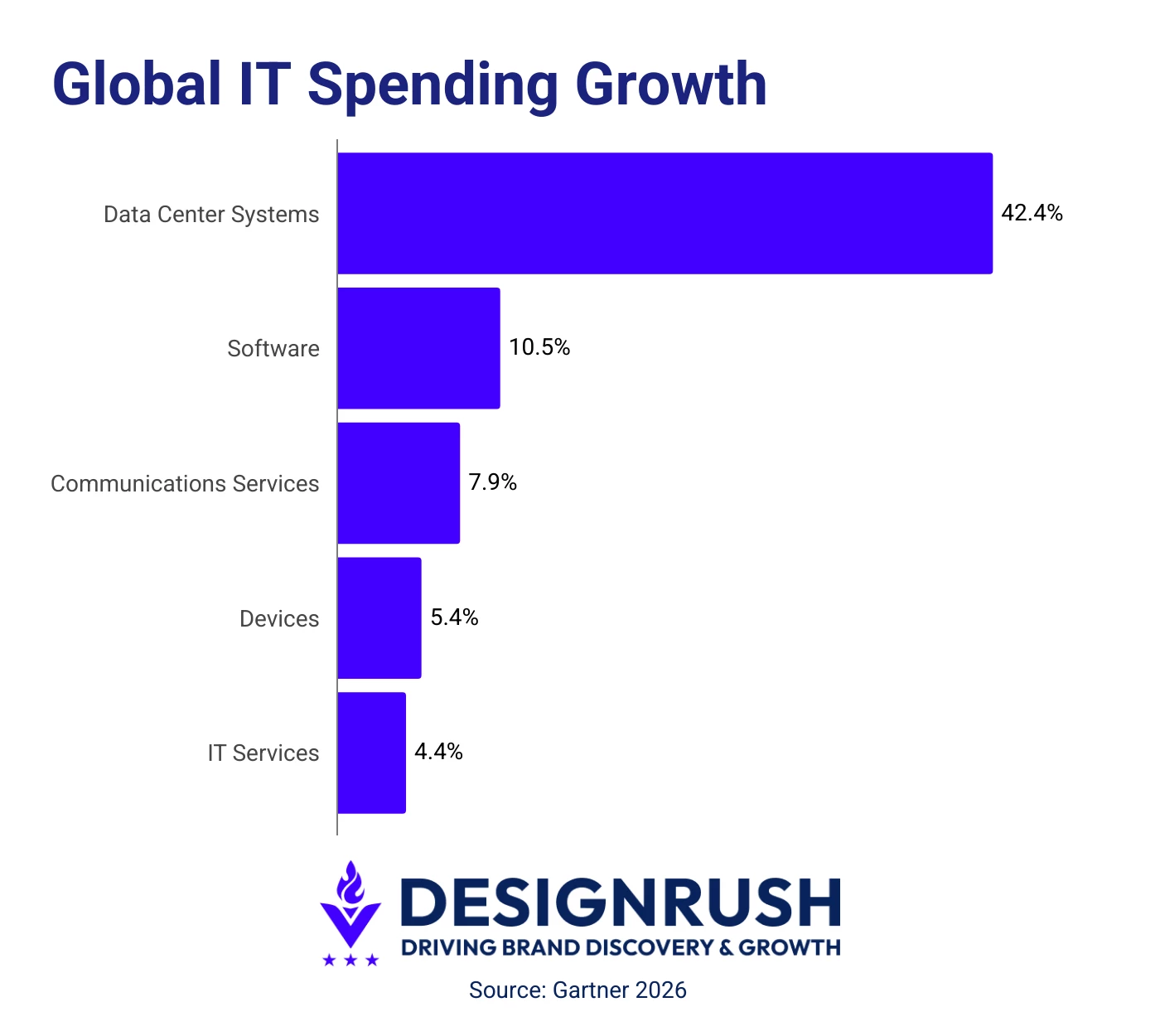
Global IT spend is still rising, according to Gartner:
- $5.61T worldwide IT spending
- +7.9% YoY growth
Software spend is growing even faster:
- $1.23T global software spending
- +10.5% YoY growth
IT services are growing steadily (outsourcing-friendly spend):
- $1.69T IT services spending (2025)
- +4.4% YoY growth
Data center systems are accelerating (AI + infrastructure buildout):
- $475B data center systems spending (2025)
- +42.4% YoY growth
Engineering outsourcing is expanding through bigger deals:
- ISG reports Engineering/ER&D managed services ACV grew 35% in 2025.
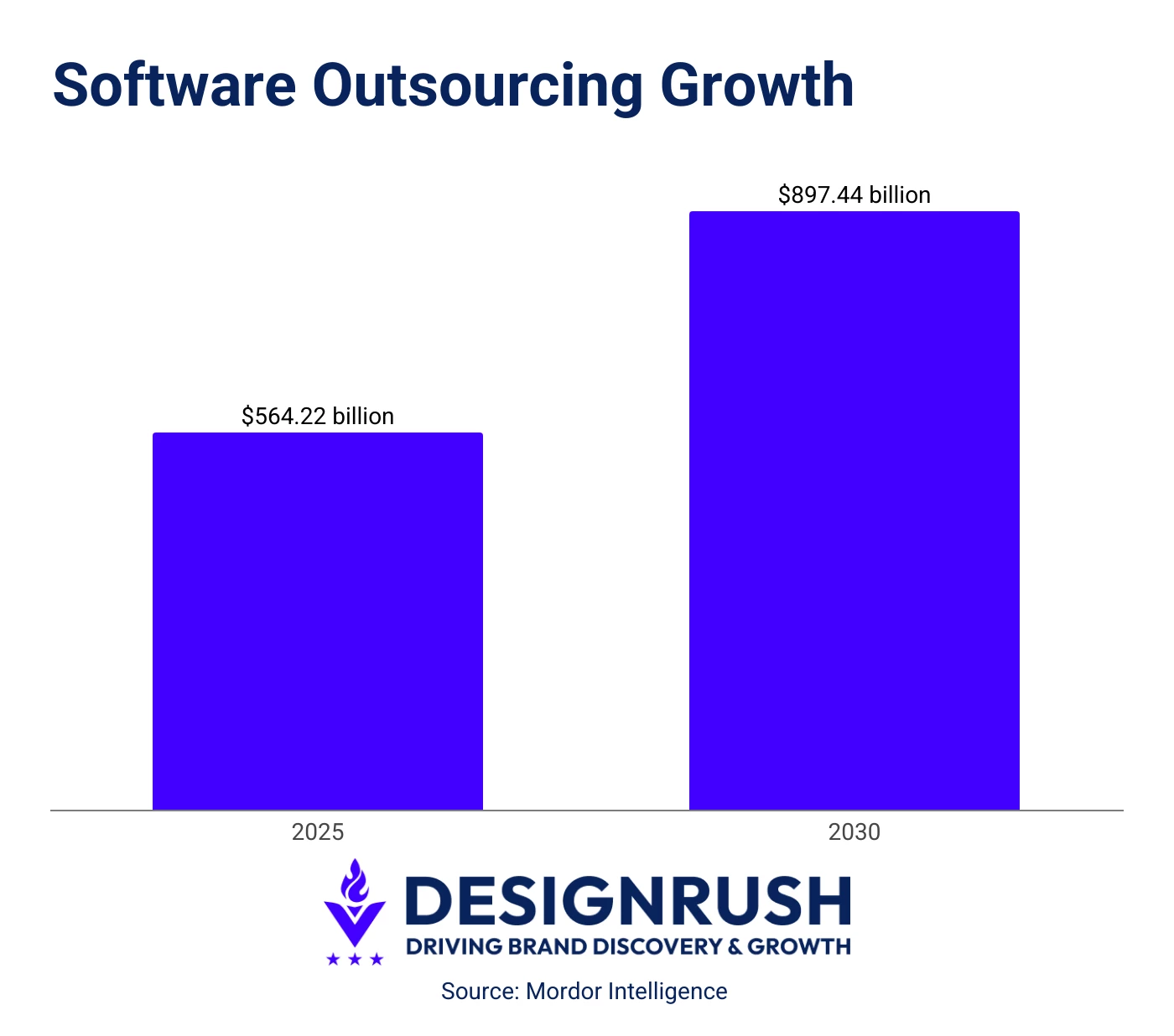 Some reports estimate software development outsourcing could grow from $564.22B (2025) to $897.44B (2030), but this is a projection of total market activity, not a total of real contract value booked.
What This Means for Businesses
You’re entering a market with more outsourcing providers than ever, but also more noise and agencies that are really broker networks.
So, ignore size and growth claims and choose based on what reduces delivery risk:
- Proven shipped outcomes
- Stable senior talent
- Strong governance maturity (how work is run, not just how it’s sold).
Software Outsourcing Is Now a Permanent Operating Model
One of the biggest mistakes leaders make is treating outsourcing like something you “switch on” during chaos and switch off after.
The statistics from Wipfli show most businesses are formalizing outsourcing as part of normal delivery.
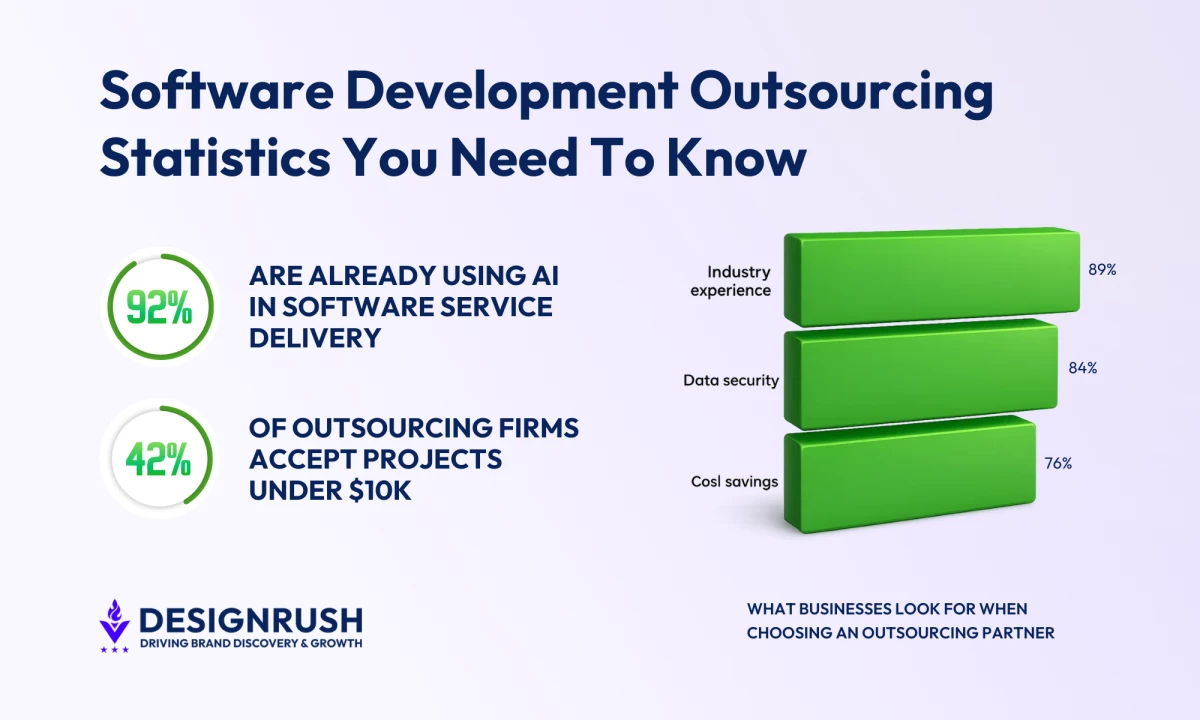
When choosing an outsourcing provider, companies are prioritizing long-term capability over short-term labor savings:
- Industry experience: 89%
- Data privacy and security: 84%
- Cost savings: 76%
At the same time, hesitation around outsourcing hasn’t disappeared entirely. Businesses still worry about:
- Quality concerns: 63%
- Data concerns: 53%
- Communication concerns: 36%
Those concerns explain why outsourcing relationships are increasingly shifting toward strategic partnerships rather than transactional staffing.
A strong example is SWIRL’s partnership with Cheesecake Labs to accelerate the development of its secure enterprise AI search platform without expanding its internal engineering team.
Cheesecake Labs embedded directly into SWIRL’s workflows to scale backend and DevOps operations while maintaining strict enterprise security and compliance standards.
Results included:
- Integration with 100+ enterprise systems
- Faster deployments across cloud, on-premise, and air-gapped environments
- Zero-trust security architecture and role-based access controls
- Stronger infrastructure resilience and faster go-to-market execution
- Up to 80% reduction in time spent searching internal company data
The case reflects a broader shift happening across the industry: outsourcing is no longer limited to overflow development work.
Companies are increasingly relying on external partners for highly specialized infrastructure, AI systems, cybersecurity, and even executive-level technical leadership.
Outsourcing is expanding into leadership and security roles:
About 34% of companies said they were likely to outsource their CTO within the next 12 months, and around 30% said the same for CISO and CIO positions.
Wipfli also found that most companies are actively outsourcing right now:
- Engaged an outsourcing provider in the last 6 months: 78%
- 6-12 months ago: 14%
- 1-2 years ago: 7%
- 2+ years ago: 1%
Outsourcing has become part of how modern companies operate, especially for businesses that need to move faster, access specialized talent, and scale development without long hiring cycles.
What This Means for Businesses
Outsourcing is a standard way to scale execution when speed and specialized skills matter more than growing headcount.
Treat vendor strategy like product strategy:
- Build a long-term partner bench
- Standardize onboarding and handoffs
- Measure performance the same way you would an internal team
What IT Outsourcing Pricing Looks Like in 2026
Outsourcing demand follows tech spend, and the current macro signal is still upward.
Rates are softening in several regions, but senior talent and strong governance are still quite expensive.
Accelerance found what’s happening to cost:
- Global developer hourly rates declined 9%-16% across key regions:
- Eastern Europe: -9%
- South Asia: -16%
- Southeast Asia: -16%
- Latin America: no change
- Provider pricing is becoming more flexible: Discounts and negotiated deals are increasingly common.
- Most firms expect demand to improve: 75% expect headcount growth and 64% expect revenue/profit growth in the next 12 months.
2026 Hourly Rate Benchmarks by Role
Role | Latin America | Eastern Europe | South Asia | Southeast Asia |
Junior Developer | $20-$70 | $30-$49 | $25-$35 | $16-$44 |
Intermediate Developer | $30-$115 | $45-$66 | $30-$45 | $20-$48 |
Senior Developer | $40-$125 | $55-$86 | $35-$50 | $25-$51 |
Lead Developer | $42-$125 | $65-$93 | $38-$50 | $33-$55 |
Architect | $45-$135 | $50-$105 | $40-$70 | $42-$130 |
What This Means for Businesses
Outsourcing budgets are still there, but leaders now expect predictable delivery, measurable value, and a clear ROI story.
If you’re buying outsourced development, bake that into the contract with milestone-based outcomes (not just hours), a defined reporting cadence, and clear “done” criteria with acceptance rules.
Outsourcing Pricing Is Changing Because AI Is Reshaping Effort
 The biggest shift is how effort gets priced when AI speeds up parts of delivery.
AI is changing demand patterns and putting pressure on traditional labor-based economics.
AI is becoming standard in service delivery:
- 92% of organizations are already using AI or plan to use it in service delivery.
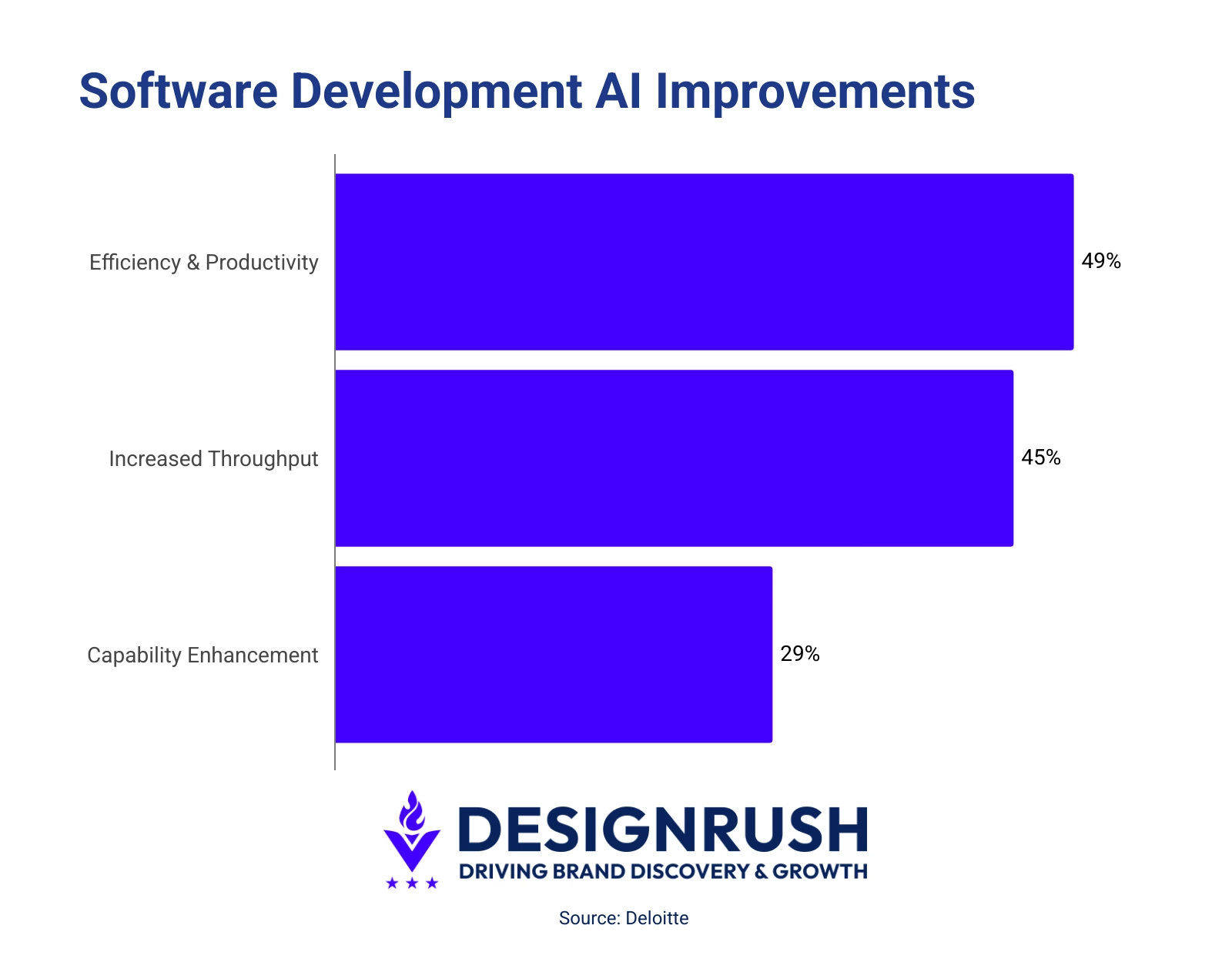
According to Deloitte, here’s what organizations say AI is improving:
- Efficiency and productivity gains (less effort required): 49%
- Increased throughput (doing more with less): 45%
- Capability enhancement (net new capabilities): 29%
- Faster cycle time (time to market): 28%
- Lower vendor service costs: 26%
- Improved service levels (better quality): 23%
Outsourcing strategy is shifting toward AI-first partners:
- 57% of organizations are forming new outsourcing relationships specifically with an AI focus.
Contracts are starting to reflect AI-driven delivery:
- 43% rely on productivity gains being reflected in vendor pricing
- 40% include AI-specific terms and conditions in contracts
- 32% use gain-sharing models to share upside and downside from AI-driven efficiency
- 25% partner with vendors to jointly develop AI-specific IP
What This Means for Teams and Roles
Most organizations expect GenAI to change work inside global business services (GBS), not just speed it up:
- Improved productivity and performance: 71%
- Shift in traditional roles: 67%
- More innovation: 52%
- Workforce mix changes / headcount reduction: 45%
Offshore and Nearshore Markets Are Mature for a Reason
Offshore and nearshore outsourcing hubs are mature because they operate at real scale and can support enterprise-grade delivery, not just small one-off projects.
DesignRush identified the leading outsourcing countries based on market signals and outsourcing performance indicators.
The biggest takeaway is concentration: the US and India represent 45% of global outsourcing supply, meaning nearly 1 in 2 outsourcing firms are based in those two countries.
Top outsourcing countries by company count:
Country | Company Count | Share of Total |
USA | 525 | 27% |
India | 353 | 18.1% |
Ukraine | 123 | 6.3% |
Poland | 110 | 5.6% |
United Kingdom | 110 | 5.6% |
Most budget-friendly countries for software development outsourcing by average hourly rate:
- India: $24.81
- Philippines: $29.6
- Poland: $35.55
- Ukraine: $35.72
- Romania: $36.5
42% of Outsourcing Firms Accept Projects Under $10K
DesignRush first-party data found that a large portion of the market is structured to support smaller budgets:
- India: over 57% of firms accept projects under $10K, including 46 firms that start at $1K or less
- Poland: around 1 in 3 firms accept projects under $10K.
- Canada and Australia: over 60% of firms also accept projects under $10K, showing surprising flexibility in high-income markets.
- US: firms tend to skew larger, with many requiring $25K+ minimum budgets to start.
What This Means for Businesses
Outsourcing works best when geography matches the job: nearshore is best for collaboration-heavy work and fast iteration, while offshore is best for scaling execution capacity and sustained delivery.
Instead of asking “where is cheapest,” decide based on delivery needs:
- How many overlap hours you require
- Whether the work needs deep product context
- Whether compliance requirements (finance/health) apply
Biggest Software Outsourcing Risks Are Misalignment and Ownership
Most outsourcing failures are shared failures: unclear internal ownership meets unclear external accountability.
Deloitte’s Outsourcing survey data shows the biggest breakdowns come from weak outsourcing operating models and low vendor management maturity:
- Lack of benefit tracking and reporting: 55%
- Inadequate organizational change management: 53%
- Poor integration of vendor services into the operating model: 47%
- Poor vendor performance during service transitions: 46%
- Inadequate financial management: 40%
- Poor contract and change management: 38%
- Poor vendor performance management: 38%
- Poor vendor relationship management: 36%
- Inadequate third-party risk management: 29%
- Poor demand intake and management: 15%
What This Means for Businesses
Software development outsourcing results depend just as much on your internal setup, as they do on the external side: decision ownership, technical standards, and what changes when priorities shift.
The levers most associated with stronger outsourcing outcomes are:
- A defined sourcing strategy: 57%
- Operating model and service delivery alignment: 49%
- Value-based business cases with target metrics: 36%
- Change management and communications planning: 36%
- Extra time and effort budgeted for transitions: 35%
- Stronger governance and vendor management: 28%
Business Outlook: What the Data Suggests for 2026-2028
The data points to a clear direction for the next 2-3 years:
Companies will keep outsourcing software work, but they’ll be far less tolerant of vague reporting, messy handoffs, and “we’ll figure it out as we go” delivery.
- Outsourcing keeps growing, but buyers will demand measurable value
- The default model becomes hybrid, not all-in
- AI changes contracts more than it changes code
- Pricing pressure continues, but premium vendors won’t disappear
- Outsourcing decisions shift from “cost” to “operational risk”
Outsourcing Keeps Growing, but Buyers Will Demand Measurable Value
Budgets are still flowing into software and IT services, which means outsourcing will stay funded.
What changes is the expectation: leaders will want to see progress tied to outcomes, rather than activity.
That means fewer updates like “we burned 400 hours,” and more clarity like “we shipped these features, reduced defects, and hit the release window.”
The Default Model Becomes Hybrid, Not All-In
More companies will split ownership intentionally:
- Keep product strategy, architecture, and security decisions internal
- Outsource execution pods for speed, capacity, and specialization
- Build stable long-term delivery through a mix of partners and in-house capability
In practice, this makes vendor management less about “who’s cheapest” and more about “who can plug into our system without breaking it.”
As Ivan Dabic, founder and CEO of BlueGrid.io, puts it: “Outsourcing often turns out to be the smarter choice. Instead of dealing with the headache of recruitment and retention, outsourcing allows you to tap into a global pool of experts who are already equipped with the skills you need.”
AI Changes Contracts More Than It Changes Code
AI will keep speeding up parts of development, so clients will expect pricing and delivery timelines to reflect that. But AI also increases risk if it’s unmanaged.
From 2026-2028, better outsourcing agreements will include clearer rules around AI use, code review expectations, documentation, and accountability when things go wrong.
Pricing Pressure Continues, but Premium Vendors Won’t Disappear
Rates may keep softening in some regions, especially for generalist work. At the same time, vendors with strong senior talent and mature governance will still charge more and stay booked.
The market is separating into two lanes: high-volume delivery and high-trust delivery.
Outsourcing Decisions Shift From “Cost” to “Operational Risk”
Security, compliance, and long-term maintainability will matter more. Not because every company is regulated, but because outsourcing is now deeply tied to core systems and revenue.
The safer vendors will win more deals, even when they aren’t the cheapest.
Software Development Outsourcing Statistics: Final Thoughts
Software development outsourcing is no longer just a way to cut costs. For many businesses, it’s now a standard part of how products get built and shipped.
The strongest outsourcing relationships work like extensions of the internal team, with clear accountability, consistent processes, and shared delivery goals.
As development cycles speed up and technical demands grow, businesses are placing more value on reliability, security, and partners that can execute without creating operational friction.

We evaluate agencies globally to connect you with the right partner. Explore our Agency Directory to discover the leading software outsourcing companies, plus:
- Top IT Outsourcing Companies
- Top BPO Companies
- Top Nearshore Software Development Companies
- Top Offshore Software Development Companies
- Top Software Companies in Nashville
Our design experts also recognize the most innovative design projects across the globe. Visit our Awards section for the best & latest in app designs.
Software Development Outsourcing Statistics FAQs
1. Is outsourcing software development cheaper in 2026?
In many regions, yes. Developer rates in Eastern Europe, South Asia, and Southeast Asia have softened, but highly experienced teams with strong governance and security capabilities still command premium pricing.
2. What should businesses look for in an outsourcing partner?
Businesses should evaluate technical expertise, security standards, communication quality, governance maturity, delivery track record, and the provider’s ability to integrate with internal workflows.
3. Can outsourced developers handle enterprise-level security requirements?
Yes, many outsourcing firms now specialize in enterprise-grade security practices, including zero-trust architecture, compliance support, secure DevOps, and role-based access controls.
4. How is AI affecting software development outsourcing?
AI is changing software development outsourcing by increasing delivery speed, reshaping pricing models, and changing what clients expect from vendors.
Businesses evaluating outsourcing providers should now ask direct questions about AI usage policies, code review processes, security controls, intellectual property ownership, and how AI-generated output is validated before deployment.