
Video production doesn’t have a standard price. A simple interview can cost a few thousand, while a branded campaign can run into tens of thousands.
This guide breaks down the cost of video production so you can understand the ranges, compare options, and set a budget that fits your goals.
Video Production Pricing: Key Findings
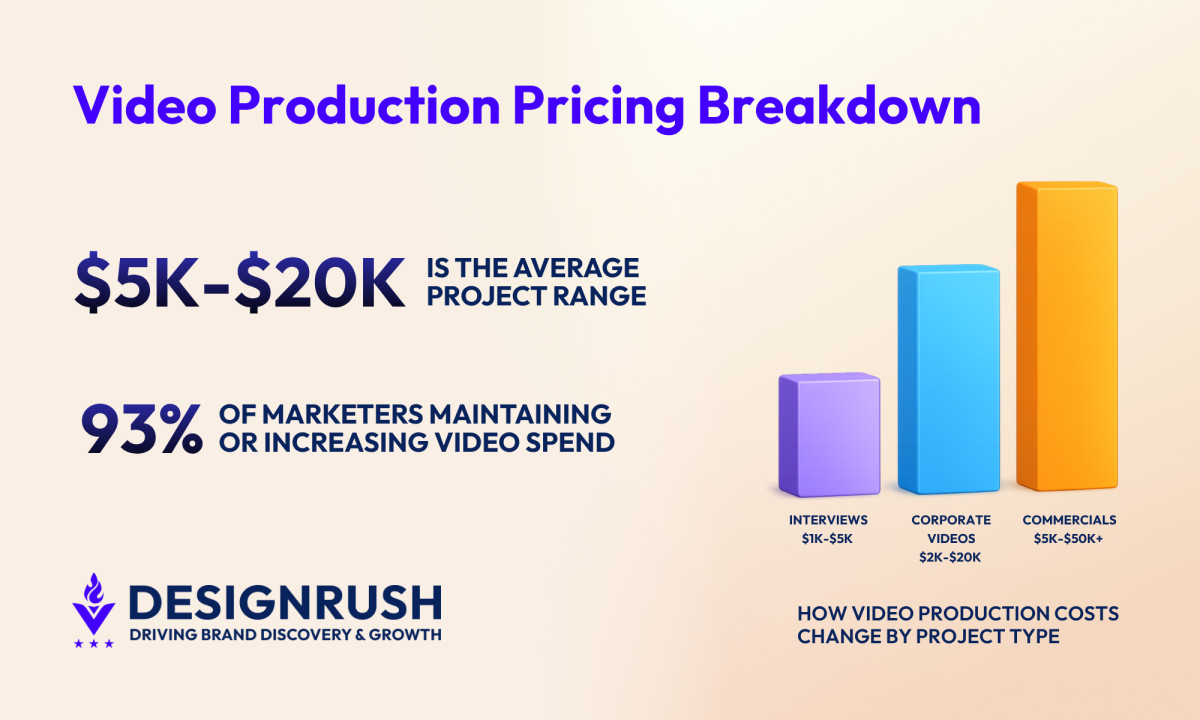
- $5,000-$20,000+ is the average project range, depending on format, team size, and post-production complexity
- $50-$200/hour is the common agency rate, with projects scaling based on scope and production setup
- 93% of marketers plan to maintain or increase video spend, making budget planning more important than ever
Video Is No Longer Just a Nice-To-Have
Most video production projects land anywhere between $1,000 and $50,000+, depending on complexity, team size, and post-production work. Video isn’t optional anymore, which is exactly why pricing is all over the place.
In 2025, a whopping 89% of businesses were putting video front and center in their marketing. And while video budgets are growing, only 8% of marketers plan to spend less.
Video isn’t going anywhere, and that’s why understanding what it costs is key. Let’s break it down.
Video Production Pricing Models Explained
The model you choose changes how predictable your costs are and how much control you have over the final budget.
Video Production Rates
Hourly rates are usually used for smaller projects or ongoing edits.
This model works when the scope isn’t fully defined. You should know that costs add up quickly if the timeline stretches or revisions keep piling up.
- Typical range: $50-$200+ per hour
- Best for: editing, minor revisions, short shoots
Day Rates
Common for filming days with a crew and complex equipment.
You’re paying for time on set, regardless of how much footage is captured. A larger crew or more equipment pushes the rate higher.
- Typical range: $500-$2,500+ per day (per crew member or setup)
- Best for: interviews, on-site shoots, event coverage
Project-Based Pricing
This is a fixed price for the entire video, and a common model.
You agree on a scope upfront, which makes budgeting easier. Changes beyond the original scope usually increase the cost.
- Typical range: $1,000-$50,000+ per project
- Best for: corporate videos and commercials
Retainer Pricing
A retainer is for ongoing monthly production support. You get a set amount of work each month, often at a lower cost per video.
It works well for social content, campaigns, or consistent output.
- Typical range: $2,000-$20,000+ per month
- Best for: brands producing content regularly
Video Production Service Pricing by Type
Video production costs are widely different depending on what you’re creating.
Some formats rely on editing and structure, and others require larger crews, locations, or animation work.
Here’s what to expect from the price depending on what format you need.
- 2D Animation
- 3D animation
- Explainer videos
- Commercial videos
- Live Event or Streaming
- Corporate Videos
- Interviews
2D Animation
- Typical cost: $5,000 -$20,000 per minute
2D animation costs depend on style, level of detail, and how much is built from scratch.
Simple motion graphics or character loops can be produced quickly, while fully custom scenes, transitions, and storytelling require more design and animation time.
Scriptwriting, voiceover, and revisions also add to the total.
Based on DesignRush data, simpler 2D projects like character animations or short explainers often fall under $5K with 1-month timelines, and more structured pieces (e.g., safety training animations) sit closer to the mid-range.
3D animation
- Typical cost: $8,000-$25,000+ per minute
3D animation is more resource-heavy. Costs increase with modeling, texturing, lighting, and rendering.
Even short videos can take weeks to produce due to technical setup and rendering time. Realistic visuals or product simulations push pricing higher than stylized work.
Short-form 3D product clips could still land under $5K for simple use cases, especially with limited scenes or shorter runtimes.
Explainer videos
- Typical cost: $3,000-$25,000
Explainer videos combine scripting, voiceover, and animation or motion graphics. Prices vary based on the level of strategy and customization.
Template-based explainers are quicker and cheaper, but custom visuals, storyboarding, and multiple revisions increase the budget.
Our agency portfolios show many explainer-style projects delivered at $50-$125/hour production rates, which keeps total costs lower for shorter videos.
Commercial videos
- Typical cost: $5,000-$50,000+
Commercials require more coordination than most formats. Costs go up with creative direction, filming days, locations, talent, and equipment.
Even short ads can involve multiple takes, lighting setups, and post-production work.
Higher-end commercial shoots often feature larger crews and multi-day schedules, so budgets start to climb quickly.
Live Event or Streaming
- Typical cost: $2,500-$25,000+
A single-speaker webinar can be handled with a lean setup, but a conference with multiple sessions, speakers, and live switching turns into a full production.
Vimeo estimates $2,500-$10,000 for a webinar with up to 500 attendees, and $4,000-$25,000 for a single-day virtual conference.
Corporate Videos
- Typical cost: $2,000-$20,000
Corporate videos cover a wide range of use cases, which is why pricing feels inconsistent. Some projects are built around a single shoot and light editing, others involve scripting, multiple filming days, and post-production.
LTX Studio notes that corporate video budgets vary depending on the amount of planning and creative development. DesignRush data confirms this range, especially for social media, internal videos, and brand pieces.
View this post on Instagram
Interviews
- Typical cost: $1,000-$5,000
Interview videos are usually built around a controlled setup, which keeps production straightforward. One location and a focused shoot can be turned around quickly.
The scope changes once you start layering in multiple speakers, additional shoot days, or graphics in post.
Freelancer vs. Agency vs. In-House Video Production Costs
Who you hire has just as much impact on cost as the type of video itself. You may go for the following:
Freelancers
Freelancers are often used for specific tasks such as filming or editing. This keeps pricing tied to hours worked or clearly defined deliverables.
On Fiverr, video production services commonly start at $50 to $200 for basic edits or short clips, with more experienced freelancers charging $500 to $2,000+ per project for filming and full video work.
Video Production Agencies
Agency pricing varies based on team size, experience, and project scope.
DesignRush data shows:
- $50/hour for smaller teams and simpler production work
- $80/hour for animation and mid-level production
- $125-$150/hour for more established agencies
- $200/hour for higher-end production setups
Project budgets reflect that range. Agency work typically starts around $1,000 and can reach $50,000+, depending on the agency you choose.
In-House Video Production Teams
In-house costs are tied to roles, and each falls into a slightly different salary band:
- Videographers average around $59,499/year, with most salaries between $42K and $81K
- Film or video editors typically earn $60,415/year, with a range of $41K to $90K
- Video producers come in higher at $66,747/year, reaching up to $99K
Compensation doesn’t stop at base salary. Bonuses and other incentives push the total pay up, with reported earnings of $85K for videographers, $96K for editors, and over $100K for producers.
Add two or three of these roles together, and the annual cost quickly moves into six figures, even before equipment and software are factored in.
What Affects Video Production Costs?
Two videos can look similar on screen and still land in completely different budget ranges.
The difference usually comes down to how much time, coordination, and post-production work are involved in the whole process.
- How Many Days You’re on Set
- Where the Video Is Shot
- Who’s Involved in the Production
- What You’re Shooting With
- How Much Happens After Filming
How Many Days You’re on Set
Time adds up fast once filming starts.
A one-day shoot with a small setup is relatively contained. Stretch that into multiple days, and you’re covering crew time, equipment use, and logistics for each additional day.
For example, a simple interview filmed in a few hours is a very different cost from a two-day shoot with multiple setups and retakes.
Where the Video Is Shot
Location affects both planning and spending.
Filming in one controlled space keeps things straightforward. Moving between locations introduces travel, setup time, and sometimes permits.
A product demo shot in an office is easy to manage. A brand video filmed at several locations requires more coordination, even if the final video duration is the same.
@bradydrogers 🎥 Pricing your video work is like building a house. Each layer, from the foundation to the finishing touches, needs careful planning and expertise. Underestimating the effort can lead to a shaky structure. Overestimating can make it inaccessible. Finding the right balance ensures a solid and sustainable creative business. Swipe to see how we break down the costs and value behind every project, making sure your vision stands strong. 💪✨ #Filmmaking#VideoProduction#CreativeBusiness♬ original sound - Brady 🎥 Cinematographer
Who’s Involved in the Production
A small crew might include a videographer and an editor. Larger productions bring in directors, camera operators, lighting specialists, sound, and on-screen talent.
Adding actors or voiceover talent also changes the cost structure. Even one additional role can change the whole budget.
What You’re Shooting With
Basic setups cover standard cameras, lighting, and audio. More advanced production might include multiple cameras, custom lenses, or additional lighting rigs.
For example, a single-camera interview setup is minimal. A multi-camera shoot with lighting and sound requires a different level of preparation.
How Much Happens After Filming
Post-production covers everything that determines the final version of the video. Editing, color, sound, graphics, and revisions all fit in this stage.
Each layer adds time. Motion graphics and animation take longer than basic cuts. Feedback rounds can extend timelines further, especially when multiple stakeholders are involved.
The amount of work here depends on how polished the final piece needs to be and how many versions are required.
How To Budget for Video Production in 2026
Most companies aren’t guessing anymore. They’re allocating their budgets to video and treating it as a core channel.
According to Wyzowl’s State of Video Marketing, 93% of marketers plan to maintain or increase their video spend.
That level of investment makes it worth planning your budget properly. Here are a few ways to approach it.
- Start With the Outcome
- Decide What Stays Lean and What Needs Investment
- Focus on Ranges
- Plan for Post-Production Early
- Know When To Scale Up
- Leave Room for Changes
Start With the Outcome
A product launch video, a hiring video, and a paid ad may all be short, but they don’t carry the same expectations.
Before setting a budget, define what the video needs to do:
- Generate leads
- Explain a product
- Support a campaign
- Build brand awareness
Once that’s decided, the format becomes easier to scope. Trying to set a budget based on vagueness usually leads to overspending.
When budgets are tight, it also helps to validate what’s worth producing before committing to more content. As Tripp Underwood, VP of Content & Strategy at Cramer, explains:
"If budget or resources are a concern, as they are for many companies right now, it helps to see which episode 'topics' get the most viewership before ordering the creation of additional content."
Decide What Stays Lean and What Needs Investment
Not every video needs the same level of investment, and treating them the same often leads to wasted budget.
You could divide your video spend based on purpose. Keep some formats lean, such as interviews, social clips, or internal updates. Set aside more money for campaign videos, product launches, or anything tied directly to revenue.
For example, a $20K budget could go toward one high-production video or be split between one larger piece and several smaller clips that support it. The right approach depends on how often you need content and what each video is expected to do.
Focus on Ranges
Video pricing doesn’t usually behave like a standard rate card. Instead of locking into a single number, build your budget in ranges:
- Base production cost
- Extra filming days
- Additional edits or versions
This keeps you from underestimating the final cost once the project evolves.
Plan for Post-Production Early
A lot of budget decisions get pushed to the end, but post-production often takes a larger share than expected.
Graphics, revisions, and multiple versions can extend your timeline and costs well beyond the initial shoot. Planning for that upfront avoids last-minute budget adjustments.
Know When To Scale Up
You may not always need a full team. Keep production lean when:
- The content is short-form
- The message is simple
- Speed matters
Bring in more structure when the planned video supports a campaign, multiple deliverables are required, or there’s a higher quality expectation.
Leave Room for Changes
Feedback rounds, additional edits, and new versions are part of the process. Setting aside a portion of the budget for changes will help you keep things moving without delays or re-scoping.
Video Production Costs Breakdown: Final Thoughts
Video production costs are less about the video itself and more about how it’s made. The clearer your scope and priorities, the easier it is to control the budget.
If you’re planning a project and want to compare pricing, timelines, and capabilities, explore top-rated video production companies.

Our team ranks agencies worldwide to help you find a qualified partner. Visit our Agency Directory for the top video production agencies, as well as:
- Top Video Production Companies in Denver
- Top 2D Animation Studios
- Top AI Video Production Companies
- Top Corporate Video Production Companies
- Top Training Video Production Companies
If you want to see what high-quality video production looks like in practice, check out our Awards Section.
We feature extraordinary work on Best Video Designs that shows how great ideas, execution, and storytelling come together on screen.
Cost of Video Production: FAQs
1. How much does video production cost?
Most video production projects range from $1,000 to $50,000+, depending on the format, team, and level of post-production involved.
Simpler videos, like interviews or short reels, are at the lower end, whereas commercials and animation require larger budgets.
2. What services do video production companies offer?
Video production agencies typically handle the entire process, including concept development, scripting, filming, and post-production.
Some also offer animation, motion graphics, and support with distribution or campaign content.
3. What makes video production expensive?
Costs are shaped by filming time, crew size, locations, equipment, and post-production work. Even small changes in any of these areas can affect the final budget.
4. How long does video production take?
Timelines vary depending on your project's scope. A simple video could be completed in a few days, but more complex productions can take several weeks or longer.
5. How can I reduce video production costs?
Keeping the setup simple is one of the easiest ways to stay within budget.
Fewer filming days, fewer locations, and a clear plan before production can prevent unnecessary costs later on.